The Best Beginner Turntables That Won't Wreck Your Records
Which turntable should a beginner buy?
On this page
Why Cheap Turntables Wreck Your Records
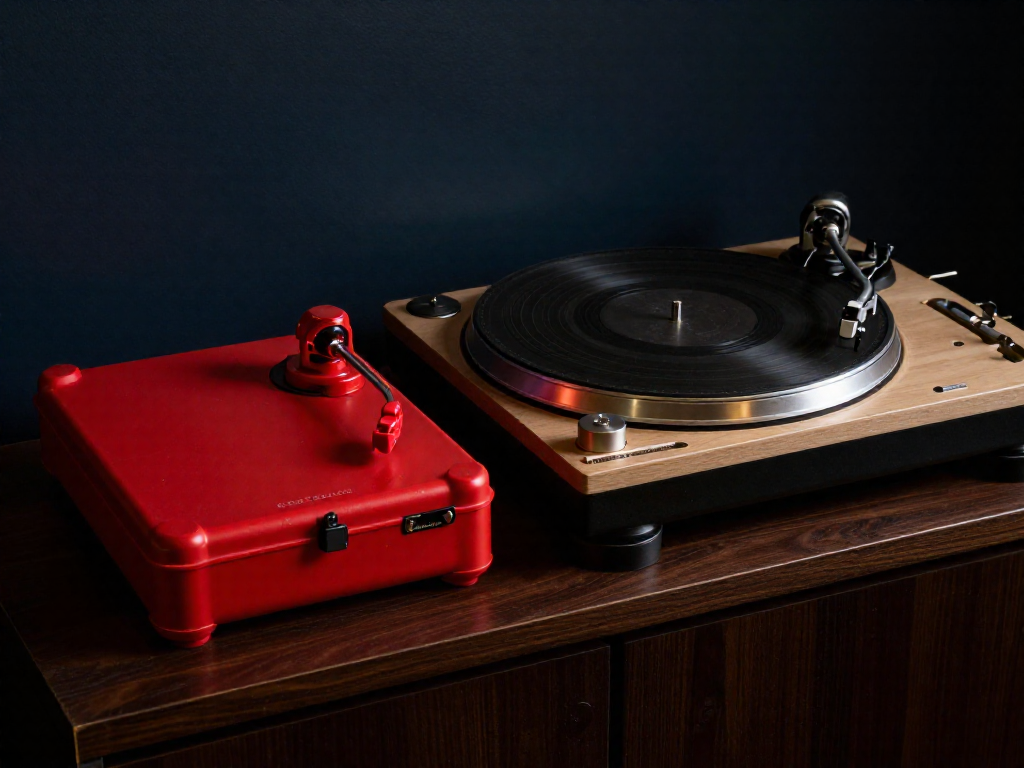
Here's the thing nobody tells you when you're standing in the store, eyeing that adorable suitcase player: the cheapest turntables can quietly destroy the very records you love. And once the damage is done, there's no undo button.
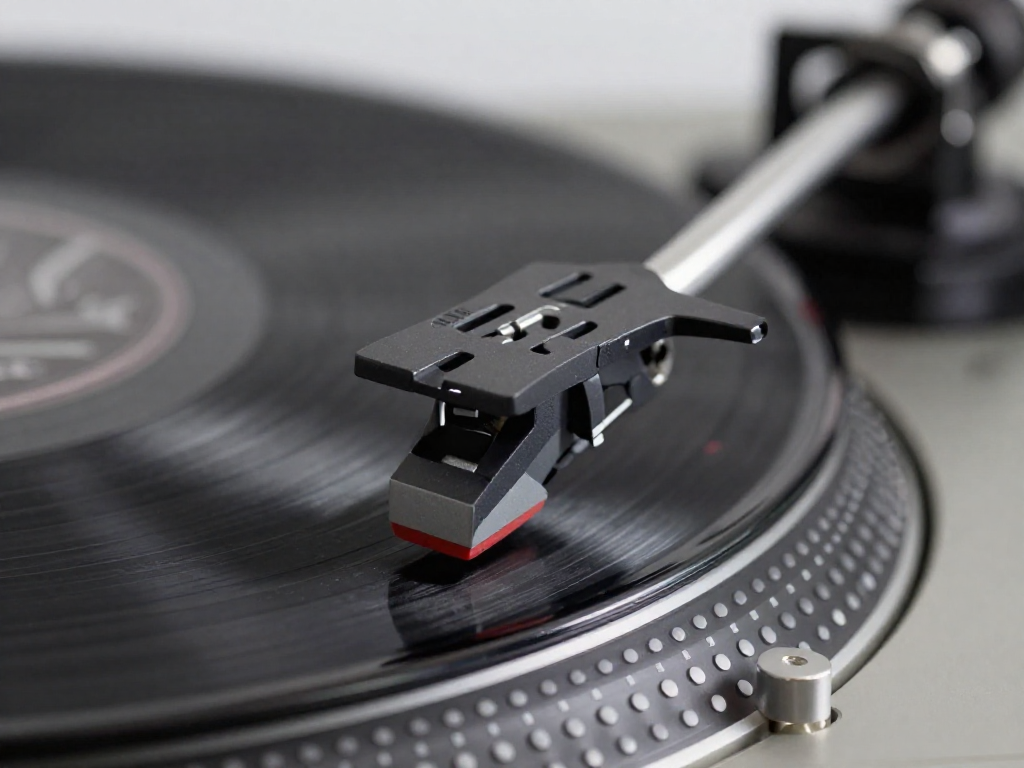
The main culprit is tracking force — how hard the needle presses into the groove. Budget players ship with stiff ceramic cartridges that bear down with several grams of pressure, far more than the roughly 1.5–2 grams a proper setup uses. That extra weight acts like sandpaper, grinding away the delicate walls of the groove with every spin.
Make it worse with a non-adjustable tonearm and no counterweight, and you've got a machine that can't be dialed in no matter what. There's no way to lighten the load, so the damage just keeps stacking up, play after play.
This is where those "Crosley-style" suitcase players earn their reputation. They're cute, they're cheap, and they're everywhere — but most use exactly this kind of heavy, fixed setup. Great for a quick novelty, rough on a record you actually care about.
And to be clear: vinyl doesn't heal. A groove worn down by a bad needle stays worn. You'll hear it as a hissy, gritty haze in the loud parts, with the highs sounding fuzzy or distorted — like the song is playing through a thin layer of static that wasn't there before.
The good news? Avoiding all this is easy and affordable, and that's exactly what the picks below are built around.
What Makes a Turntable Record-Safe (Beginner Checklist)
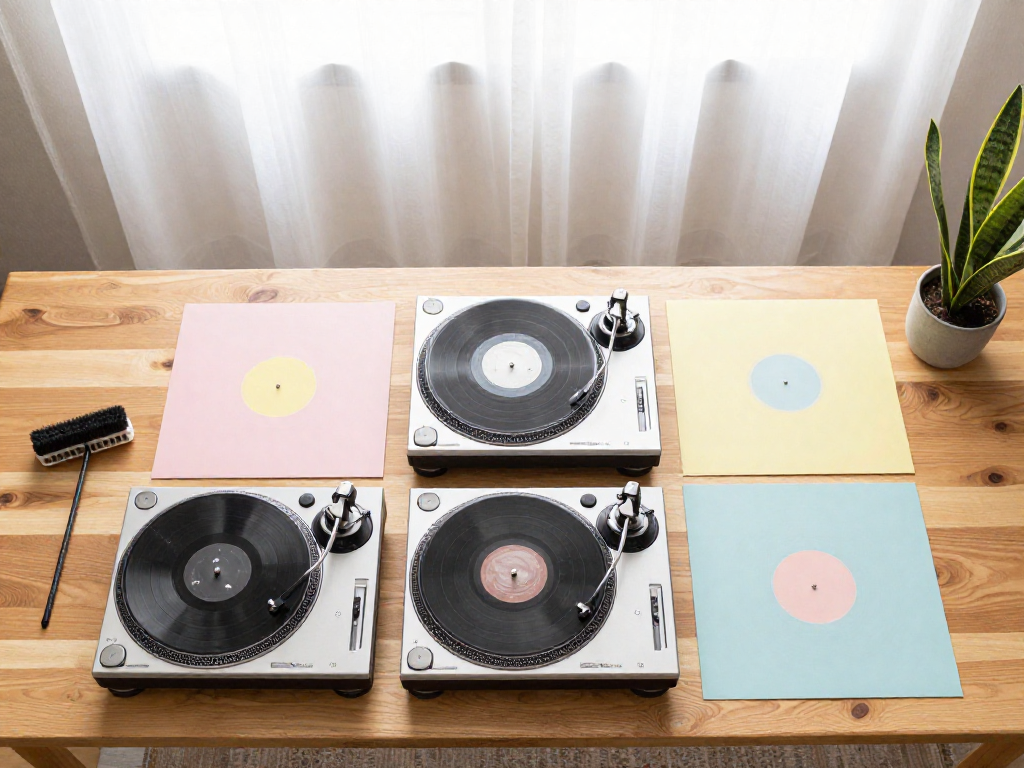
Here's the good news: you don't need to be an audiophile to spot a turntable that'll treat your records kindly. You just need to know what to look for. Run any model through this quick checklist before you buy.
- Adjustable counterweight and anti-skate. This is the big one. The counterweight lets you dial in how hard the needle presses down, and anti-skate keeps it centered in the groove. Cheap players with a fixed, non-adjustable arm can't do this — and that's exactly how records get worn out. If the spec sheet doesn't mention these, walk away.
- A decent moving-magnet cartridge. Look for a known name like Audio-Technica's AT-series (the AT-VM95 line is a beginner favorite) or Ortofon. A good cartridge tracks the groove gently instead of plowing through it.
- Tracking force in the safe range. Once you set the counterweight, you want the stylus pressing down around 1.5–2.5 grams, depending on the cartridge's spec. Too light and it skips; too heavy and it grinds. A cheap $10 stylus force gauge takes the guesswork out.
- Belt drive vs. direct drive. For casual listening, belt drive is quieter and very forgiving — perfect for beginners. Direct drive is built for DJs who need instant speed and back-cueing. Either is fine; just don't pay extra for DJ features you won't use.
- A replaceable stylus. Styli wear out (figure every 500–1,000 hours). If you can pop in a new one for $20–$40, your deck lasts years. If the needle is glued in, you're buying a disposable.
The Best Beginner Turntables Under $300
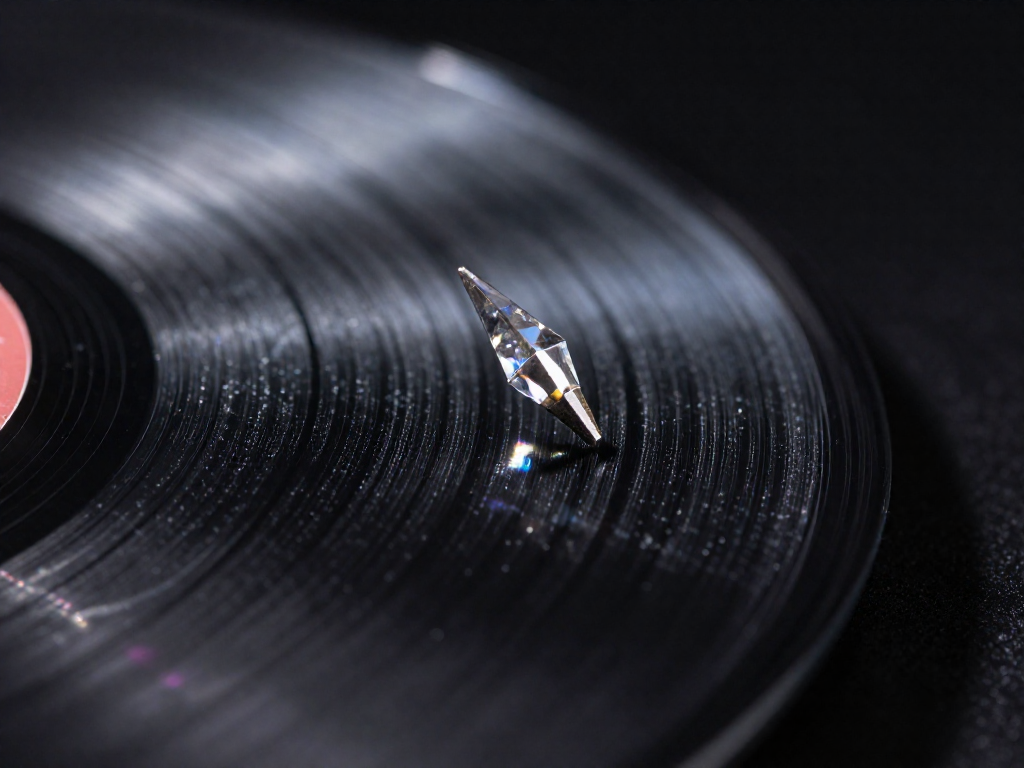
Okay, here's the good news: you do not need to drop a paycheck to spin your records safely. Every pick below tracks gently, won't chew up your grooves, and gives you room to grow. Prices float a bit depending on sales, so treat these as ballpark ranges.
Audio-Technica AT-LP60X — Best Ultra-Budget Automatic
Price range: ~$120–150 Who it's for: Total newcomers who want to press one button and listen. This is the "just play my record" turntable. It's fully automatic, so the arm lifts, drops, and returns on its own — no steady-handed cueing required.
- Pros: Cheap, dead simple, surprisingly gentle on records for the price.
- Caveat: The cartridge isn't upgradeable, so this is a starter, not a forever deck.
Audio-Technica AT-LP120XUSB — Best All-Rounder
Price range: ~$250–300 Who it's for: Folks who want one table that does everything and lasts. A direct-drive workhorse with adjustable tracking force, a USB output for digitizing, and a removable headshell you can upgrade later.
- Pros: Sturdy, tweakable, grows with you, great for casual DJ-curious tinkerers.
- Caveat: Heavier and more "knobs and dials" than a plug-and-play deck — slightly steeper learning curve.
Fluance RT81 — Best Sound for the Money
Price range: ~$200–250 Who it's for: Listeners who care most about how it sounds. The wood plinth, weighty platter, and pre-installed Audio-Technica AT95E-style cartridge punch way above the price tag.
- Pros: Warm, detailed audio; handsome looks; built-in preamp you can switch off as you upgrade.
- Caveat: It's a manual table, so you lift the arm yourself — no auto-stop at the end of a side.
Sony PS-LX310BT — Best for Wireless Setups
Price range: ~$200–250 Who it's for: Anyone pairing to a Bluetooth speaker or soundbar. Fully automatic and wireless, so you can stream vinyl across the room without a tangle of cables.
- Pros: Convenient, automatic operation, easy Bluetooth pairing.
- Caveat: Bluetooth adds a touch of compression — fine for casual listening, less so for critical audiophile sessions.
U-Turn Orbit Basic — Best Fully Manual Starter
Price range: ~$200–290 (with add-ons) Who it's for: Hands-on beginners who want the classic, tactile vinyl ritual. This US-assembled, minimalist table makes you part of the process — you cue every record yourself, and it's built to be upgraded piece by piece.
- Pros: Excellent build, modular upgrades, real "audiophile starter" feel.
- Caveat: No built-in preamp on the base model, so budget for one (or add it as an option) if your speakers don't have phono input.
How to Actually Buy One
Watch for sales around Black Friday and Prime Day, where these regularly dip $30–50. Check Crutchfield, Amazon, or the manufacturer's own site for new units. Buying used? Inspect the stylus tip under magnification (a worn, jagged needle is what wrecks records), confirm the platter spins evenly, and ask whether the cartridge has been replaced. When in doubt, a fresh stylus is a cheap fix that protects your whole collection.
Turntables and Brands to Avoid
We've covered what to buy, so let's talk about what to leave on the shelf. A few common players are practically designed to grind down your records, and spotting them is easier than you'd think.
- All-in-one suitcase players with built-in speakers. That cute retro case hides a heavy, non-adjustable tonearm that drags across your grooves. They're fun party props, but every spin shaves a little life off your vinyl.
- No-name Amazon brands with ceramic cartridges. Ceramic cartridges need much higher tracking force than the magnetic ones on quality decks. More downward pressure means faster wear. If a listing doesn't name the cartridge type, assume the worst.
- Anything without an adjustable tonearm. No counterweight or anti-skate means you can't dial in safe tracking force. This is the single biggest red flag, full stop.
- "Vintage bargain" thrift finds that need a new stylus. A $20 receiver-era turntable can be a gem, but a worn or chipped stylus will carve up records on the first play. Budget $20–$40 for a fresh stylus before you spin anything you love.
- Red-flag marketing words to ignore. "Suitcase," "all-in-one," "Bluetooth speaker built in," and "vintage style" usually signal a record-eater. Look instead for "adjustable counterweight," "moving magnet cartridge," and a named brand.
When in doubt, skip the gimmicks and pick a simple deck with an adjustable tonearm. Your record collection will thank you.
What Else You Need to Get Started
A good turntable is just the start. Here's the rest of the rig, without the sticker shock.
- A phono preamp — Turntables put out a tiny signal that needs boosting. Many beginner decks (like the Audio-Technica AT-LP60X) have one built in, so you can plug straight into powered speakers. If yours doesn't, a standalone preamp runs about $30–$80.
- Speakers — Powered bookshelf speakers are the easiest path; they have an amp inside so you don't need a separate receiver. Expect $100–$150 for a solid budget pair. Passive speakers sound great too, but you'll need an amp, which adds cost.
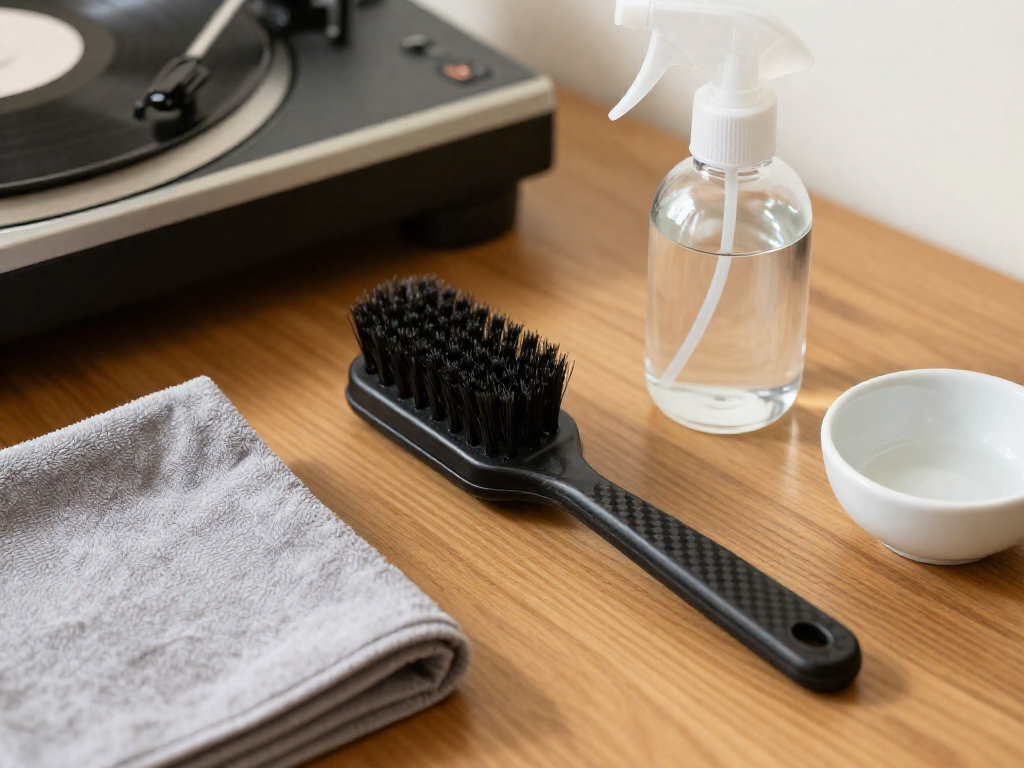
- A carbon-fiber brush — Run it over the record before each play to lift dust that would otherwise grind into the grooves. Around $15–$20, and worth every penny.
- Storage — Always store records vertically, like books on a shelf. Stacking them flat warps the vinyl over time. A simple crate or cube shelf works fine.
Starter budget: turntable ($150–$250) + powered speakers ($120) + brush ($15) ≈ $285–$385 for a complete, record-safe setup. No audiophile mortgage required.
Final Pick: Where Most Beginners Should Start
If you just want one honest answer: the Audio-Technica AT-LP60X (around $130–$150) is the best all-around starting point. It tracks your records gently, comes with a decent factory cartridge, and won't chew up that thrift-store copy of Rumours you finally tracked down. For most people dipping a toe back into vinyl, it's all the turntable you need.
Truly tight on cash? Look for a used Audio-Technica or a basic Sony PS-LX310BT on the secondhand market (think $70–$100 on local listings). Just check that the stylus isn't worn flat and that the platter spins evenly before you hand over any money.
Ready to grow? When your shelf starts filling up, step up to a manual belt-drive deck like the U-Turn Orbit or Fluance RT81 ($249–$349). You can swap in a better cartridge later, and your records will sound noticeably richer.
Start small, play often, and upgrade when you feel ready — not before.
See also
- Beginner's guide to building a vinyl collection on a budget
- Where to buy used records without getting ripped off
- How to store vinyl records to prevent warping
- Understanding cartridges and styluses for new collectors
Related articles
Troubleshooting a Turntable That Skips, Hums, or Drags
Why is your turntable skipping or sounding off? Diagnose speed, tracking, and grounding problems with simple, beginner-friendly fixes—no expensive gear needed.
Jun 27, 2026 · 11 min read
How to Store Cassette Tapes So They Last Another 30 Years
Learn how to store cassette tapes long-term. Simple tips on heat, humidity, magnetism, and case care to preserve your tape collection for decades.
Jun 27, 2026 · 9 min read
The Story Behind the 45 RPM Single and the Jukebox Era
Discover where the 45 RPM single and jukebox culture came from, why the little record changed music, and beginner tips for collecting 45s on a budget.
Jun 27, 2026 · 9 min read