How to Store Cassette Tapes So They Last Another 30 Years
How should I store cassette tapes long-term?
On this page
Why Cassette Tapes Degrade (the Quick Science)
Before we talk shelves and storage bins, it helps to know what you're actually fighting. A cassette tape is a long, skinny ribbon of plastic coated with magnetic particles, and those particles are held in place by a glue-like layer called a binder. Music lives in how those particles are arranged—so anything that disturbs the ribbon or its coating chips away at your sound.
Here's what slowly works against your collection:
- Heat speeds up the breakdown of that binder and can warp both the ribbon and the plastic shell, leading to wobble and squeal.
- Humidity invites mold and, on certain tape formulations from the late '70s through the '80s, the dreaded "sticky-shed" where the coating turns gummy.
- Stray magnetic fields—think speakers, motors, or that magnet on the fridge—can gradually weaken or erase the signal recorded on the tape.
- Physical stress like loose, sloppy winds or a case dropped on the floor can crease and stretch the ribbon, which you'll hear as warble.
None of this is a death sentence. Tapes are tougher than people assume, and almost every one of these threats is easy to dodge once you know it exists. That's exactly what the rest of this guide is for.
Keep Tapes Cool and Dry: Beating Heat and Humidity
If you remember finding a melted mixtape on your car dashboard in July, you already know the enemy: heat and moisture are what turn beloved cassettes into warped, squeaky shadows of their former selves. The good news? You don't need a fancy archival vault to win this fight. You just need to be a little picky about where your tapes live.
Aim for a spot that stays cool and stable—roughly 60–70°F—with relative humidity around 40–50%. That range keeps the plastic shell from warping and stops the magnetic tape from getting sticky or growing mold. Heat speeds up the breakdown of the binder holding the magnetic particles in place; humidity invites mildew. Control both and you've solved most of the problem.
Here's where not to store them:
- Attics bake in summer and freeze in winter.
- Garages and basements swing wildly in temperature and often run damp.
- Cars are basically tiny ovens.
- Sunny windowsills combine UV light with heat—double trouble.
So what's the move? An interior closet—one against a central wall, away from exterior heat—is the best free option most of us already have. Any climate-controlled room in your home beats a shed or crawlspace every time.
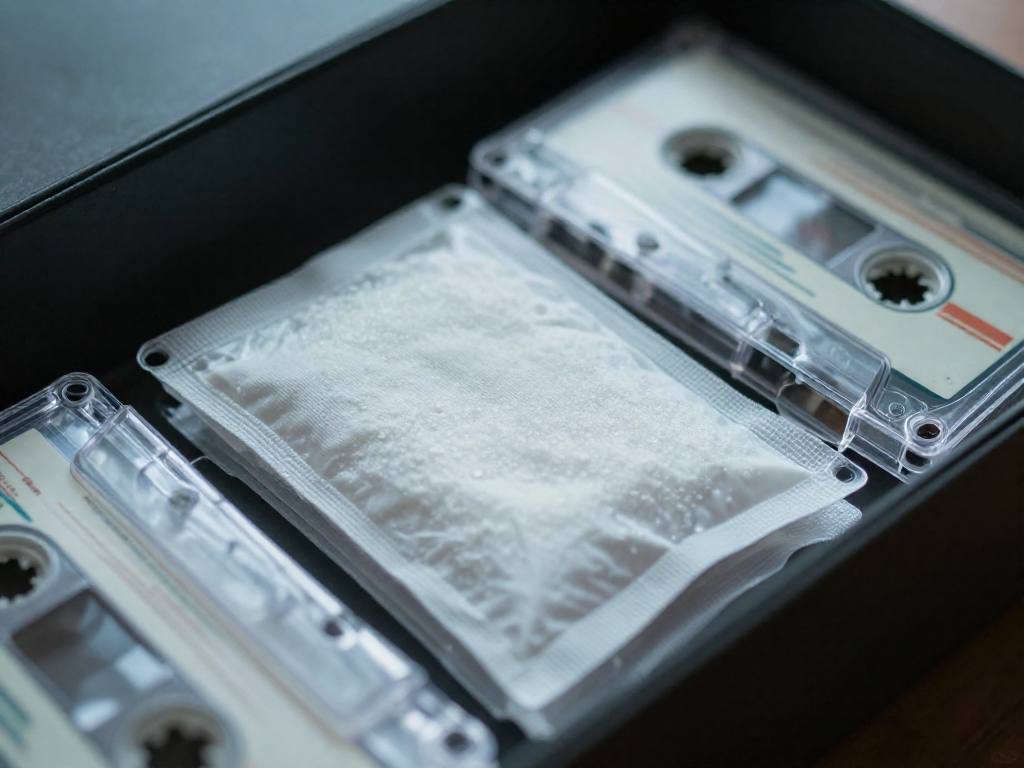
For extra insurance, toss a few silica gel packs (the kind that come in shoeboxes and supplement bottles) into your storage bins to soak up stray moisture. Replace or dry them out every few months.
One last thing: stability beats perfection. A closet that holds a steady 72°F is kinder to your tapes than a room that bounces between 60° and 85°. Avoid the big swings, and your cassettes will thank you for decades.
Stay Away From Magnets and Electronics
Here's the villain most collectors forget: magnetism. Your cassettes store sound on magnetic tape, which means a strong enough magnetic field can slowly scramble those recordings. It won't happen overnight, but years of sitting next to the wrong gear can leave you with muffled hiss where your favorite mixtape used to be.
The biggest offenders are things that generate magnetic fields during normal use. Keep your tapes away from:
- Speakers and subwoofers (those big magnets are the whole point of a speaker)
- TVs and stereo equipment, especially older CRT sets
- Large motors, like the ones in fans or power tools
- Magnetic clasps and tool magnets on nearby cabinets or pegboards
Good news: a quick brush past your TV won't wipe a tape. Everyday, short exposure is low-risk. The real danger is long-term proximity — a box of tapes parked on the same shelf as your receiver for a decade.
The simplest fix costs nothing. Give your collection its own dedicated shelf or drawer, well away from anything electronic. When in doubt, more distance is always better.
Store Tapes Upright in Their Cases
Here's the easiest habit to build, and it costs you nothing: stand your tapes up like books on a shelf, each one tucked in its case. That's it. Do that consistently and you've already solved half the battle.
Why upright? A cassette's tape pack—the spooled ribbon inside—is happiest when it's evenly supported. Stack tapes flat in a pile and the ones on the bottom take all the weight, which presses on the shell and can slowly warp it. Over years, that pressure can also nudge the tape pack out of alignment. Standing them vertically spreads the load along the spine of the case, where the cassette was designed to handle it.
A few practical pointers to make this stick:
- Keep every tape in a case. The original is ideal, but a clear Norelco case (the standard plastic clamshell, named after the brand that popularized it) works just as well and runs roughly $0.25–$1 each in bulk online.
- Replace cracked or broken cases. A split hinge lets in dust and leaves the tape exposed to bumps. Swapping it is cheap insurance.
- Label the spines. Write or print titles on the case edge so you can read your collection at a glance. The less you pull tapes out and slide them back to check what they are, the less wear on the shell and the artwork.
Think of it like a bookshelf for your music. Tidy, browsable, and gentle on everything inside.
Wind, Handle, and Play Tapes the Right Way
How you treat a tape during everyday use matters just as much as where you stash it. A few simple habits keep that magnetic ribbon happy for decades.
Before a tape goes into long-term storage, run it all the way to one end with a full rewind or fast-forward. A clean, even wind keeps the tension consistent across the pack and helps prevent warping. Some collectors like to store tapes fully wound onto one reel so the delicate outer edges of the ribbon are tucked away and less exposed — either approach beats leaving a tape parked halfway through.
When you pick one up, hold it by the plastic shell. Never touch the exposed ribbon in the window; fingertip oils attract dust and can leave residue that muddies playback.
Play matters, too. Use a clean, well-maintained deck, and keep the heads and pinch rollers free of gunk (a cotton swab and isopropyl alcohol do the trick). And don't be precious about your favorites — actually play them once in a while. Spinning a tape now and then keeps the layers from sticking together, which is one of the quiet killers of old cassettes.
A Simple Long-Term Storage Setup You Can Build Today
Ready to put it all together? Here's a budget-friendly setup you can knock out this weekend, no special gear required.
-
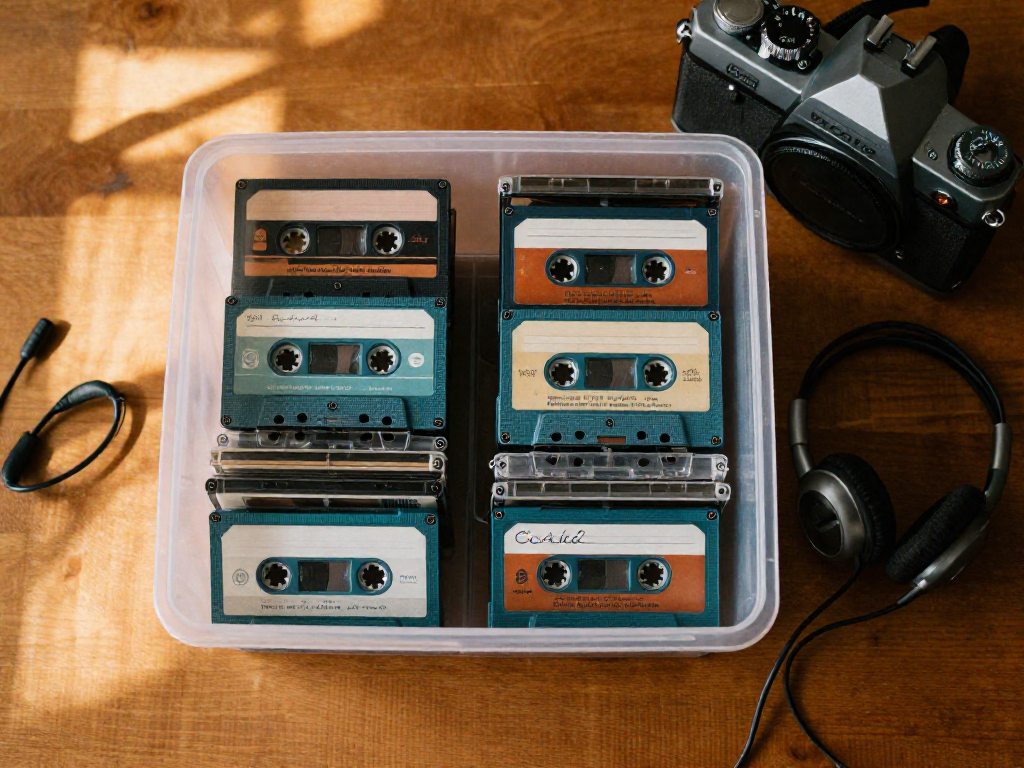
Grab a bin. A lidded plastic storage tote or a flip-top media box ($10–$20 at any big-box store) works great. Tuck it into an interior closet—away from attics, basements, and exterior walls where temperatures swing.
-
Toss in silica gel. A few desiccant packs (often free in shoeboxes and supplement bottles, or a few bucks for a bulk bag) keep humidity in check. Check them seasonally and swap or recharge them when they feel heavy or change color.
-
Stand tapes upright. Keep them in their cases, spines out and labeled so you can browse without digging—just like vinyl on a shelf. Park the bin a safe distance from speakers, TVs, and other electronics that throw off magnetic fields.
-
Do a yearly check. Once a year, pop the lid and look for mold, a musty smell, or warped shells. Catching trouble early is half the battle.
-
Digitize the irreplaceable ones. For mixtapes or one-of-a-kind recordings, a cheap USB cassette deck ($20–$30) lets you save a digital backup. Worst case, the music lives on.
That's it—a little care now, and your collection can easily roll into its next 30 years.
FAQ
How should I store cassette tapes long-term?
Aim for cool, dry, and stable. The sweet spot is roughly 60–70°F with relative humidity around 40–50%. Keep tapes out of direct sunlight, away from heat sources, and inside their plastic cases to block dust. Store them in an interior closet or on a shelf in your living space rather than anywhere that swings hot and cold. For an easy starter setup, grab a few archival-style plastic storage boxes or even sturdy shoeboxes lined to keep light out — you don't need to spend more than $10–20 to get going. Check on them once a year and they'll happily play for decades.
Should cassette tapes be stored standing up or lying flat?
Store them standing up on their edge, like books on a shelf, with the spine label facing out. Upright storage keeps the tape pack wound evenly and reduces stress on the reels and shell over time. Stacking cassettes flat in tall piles puts weight on the bottom cases and can warp shells or pinch the tape. Standing them vertically also makes browsing your collection way more fun — half the joy is reading those spines.
Do magnets really erase cassette tapes?
They can, but it takes more than your average fridge magnet. Cassette audio is stored magnetically, so a strong magnetic field placed right against the tape can scramble or wipe it. The realistic culprits are powerful sources like large speaker magnets, certain power tools and motors, or industrial magnets — not the little magnet holding up a photo. Still, it's smart to keep tapes a few inches away from speakers and electronics. Treat strong magnets with respect and your recordings stay safe.
Is it bad to store cassette tapes in the garage or attic?
Yes — these are two of the worst spots. Attics get brutally hot in summer, which can warp the plastic shell and soften the tape's binder, while garages bring temperature swings, humidity, and dust. Both create the heat-and-moisture combo that leads to mold and the dreaded 'sticky-shed' breakdown. Move your tapes into a climate-controlled part of the house — a bedroom closet or interior shelf is ideal. Your old mixtapes will thank you.
Should I rewind tapes before storing them?
It's a nice habit, but the more important goal is even tension. Many collectors recommend storing tapes fully wound to one end — either fully rewound or fully fast-forwarded — so the tape pack sits uniformly with no half-spooled slack. Whichever you choose, avoid leaving tapes paused mid-reel for years. If you want to be extra kind to a treasured tape, give it a full fast-forward and rewind every couple of years to keep the wind smooth and prevent it from sticking.
How do I prevent mold on cassette tapes?
Mold loves moisture, so humidity control is your best defense. Keep tapes in a space with relative humidity around 40–50% and avoid damp basements, garages, and attics. Tossing a few silica gel packets into your storage boxes helps absorb stray moisture, and they cost just a few dollars for a bag of them. Make sure tapes are fully dry before you box them, leave a little air space rather than sealing them airtight, and check on the collection once a year. If you ever spot fuzzy growth, isolate that tape immediately so it can't spread to its neighbors.
See also
- How to Clean a Cassette Deck for Better Sound
- Best Ways to Digitize Old Cassette Tapes at Home
- How to Store Vinyl Records So They Last for Decades
- Are Your Old Cassettes Worth Anything? A Beginner's Guide
Related articles
Troubleshooting a Turntable That Skips, Hums, or Drags
Why is your turntable skipping or sounding off? Diagnose speed, tracking, and grounding problems with simple, beginner-friendly fixes—no expensive gear needed.
Jun 27, 2026 · 11 min read

The Story Behind the 45 RPM Single and the Jukebox Era
Discover where the 45 RPM single and jukebox culture came from, why the little record changed music, and beginner tips for collecting 45s on a budget.
Jun 27, 2026 · 9 min read
Are Your Old Records Actually Worth Anything?
Wondering if your old records have value? Learn how to identify pressings, gauge demand, and find realistic prices—without getting ripped off.
Jun 27, 2026 · 7 min read