The Story Behind the 45 RPM Single and the Jukebox Era
Where did the 45 single and jukebox culture come from?
On this page
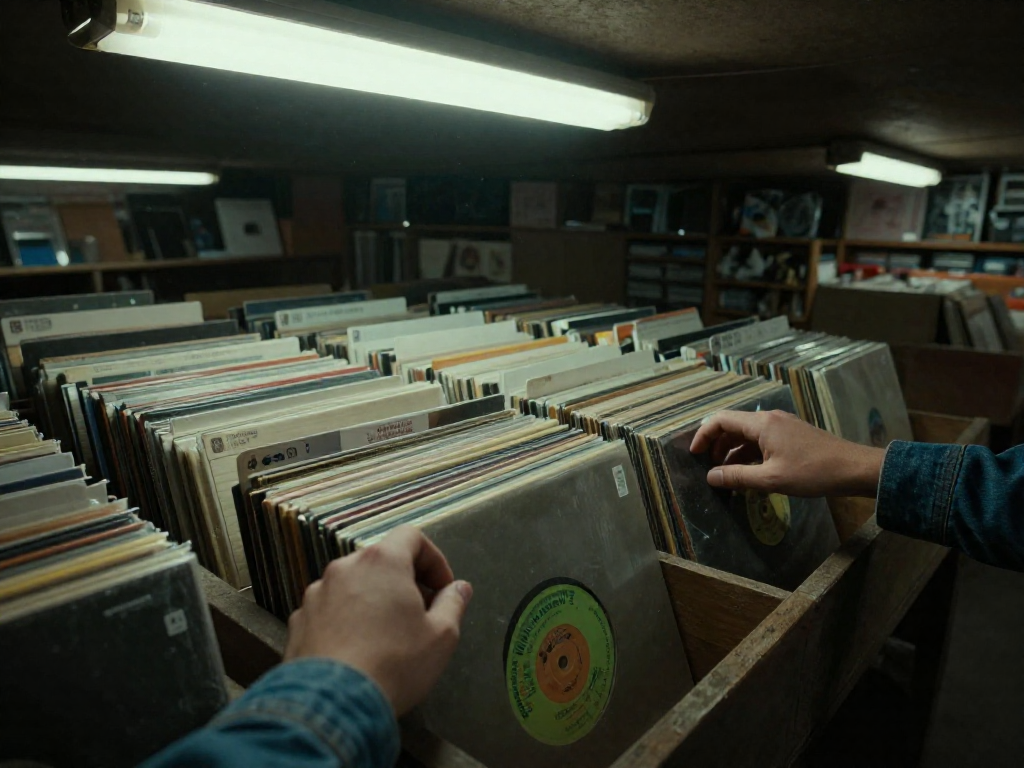
What Exactly Is a 45 RPM Single?
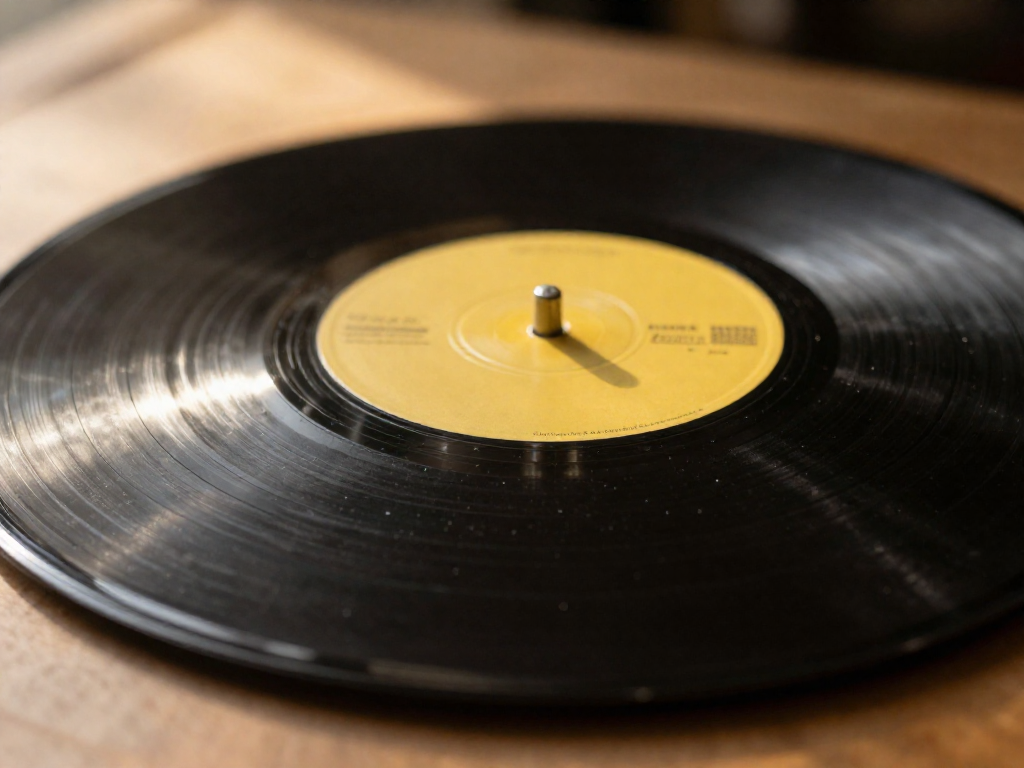
If you grew up flipping through a shoebox of these little records, you probably never stopped to ask what "45" actually meant. Here's the quick version, no expertise required.
A 45 RPM single is a 7-inch vinyl record that spins at 45 revolutions per minute on the turntable. RCA Victor introduced the format in 1949, and it quickly became the way most people bought a single hit song. That's the key idea: where a full album (the LP) gave you a dozen tracks, the 45 gave you one song you really wanted, usually for pocket change.
Each 45 had two sides. The A-side was the song the label was betting on—the radio hit, the one meant to sell records. The B-side was the flip side, often a lesser track, though sometimes a B-side surprised everyone and became the bigger hit. Flipping the record over was part of the ritual.
Then there's that big hole in the middle. Unlike LPs, which have a small spindle hole, 45s have a wide center hole about 1.5 inches across. That wasn't a mistake—it was designed for the rapid-fire mechanical arms inside jukeboxes, which could grab and drop records fast without jamming. At home, people used a plastic snap-in adapter (you may remember the little yellow "spider") to play them on a standard turntable.
A 45 typically held about 3 to 4 minutes of music per side. That limit quietly shaped pop itself—songwriters learned to land a hook fast and keep things tight.
The 45 also replaced the older 78 RPM records, which were made of brittle shellac that cracked if you looked at them wrong. Vinyl 45s were lighter, tougher, and cheaper—built for a faster, more affordable music era.
The Format War: How RCA's 45 Beat the Odds
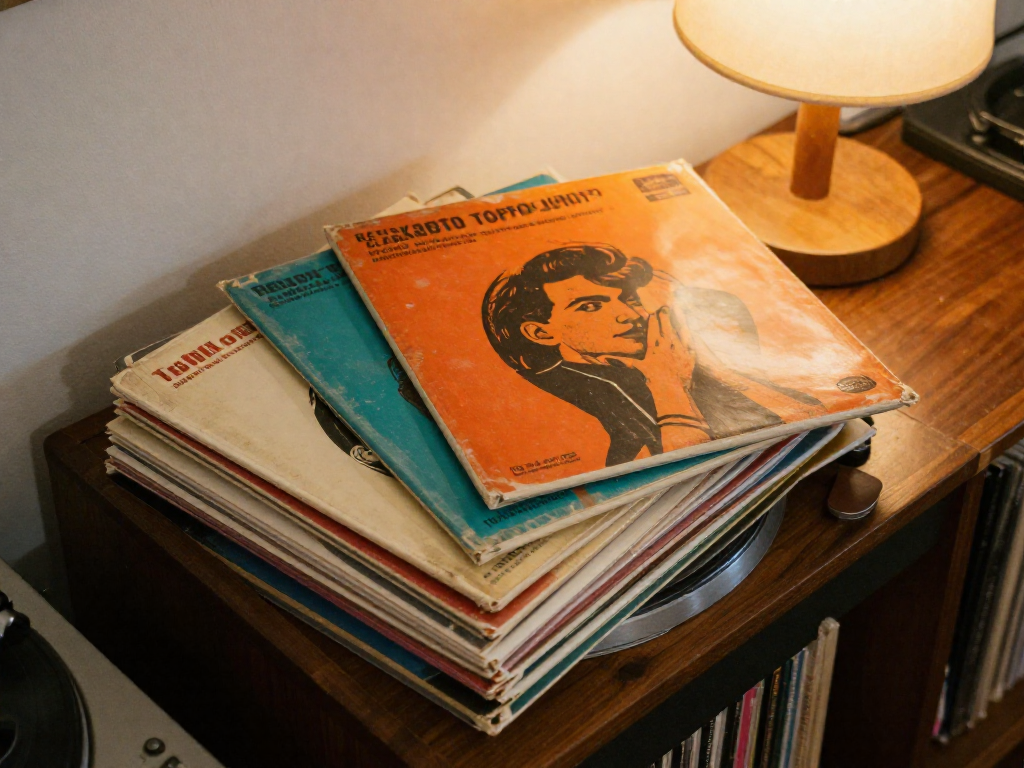
Picture the late 1940s, when records still meant heavy, brittle shellac discs that spun at a clunky 78 RPM. Two giants were about to blow that world apart. In 1948, Columbia Records introduced the 33⅓ RPM "long-playing" record—the LP—a vinyl disc that could hold a full 20-plus minutes per side. It was a genuine leap forward. And then there was RCA Victor, which, rather than license Columbia's idea, decided to fight back with its own format entirely: the 45 RPM single, launched in 1949.
So why 45? It wasn't a random number. RCA's engineers ran the math on the trade-off between groove space, playing time, and sound quality, and concluded that 45 revolutions per minute on a compact 7-inch disc gave the best fidelity for a single song per side. The result was small, lightweight, and—crucially—nearly unbreakable compared to the old shellac 78s. If you've ever held a 45, you know the feeling: that satisfying little disc with the big hole in the middle, built for one great song.
That big hole was no accident either. RCA designed a clever fat spindle and automatic changer system around it. You could stack a tower of 45s on the spindle, and the player would drop them one at a time, giving you a homemade hit parade without lifting a finger. For a generation used to swapping fragile records by hand, it felt like magic.
There was just one problem: chaos. With Columbia pushing 33⅓ and RCA pushing 45—while 78s were still on shelves—shoppers walked into stores genuinely confused about which player to buy. This standoff earned the nickname the "War of the Speeds," and for a few years nobody knew which format would survive, or whether buyers would get stuck with an obsolete machine.
The truce turned out to be the smartest outcome of all. Instead of one format killing the other, the market simply split. The LP became the home of the album—full artistic statements you'd sit and listen to. The 45 became the home of the single—the cheap, fun, grab-it-at-the-counter hit you'd play at parties or feed into a jukebox. Manufacturers eventually built players that handled all speeds, ending the confusion for good. Both formats won, and that uneasy compromise is the exact reason the 45 existed long enough to define an era.
Enter the Jukebox: A Coin, a Song, a Cultural Moment
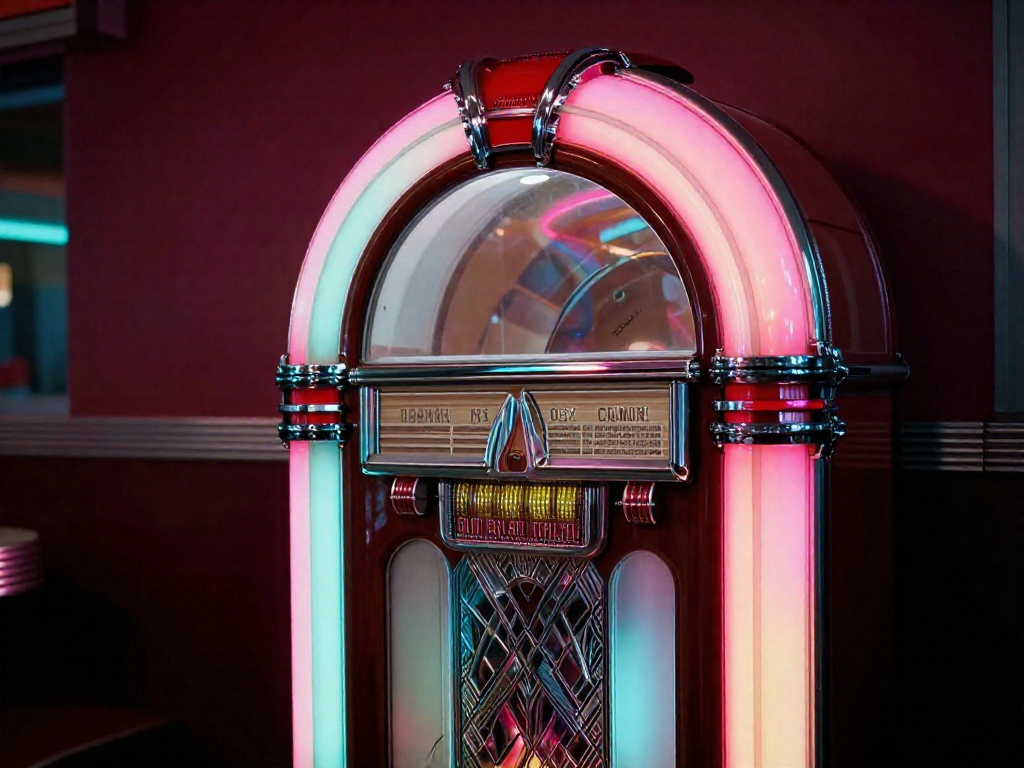
Here's where the 45 stopped being just a clever piece of engineering and became the soundtrack of a generation. The little seven-inch disc was practically built for the jukebox: lightweight, durable, and quick to swap with that big hole in the middle that the machines could grab and load in seconds. Where a fragile 78 might crack under heavy public use, the 45 shrugged it off play after play after play. That reliability mattered when a single record might get spun dozens of times a day.
And get spun it did. By the 1950s, jukeboxes were everywhere teenagers gathered—diners, malt shops, bowling alleys, corner bars, and roadside cafes. For a nickel (later a dime), anyone could become the DJ for three minutes. This was the birth of the public listening experience: music as a shared, social event rather than something locked away in a living room console. You picked the song, the whole room heard it, and suddenly your taste was part of the conversation.
The machines themselves were unapologetic showstoppers. Wurlitzer's glowing, bubble-tubed Model 1015 (1946) became the look everyone pictures when they hear the word "jukebox," all warm arches and shifting color. Seeburg pushed the technology forward with its Select-O-Matic mechanism that could hold 100 selections, and AMI built sturdy, handsome cabinets that filled bars across the country. These weren't just record players—they were furniture designed to pull you across the room.
Jukeboxes also quietly became one of music's first popularity charts. Operators tracked which records earned the most plays and swapped out the duds, so a song's survival in the slots was real-time proof of what people actually loved. Billboard even reported jukebox activity, making those coin-fed machines genuine tastemakers. A tune that caught fire in the jukebox circuit could climb its way into a national hit.
Underneath it all was something new: the teenager economy. Postwar kids had a little pocket change and somewhere to spend it, and those scattered nickels and dimes added up to real influence. Teens weren't waiting for adults to tell them what was good—they were voting with their coins, song by song, turning local favorites into chart-toppers. The 45 and the jukebox together handed a generation the power to shape pop music, three minutes and one coin at a time. That feeling—of a song belonging to you because you chose it—is exactly what we're chasing when we collect these records today.
How the 45 Powered the Birth of Rock 'n' Roll and Pop
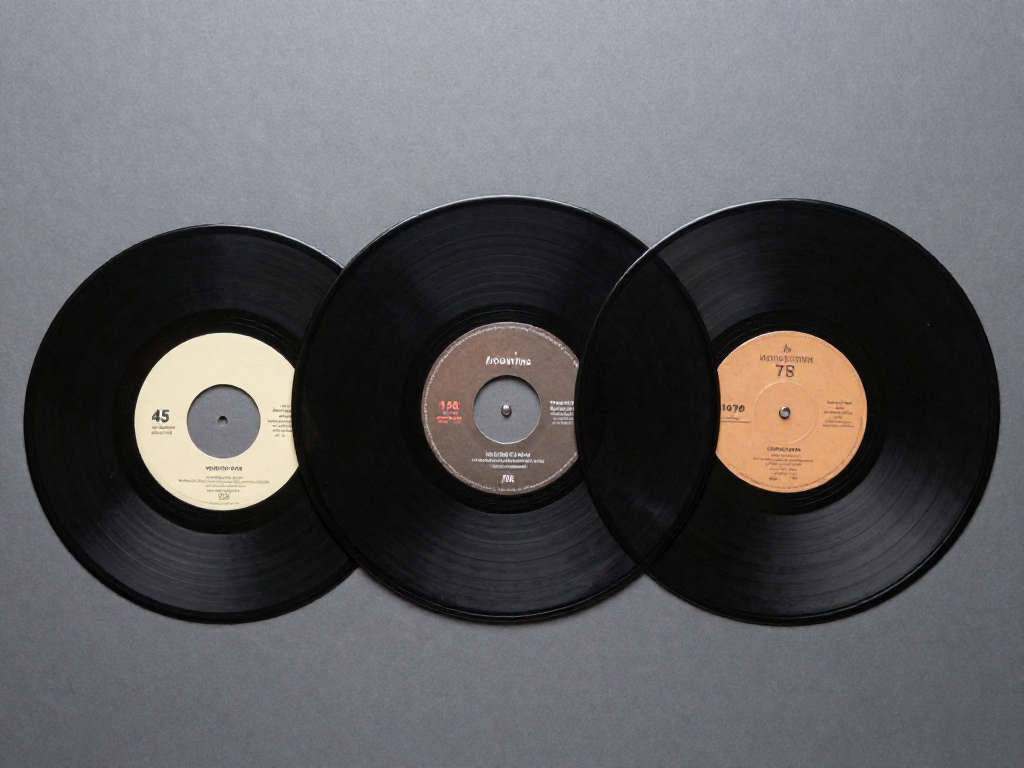
Here's the thing that made the 45 revolutionary: it was cheap. Through the 1950s, a single typically ran well under a dollar, which meant a teenager with a little allowance money could own the song they heard on the radio without saving up for a whole LP. For the first time, the music industry's most valuable customers weren't adults with disposable income — they were kids. And kids wanted hits.
That shift handed enormous power to the artists who lived and breathed the single. Elvis Presley's "Heartbreak Hotel" (1956) and Chuck Berry's "Maybellene" (1955) were built for the format — three minutes of energy, perfect for a jukebox play or a radio spin. A few years later, Berry Gordy's Motown turned the 45 into an art form, releasing a steady run of singles from the Supremes, the Temptations, and Marvin Gaye that defined the sound of the 1960s.
The format created its own collectible artifacts, too. The picture sleeve — that printed paper cover wrapping the disc — turned a simple record into a tiny poster, and clean original sleeves are often worth far more today than the record inside. Then there's the B-side: the "throwaway" flip that occasionally became a hidden classic, which is exactly why crate-diggers still flip every single over.
Radio and jukeboxes worked hand in hand to build the Top 40 era. A song climbed the charts on airplay, then earned its keep one coin at a time in diners and bars across the country — a feedback loop that turned singles into shared national moments.
The 45's reign couldn't last. Cassettes brought portability in the '70s and '80s, and CDs delivered convenience in the '90s, slowly pushing the little disc off store shelves. But it never fully disappeared — and that's good news for you. Garage sales, thrift stores, and estate sales still turn up boxes of common 45s for $1–$3 each, making this one of the most affordable corners of collecting. Check for deep scratches and a flat (not warped) disc, and you can start a stack of genuine history this weekend.
Starting Your Own 45 Collection (Without Spending a Fortune)
Here's the best part about collecting 45s: you can dive in for the price of a fancy coffee. Unlike LPs, which have become trendy (and pricey) again, those little 7-inch singles still fly under the radar. That means bargains everywhere—if you know where to dig.
Where to Look
Start cheap and start local. The classic hunting grounds:
- Thrift stores (Goodwill, Salvation Army) — often 25¢ to $1 each
- Estate sales — where whole collections surface, sometimes by the box
- Flea markets and yard sales — great for haggling
- Record shop dollar bins — already sorted, easy to browse
You'll find far more Top 40 hits than rarities, and that's fine. Half the fun is the unexpected score.
What Actually Affects Value
Most 45s sell for a few dollars or less. A handful are treasures. The difference usually comes down to:
- Condition — scratches, warping, and label wear all knock down value
- Rarity — limited regional pressings or short-run labels
- Original picture sleeves — these can be worth more than the record itself
- Pressing — a first pressing beats a later reissue, often by a lot
Spotting Originals vs. Reissues
Flip the record over and read the label closely. Original pressings usually list the record company's address and logo as it appeared in that era. Check the matrix numbers—those tiny etched digits in the smooth runout area near the center. They identify the specific master used and help you tell a genuine first pressing from a 1970s repress. A quick search of the catalog number on Discogs.com will confirm what you've got.
Gear You'll Need
Almost any turntable works, but make sure it has:
- A 45 RPM speed setting (not just 33⅓)
- A 45 adapter — that little plastic insert for the big center hole. Many turntables include one, or you can buy a pack for a couple dollars.
Keeping Your Finds Safe
Store records upright, like books, never stacked flat—stacking causes warping. Slip each one into a paper or poly sleeve. For cleaning, a soft anti-static brush and a drop of record-cleaning solution lifts decades of dust without scratching the grooves.
Build slowly, buy what you love, and don't stress about hunting for a fortune. The joy is in the digging—and in dropping the needle on a song you haven't heard since you were a kid.
Quick Facts and Fun Trivia About 45s
Here's the kind of stuff that makes 45s so fun to collect—and easy to share with a fellow nostalgia nerd.
-
That little plastic adapter is a star. Because 45s had a big center hole (a holdover from jukebox mechanisms), you needed a "spider" adapter to play them on a home spindle. Those colorful inserts are now collectible themselves—often a buck or two at flea markets, so grab a handful while they're cheap.
-
Some 45s flew off the shelves. Elvis Presley and The Beatles routinely moved singles by the millions; "I Want to Hold Your Hand" (1963 in the UK, 1964 in the US) was a runaway smash. Chart-topping speed varied by era, so verify figures before quoting them.
-
Keep an eye out for oddball pressings. Colored vinyl, picture sleeves, and promo-only copies (often stamped "DEMONSTRATION—NOT FOR SALE") can be worth more than standard black pressings. Check the label wording and flip for a sleeve.
-
A few play "wrong" on purpose. Some early jukebox and specialty discs were cut for specific equipment, and EPs packed extra songs at 45 RPM. Always check the label's stated speed before you spin it.
Pin this, share it, and happy hunting.
See also
- A Beginner's Guide to Starting a Vinyl Record Collection
- The Rise and Fall of the Cassette Tape
- Best Turntables for Spinning Your Retro Record Collection
- Vinyl vs. CD vs. Cassette: Which Format Sounds Best?
Related articles
Troubleshooting a Turntable That Skips, Hums, or Drags
Why is your turntable skipping or sounding off? Diagnose speed, tracking, and grounding problems with simple, beginner-friendly fixes—no expensive gear needed.
Jun 27, 2026 · 11 min read
How to Store Cassette Tapes So They Last Another 30 Years
Learn how to store cassette tapes long-term. Simple tips on heat, humidity, magnetism, and case care to preserve your tape collection for decades.
Jun 27, 2026 · 9 min read
Are Your Old Records Actually Worth Anything?
Wondering if your old records have value? Learn how to identify pressings, gauge demand, and find realistic prices—without getting ripped off.
Jun 27, 2026 · 7 min read