Why Beanie Babies Were the Bubble That Burst
What really happened with the Beanie Babies craze?
On this page
The Plush Toy That Promised Riches
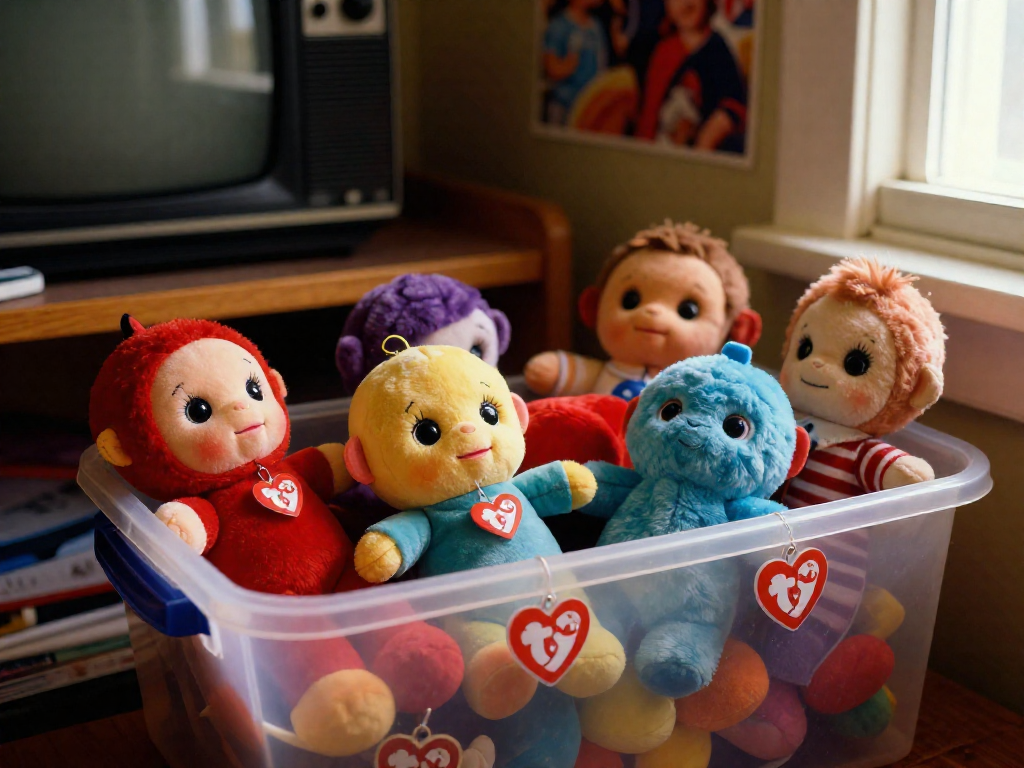
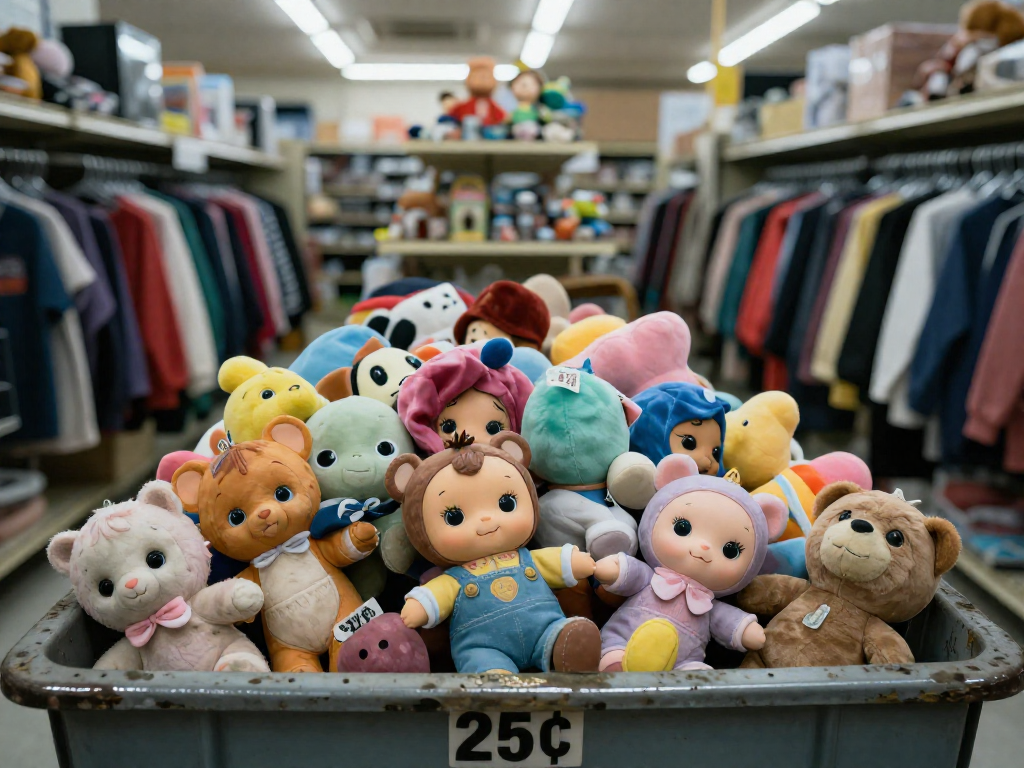
You probably know the bin. It's somewhere in the attic, the garage, or the back of a closet — a plastic tub packed with floppy little animals, each one with its red heart-shaped tag carefully sheathed in a stiff plastic protector. Nobody played with these. They were never meant to be toys, not really. They were an investment. At least that's what we all told ourselves.
For a stretch of the mid-to-late 1990s, a small bean-filled creature you could grab for around $5 became one of the strangest financial obsessions America has ever had. Ty Inc. released its first nine Beanie Babies in 1993, but the mania didn't truly catch fire until 1995 and 1996. Suddenly people weren't buying them to cuddle — they were buying them to flip. Parents stalked Hallmark stores and gift shops hunting for "retired" designs. Folks photocopied price guides. Some genuinely believed Princess the Bear or a misprinted tag might one day pay for a kid's college tuition.
It sounds ridiculous now. But in the moment, the logic felt airtight: limited production, rabid demand, prices climbing week over week. What could go wrong?
A lot, as it turned out.
So here's the question this whole story comes down to — the one worth digging into before you go appraising that attic bin: what actually turned a cheap plush toy into a speculative bubble, and what made that bubble pop so spectacularly? Let's rewind and find out.
How Ty Engineered the Frenzy
Here's the thing about the Beanie Baby boom: it didn't just happen. Ty Warner, the famously private founder of Ty Inc., built it on purpose, one clever decision at a time. Once you see how the pieces fit together, the whole craze starts to look less like a fad and more like a masterclass in manufactured demand.
Keep Them Hard to Find
Warner's first move was the boldest. When Beanie Babies launched in 1993, he refused to sell them through big-box chains like Walmart, Kmart, or Toys "R" Us. Instead, he stocked only small, independent gift shops, florists, and Hallmark-style card stores. That choice did two things at once: it kept supply scattered and unpredictable, and it made hunting for a specific Beanie feel like a treasure hunt. You couldn't just grab Patti the Platypus on a routine grocery run — you had to find her. Scarcity, even when it's deliberate, makes the heart grow fonder.
The "Retirement" Trick
Then came the genius (or maddening) part. Ty would announce that a particular Beanie was being "retired" — pulled from production for good. Overnight, an ordinary $5 plush toy became a "rare" collectible. Word would spread, prices on the secondary market would spike, and casual fans suddenly felt the pressure to buy now before something else vanished. There was no public production schedule, so nobody knew when their favorite might disappear. That uncertainty was the point. It turned shopping into a low-grade emergency.
Cheap Enough to Justify, Endless Enough to Chase
Each Beanie cost about $5 retail, a price low enough that buying "just one more" never felt reckless. But Ty kept the releases coming constantly — new animals, new colors, seasonal editions — so the collection was never finished. That combination is what hooked people. A small, guilt-free purchase repeated dozens of times adds up, and the steady drip of new releases meant there was always a reason to come back. You weren't overspending; you were just keeping up.
The Cuteness Cover
Finally, there was the spell of the toys themselves. Soft, big-eyed, palm-sized, and given goofy little names with poems on their heart-shaped tags, Beanie Babies were impossible to read as a risky investment. They felt like harmless fun, the kind of thing you'd buy a kid or set on your desk. That innocence was the perfect cover for what was, underneath, a speculative bubble. Collectors traded tips in church parking lots and on early internet forums, and the word-of-mouth did the advertising Ty never paid for.
Put it all together — limited distribution, surprise retirements, a low price, endless variety, and that disarming charm — and you get a frenzy that felt organic but was anything but.
When Speculation Took Over
Somewhere along the way, Beanie Babies stopped being toys. By the mid-to-late 1990s, a plush bean-filled critter that cost about $5 retail had quietly transformed into something people genuinely believed was an investment. And once that shift happened, things got a little unhinged.
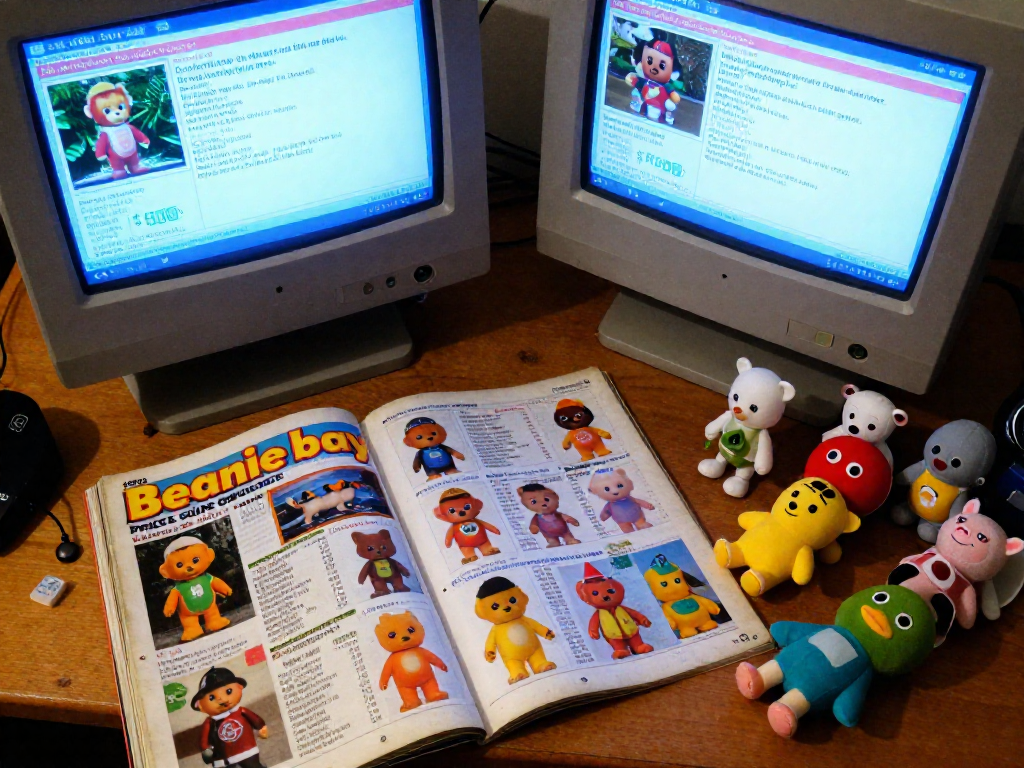
The infrastructure of a real market sprang up almost overnight. Glossy price guides like Mary Beth's Beanie World hit newsstands, claiming a retired Beanie might be "worth" hundreds or even thousands. eBay, founded in 1995, became the trading floor, and suddenly anyone could watch bids climb in real time. When you can see a number next to your stuffed animal, it's easy to start believing that number is real money.
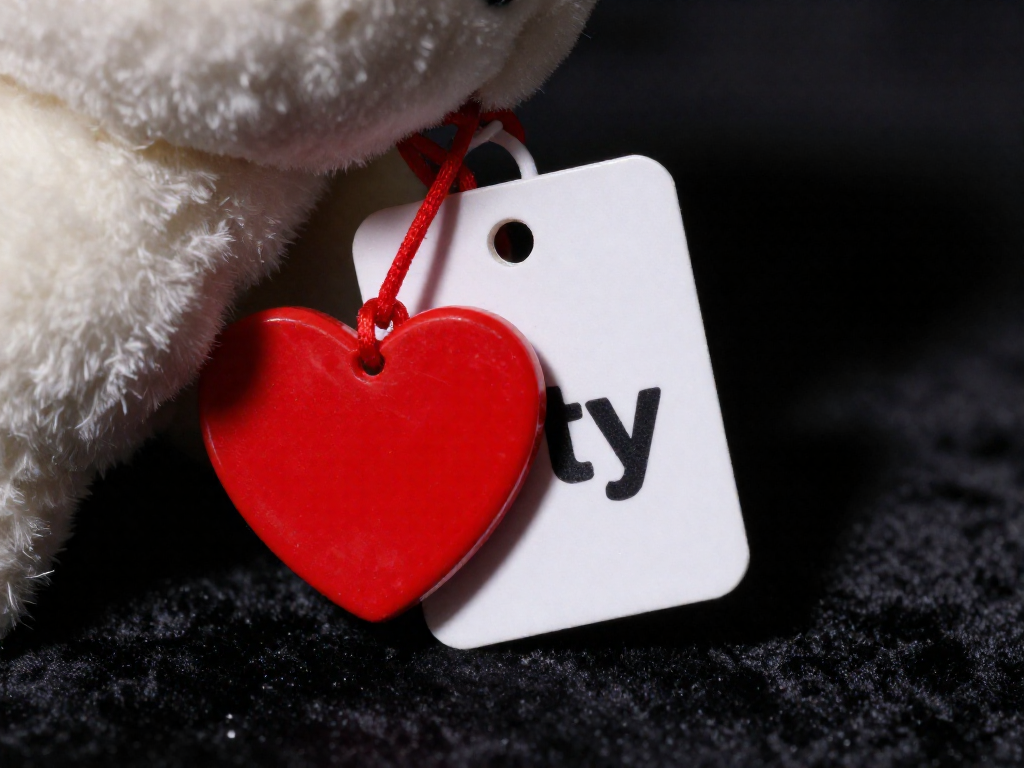
So people behaved like it was. Buyers grabbed multiples of the same Beanie off store shelves — not to play with, but to stash away untouched. The toys never left their plastic. The heart-shaped Ty tag became the whole point, treated less like a label and more like a stock certificate. A bent tag could supposedly knock serious value off a $5 toy, which is how we ended up with plastic tag protectors: little hard cases sold specifically to guard a piece of cardboard.
The mindset got bigger than the toys themselves. "This will pay for the kids' college" became an actual sentence people said out loud, and the media happily fanned the flames with breathless news segments about retired Beanies and skyrocketing values. There's a now-famous photo of a divorcing couple dividing their Beanie Baby collection on a courtroom floor in 1999 — that's how seriously folks took it. Counterfeits flooded in too, with fakes copying tags and fabric closely enough that "authenticators" and tag-checking guides became their own cottage industry. The obsession with mint, untouched, perfectly-tagged condition reached a point that, looking back, feels almost surreal.
Here's the practical takeaway if you're tempted to dive in today: that speculative premium is gone, and that's good news for casual collectors. Most common Beanies now sell for $1–$5 at thrift stores, estate sales, and yard sales, and even bulk eBay lots often work out to under a dollar each. A few genuinely rare ones or verified error pieces can fetch more, but treat those as exceptions, not the plan. Buy the ones that make you smile — the bear you had, the colors you loved — not the ones a 1998 price guide swore would fund a semester at college. The joy was always the real value. The market just took a while to remember that.
The Anatomy of a Bubble
Strip away the felt and floppy ears, and the Beanie Baby boom followed the same script as every speculative mania in history. Once you know the pattern, you can spot it forming a mile away—and maybe save yourself a closet full of regret.
It only worked if someone else paid more. Economists call it the "greater fool theory": you overpay for something not because it's worth the price, but because you're betting a greater fool will buy it from you for even more. A retired Beanie wasn't valuable because of what it was—a few dollars of plush and plastic pellets—but because of what the next buyer might pay. That kind of value is a game of musical chairs. It feels great until the music stops.
Manufactured scarcity isn't real scarcity. Ty Inc. fueled demand by "retiring" styles, creating the feeling of rarity. But these were mass-produced toys, churned out by the millions through the late 1990s. Genuine scarcity—think a misprinted baseball card or a short-run pressing—survives because supply truly is limited. Beanie "rarity" was a marketing lever, not a fact. When everyone's attic holds the same "rare" bear, it isn't rare at all.
We've been here before. Back in 1630s Holland, people traded houses for tulip bulbs during "tulip mania," convinced prices could only climb. Same story with 1980s comic speculation and countless fads since. The props change; the human psychology doesn't. Hype convinces us this time is different—it almost never is.
The tipping point. A bubble needs a constant stream of new buyers to keep prices rising. When that stream dries up—when the last hopeful collector has already bought in—confidence cracks. Around 1999, Ty announced it would stop making Beanies, the panic-buying peaked, and the wave of new money simply stopped. Suddenly everyone was a seller and no one was a fool. Prices collapsed almost overnight.
The lesson for any collector: buy what you genuinely love at a price that makes sense to you, not because a price chart promises riches.
The Crash and the Aftermath
By the late 1990s, the music stopped. Ty Inc. had flooded the market with so many "limited" editions that scarcity stopped meaning anything, and the speculators who'd treated plush toys like tech stocks started looking for the exits. The symbolic gut-punch came on December 31, 1999, when Ty announced it was retiring the entire Beanie Babies line. The stunt was meant to spark one last buying frenzy, but for a lot of people it just confirmed the obvious: the party was over.
What followed wasn't a dramatic single-day collapse so much as a slow, deflating leak. The "investment" everyone had stockpiled in plastic tote bins turned out to be exactly as valuable as the market wanted it to be — which was almost nothing. Tag protectors and price guides got tossed. And if you've wandered through a yard sale or thrift store in the last twenty years, you've seen where they landed: cardboard boxes of Princess bears and Patti the Platypuses marked 50 cents each, often with no takers.
Do any Beanies hold value today?
A few — but go in with clear eyes, because this is the rare exception, not the rule. The Beanies that occasionally fetch real money are early "first-generation" releases with specific tag errors, since collectors of any toy prize manufacturing mistakes. A genuine first-gen with the right hang-tag and tush-tag combination can sell for a meaningful sum. The catch is that the overwhelming majority of Beanies — including the famous Princess Diana bear, which was produced in enormous numbers — are worth a couple of dollars at most.
If you want to check what you've got, here's the beginner approach:
- Read both tags. The swing "hang tag" and the sewn-in "tush tag" tell you the generation. Early generations (roughly 1993–1995) are the ones worth a second look.
- Inspect condition. Value lives in mint, tag-attached examples. A loved, tag-free bear is a keepsake, not a payday.
- Check sold listings, not asking prices. On eBay, filter for "Sold items" to see what people actually paid — usually $5 to $15, with the rare verified outlier going higher.
For almost everyone, the real ending is a happier one. The Beanies that survived didn't make anybody rich; they ended up in a kid's bedroom, a grandma's shelf, or a memory box in the closet. Their value turned out to be entirely emotional — which, honestly, is the best return that whole era ever offered.
What Collectors Can Learn From the Beanie Bust
The Beanie Babies saga has a happy ending if you take the right lessons from it. Here's how to enjoy collecting without getting burned by the next bubble.
Collect what you actually love. The folks who held onto their Princess bear because it made them smile are still smiling. The ones who bought 40 of them to fund retirement are not. The simplest rule in collecting: buy things you'd be glad to own even if they never gained a dime. Nostalgia is the real return.
Be skeptical of "limited editions." When something is mass-produced by the millions, calling it limited is mostly marketing. True scarcity comes from time, attrition, and accident — toys that survived because most got thrown away, not because a company printed "exclusive" on the box. If it's still on store shelves, it isn't rare yet.
Learn to spot manufactured scarcity. The Beanie playbook didn't retire — it just changed costumes. Watch for the same tricks in modern sneaker drops, NFT mints, and "vault" toy releases: artificial drop dates, surprise "retirements," resale prices quoted as if they're guaranteed, and hype that leans harder on FOMO than on the item itself. When the seller is the one telling you it'll be valuable later, treat that as a red flag, not a tip.
A beginner's ground rule: don't overpay for hype. Before buying, check completed sales on eBay (filter to "Sold items") rather than asking prices, which are wishful thinking. For most retro plush and toys, a few dollars to maybe $20–$30 is a realistic, fun range to start. Spend at the level where the worst case is simply owning something you enjoy. That's a deal that never crashes.
See also
- A guide to spotting manufactured scarcity in collectibles
- The most overhyped '90s collectibles that never paid off
- Beginner's guide to collecting retro toys on a budget
- How eBay changed the collectibles market forever
Related articles
Cleaning and Restoring Grimy Vintage Toys the Safe Way
Learn gentle, safe ways to clean grimy vintage toys—plastic, vinyl, and stickers—without damaging paint, decals, or value. Beginner-friendly tips you can do today.
Jun 27, 2026 · 10 min read
What Makes a Vintage Toy Valuable? The Real Factors
Wondering what makes a vintage toy valuable? Decode rarity, condition, demand, and packaging with beginner-friendly tips you can actually use.
Jun 27, 2026 · 8 min read
How to Display Your Toy Collection Without Damaging It
Learn how to display vintage toys safely with smart light, dust, and shelving solutions that protect their condition and long-term value.
Jun 27, 2026 · 8 min read