How to Start a Collection (Any Collection) Without Regret
What are the first steps to starting any collection?
On this page
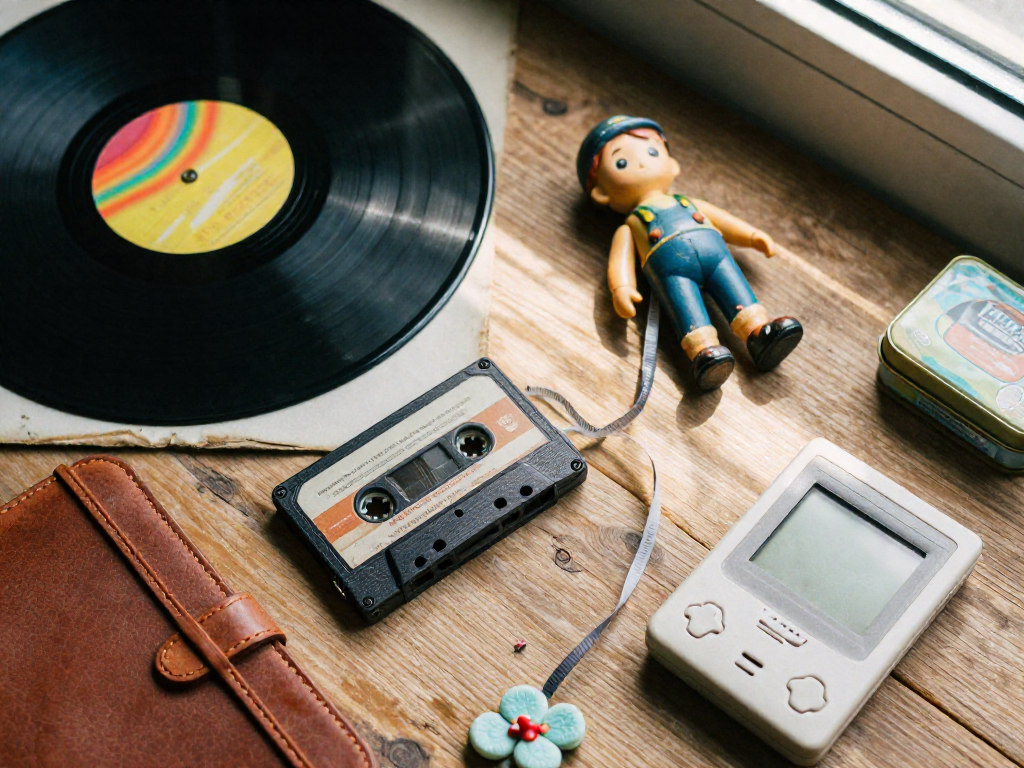
The #1 Mistake That Turns Collecting Into Clutter
Here's the trap almost every new collector falls into: you spot a dusty cassette at a yard sale, your heart does a little flip, and suddenly it's in your bag. Then it happens again next weekend. And again. Six months later you've got a closet full of orphaned items that don't really go together — and no clue what to do with any of them.
That's the difference between accumulating and collecting. Accumulating is buying first and figuring it out later. Collecting is deciding, even loosely, what you're after before the impulse hits. One leaves you with clutter and buyer's remorse; the other leaves you with something that actually feels like yours.
The good news? You don't need a spreadsheet or a fat wallet to avoid the mess. A tiny bit of planning — picking a focus, setting a rough budget, knowing what "good condition" looks like — saves you real money and a whole lot of heartbreak. Most regret in this hobby comes from the things we grabbed without thinking, not the ones we chose on purpose.
And here's the reassuring part: this framework works no matter what pulls at your nostalgia. Vinyl, arcade flyers, original Star Wars figures, your old Saturday-morning cereal toys — the same handful of decisions applies to every retro category. Get the thinking right once, and you can point it at anything.
So before you buy another thing, let's talk about how to choose your lane.
Step 1: Pick a Focus (Niche Down Before You Buy)
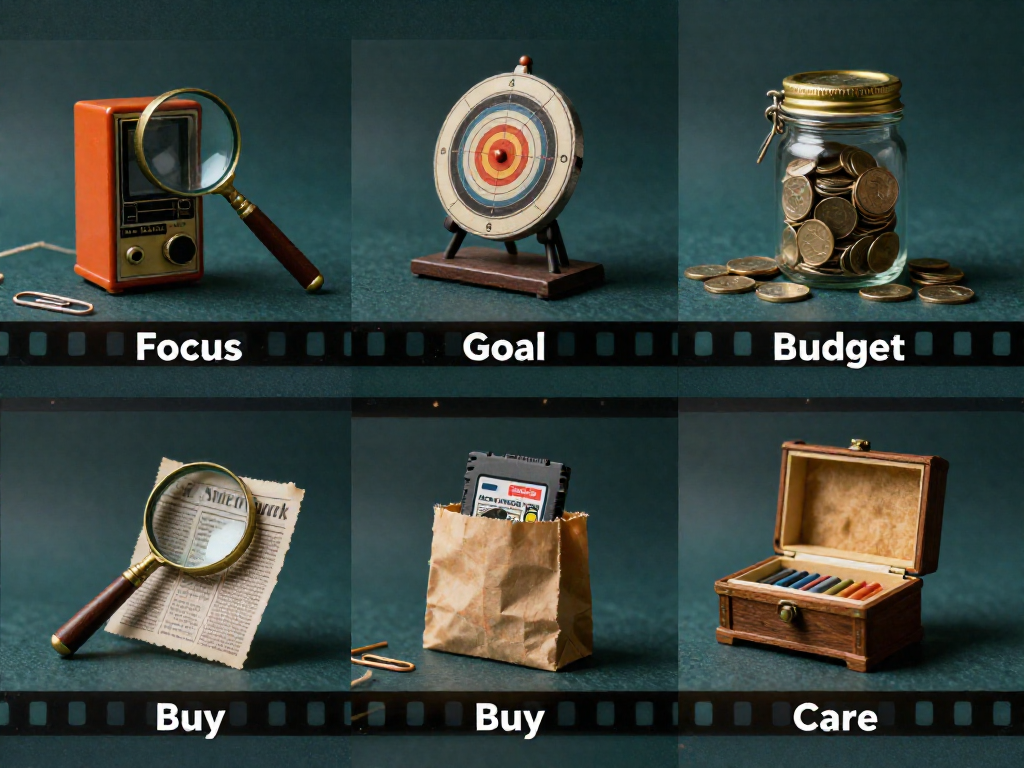
Here's the truth nobody tells new collectors: "I collect retro stuff" isn't a collection. It's a shopping list with no edges. When everything qualifies, every flea market table, every thrift bin, and every late-night eBay scroll becomes a temptation — and your shelves fill up with random things you don't even love. A tight theme does the opposite. It gives your collection an identity, keeps it affordable, and turns the hunt into something you can actually win.
So before you buy anything, pick a focus. There's no wrong way to do it — just choose the angle that makes your heart race a little:
- By era: Only 1980s, or only the cassette-and-boombox stretch of roughly 1979–1991.
- By format: 45 RPM singles, cassette tapes, or arcade flyers instead of "all music stuff."
- By franchise: Star Wars (debuted 1977), Teenage Mutant Ninja Turtles (the toy line launched 1988), or one band's discography.
- By color or design: Picture discs, clear/colored vinyl, or a single toy line's packaging.
- By condition: Sealed and mint, or proudly played-and-loved — both are valid, and the loved stuff is cheaper.
- By personal memory: The exact toys, tapes, or games you had as a kid. This one's my favorite, because it can't be faked.
A few examples to make it concrete. Instead of "vinyl," try soul 45s from your hometown labels. Instead of "cassettes," try original-run movie soundtracks on tape. Instead of "arcade," chase original arcade flyers (a fraction of the cost of a cabinet). Instead of "retro toys," go after one He-Man wave rather than the whole 1982–1987 line.
The magic of a focus is the word it hands you: no. When a seller waves something shiny at you that's outside your lane, you get to walk away guilt-free. That saved money goes toward the pieces that actually belong. Your collection gets deeper instead of just bigger, and "deeper" is what makes it feel like yours.
One more thing, because rules need an escape hatch: you're allowed to evolve. Plenty of collectors start with the toys they owned, drift into the comics those toys came from, and end up somewhere they never expected. A focus isn't a cage — it's a starting point. Pick one today so you can start hunting with purpose, and let it grow up alongside you.
Step 2: Define Your Goal (Why Are You Collecting?)
Here's the question that saves you the most money and heartache: why are you collecting this stuff? Your answer shapes everything — your budget, what condition you'll accept, and what makes you feel like you scored versus settled.
Most collectors fall into one of five camps:
- Nostalgia and joy — you want the He-Man figure you had in 1985, not a pristine investment. A played-with, slightly scuffed copy is perfect, and cheaper.
- Display — looks matter most. You'll care about cover art, color, and shelf presence more than whether the cassette still plays.
- Completion — you want the whole set. Be honest about how big that set is before you start (some toy lines ran dozens of figures).
- Investment — you're hoping it appreciates. This means sealed, graded, and documented — and a lot more cost up front.
- To use or play — you actually want to spin the vinyl or beat the arcade cartridge. Condition matters functionally, not cosmetically.
Each goal quietly changes what you buy. Chasing nostalgia? A loose, well-loved item at a flea market for a few bucks beats a $200 graded one. Going for investment? That same loose item is basically worthless to you, and you'll want a sealed copy with a grading slab. Mixing these up is how people overpay.
The trap to avoid: secretly wanting both joy and investment without admitting it. You buy a sealed Star Wars figure "as an investment," then can't bring yourself to open the toy you actually wanted to hold. Or you open it for the joy and feel a pang watching the "value" evaporate. Pick a lane per item and you sidestep that regret entirely.
A quick gut-check before you buy anything:
- Would I be happy with this if it never went up in value?
- Do I want to experience it, or preserve it? (You usually can't do both with the same copy.)
- Am I buying this for 12-year-old me, or for a future resale spreadsheet?
There's no wrong answer — there's just your answer. Name it now, and every purchase after this gets easier.
Step 3: Set a Budget You Won't Resent
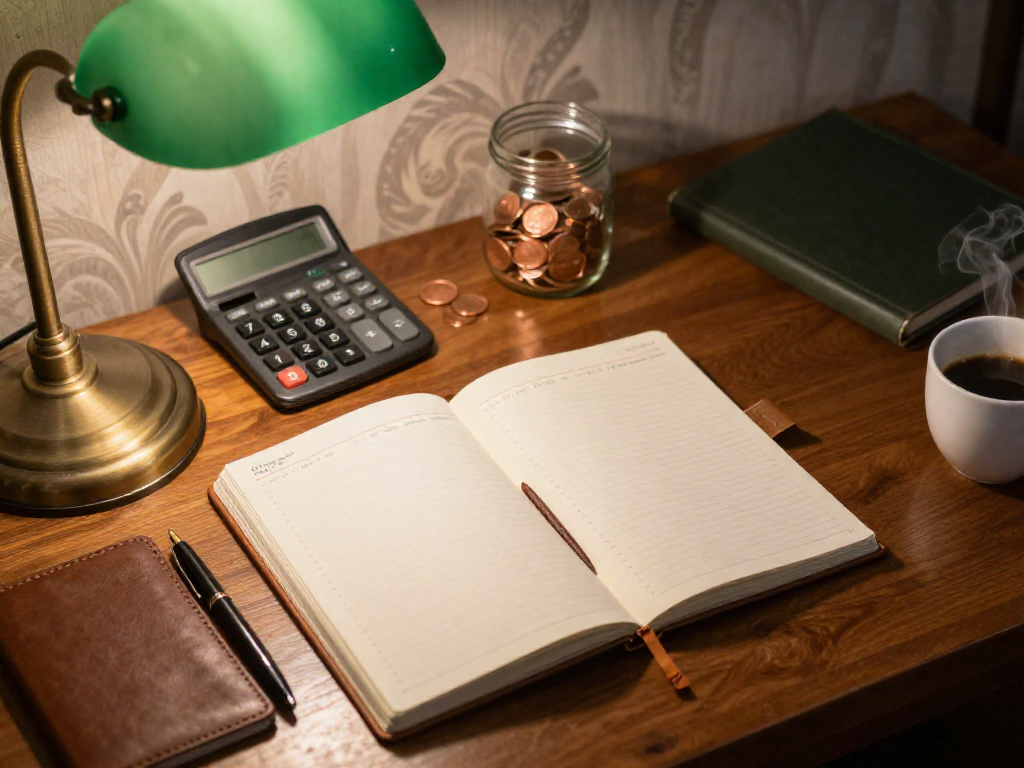
Here's the truth nobody tells you when you're chasing that mint-condition He-Man figure or a sealed copy of Thriller on vinyl: the fun dies the moment your hobby starts feeling like a bill. So before you browse a single listing, set a monthly cap. Pick a number that wouldn't sting if it vanished — $20, $50, whatever fits your life. Treat it like your old allowance: when it's gone, you're done until next month. That single habit prevents 90% of collector's remorse.
One nice piece or several cheap ones?
This is the classic fork in the road. You can spend your whole monthly budget on one standout item, or spread it across a few bargain finds. Neither is wrong. If you love the thrill of the hunt and want a fuller shelf fast, grab the cheap-but-fun pieces. If you'd rather own something you'll be proud of for years, save up and buy one quality item. My advice for beginners: lean toward fewer, better pieces. A small, curated shelf beats a bin of stuff you stop caring about.
Watch the hidden costs
The sticker price is rarely the real price. Budget for:
- Shipping — often $5–$15, and fragile items cost more to pack safely
- Storage and supplies — sleeves, boxes, display cases, acid-free dividers
- Grading — optional, but services like PSA or CGC charge per item if you ever go that route
- Repairs or cleaning — a $10 cassette deck belt, a record-cleaning kit, replacement parts
These add up quietly. Pad your monthly cap to account for them so a "$30 find" doesn't quietly become $50.
The 24-hour rule
Found something you have to have at 11 p.m.? Close the tab and sleep on it. If you still want it tomorrow, buy it guilt-free. Nine times out of ten, the late-night itch fades — and the listing's usually still there. This one rule alone will save you more money than any coupon code.
Start small, one piece at a time
You don't need a big budget to begin. Hit local thrift stores, estate sales, and Facebook Marketplace where retro records, cassettes, and loose toys often go for $1–$10. Buy one thing you genuinely love, enjoy it, then come back next month. Collecting is a marathon, not a sprint — and the slow way is the fun way.
Step 4: Learn Before You Spend (Quick Research Habits)
Here's the good news: you don't need to become an expert before you buy your first piece. You just need a few five-minute habits that keep you from overpaying or accidentally bringing home a reproduction.
Check what things actually sell for. Ignore asking prices — anybody can list a beat-up cassette for $200; that doesn't mean it sells. On eBay, run a search, then filter to Sold Items. That shows you the real, recent prices people paid. Do this two or three times for the same item and you'll have a reliable range in your head. That alone will save you from impulse regret.
Learn to spot repros, bootlegs, and reissues. Reproductions aren't always scams (a $15 reissue poster is great wall art), but you don't want to pay original prices for one. Look for tell-tale signs: blurry or off-color printing, missing copyright or date stamps, modern barcodes on "vintage" packaging, and prices that seem too good to be true. When in doubt, compare against photos of a verified original.
Get the basics of condition grading. You don't need the full jargon. For most hobbies it boils down to a simple ladder: Mint (looks unused), Near Mint, Very Good (light wear, still nice), Good (visibly used but intact), and Poor (damaged). Condition often matters more than rarity, so always check photos for creases, scratches, water stains, and whether the original packaging is included.
Find your people. Join one or two communities — a subreddit, a Facebook group, or a Discord for your niche. Follow a single trusted source rather than chasing everyone. Ask questions; collectors love sharing what they know.
Finally, let patience do the heavy lifting. That "rare" find will come around again — these items were mass-produced, after all. FOMO empties wallets. The right piece at the right price is worth the wait, and the hunt is half the fun.
Step 5: Make Your First Smart Purchase
Here's the fun part. You've picked a focus, named your goal, set a budget, and done a little homework. Now you get to actually buy something — and there's a real thrill to holding that first piece.
Pick a starter that fits. Resist the urge to chase the "grail" right away. Your first buy should land comfortably inside your budget and squarely in your focus. If you're collecting 1980s arcade memorabilia, a $15 flyer or token beats blowing your whole month's allowance on a cabinet you can't move. A low-stakes first piece keeps the hobby joyful instead of stressful.
Know where to look. Each spot has its own flavor:
- Thrift stores & flea markets — cheapest, most random, best for the thrill of the hunt ($1–$20 finds).
- Estate sales — fantastic for intact collections; show up early or at the half-price final day.
- Local shops — pricier, but you get expertise and a relationship.
- Online (eBay, Etsy, Discogs, Mercari) — biggest selection; great for comparing real sold prices.
Inspect before you pay. In person: check for cracks, water damage, missing parts, and mismatched pieces. For vinyl, tilt the record under light to spot scratches. Online: ask for extra photos, read the seller's feedback, and be wary of stock images, vague descriptions, or "rare" labels with no proof.
Log it. A simple spreadsheet or a notebook works fine — record what it is, the date, what you paid, where you got it, and condition. Future-you will thank present-you when you can't remember if you already own that issue.
Celebrate, then breathe. You did it! Enjoy the piece. Display it, tell someone the story behind it, sit with the satisfaction. There's no rush to grab the next one. The best collections grow slowly, one thoughtful find at a time.
Caring For and Growing Your Collection
Here's the part nobody tells you when you're chasing that first great find: keeping it nice is half the hobby. The good news? Protecting your stuff is cheap and mostly common sense.
Match the storage to the material. Each format has one big enemy:
- Paper (comics, manuals, trading cards): slip into acid-free sleeves and bags. Store upright, not stacked, so the bottom items don't bow.
- Vinyl records: keep them vertical like books—never flat, never leaning. Use poly outer sleeves and replace the flimsy paper inner sleeves with anti-static ones.
- Cassettes and VHS (magnetic tape): keep them away from magnets and speakers, and rewind tapes fully before long-term storage.
- Plastic toys and figures: dust kills the look more than anything; a closed display case or bin does wonders.
- Electronics (consoles, handhelds): pull the batteries out. Decades-old AAs leak and corrode contacts.
The universal three rules: avoid direct sunlight (it fades box art and warps vinyl), keep humidity moderate (a tiny silica-gel pack in a bin helps), and skip the attic, garage, or basement—heat and damp swings are where collections quietly die.
Affordable supplies worth it: acid-free bags and boards (often under $0.25 each in bulk), poly record sleeves, a soft microfiber cloth, and a few plastic storage bins. You do not need a climate-controlled vault.
As you grow, let go of upgrades. When you find a cleaner copy of something you own, sell or trade the duplicate—that money funds the next find and keeps shelves from overflowing.
Finally, pace yourself. Buy a little, enjoy it, then buy more. A collection you can store, see, and afford beats a pile of boxes you'll someday dread sorting.
Your No-Regret Starter Checklist
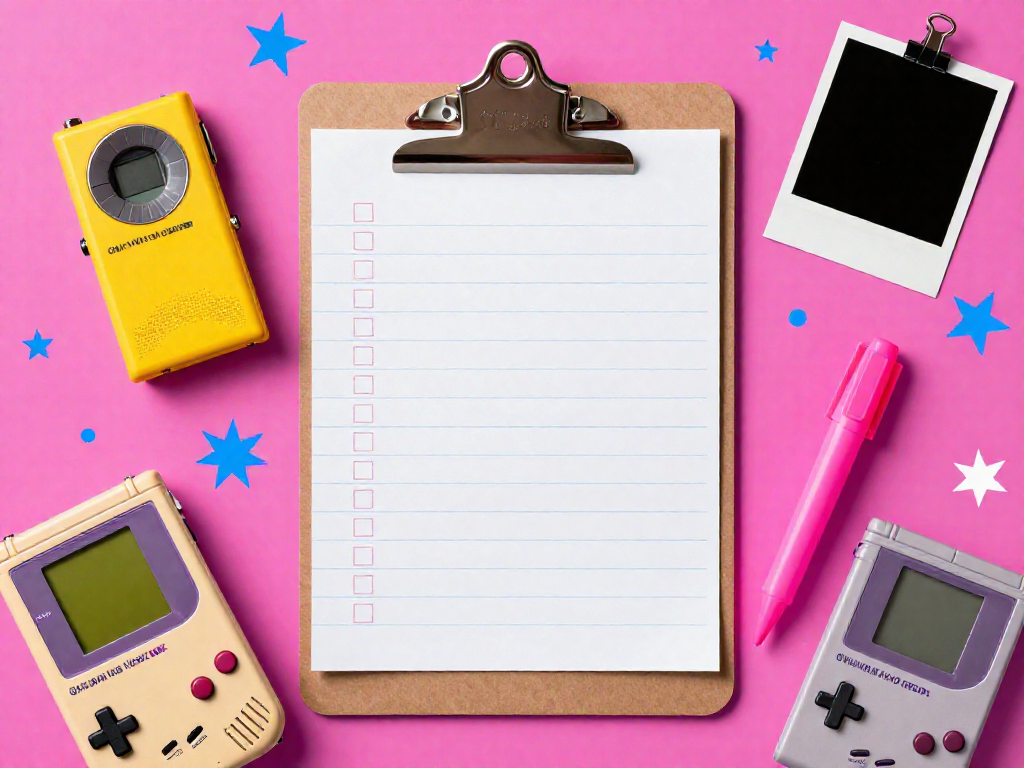
Pin this, screenshot it, tape it to your record shelf — here's the whole framework in one glance:
- Pick a focus. One niche, not "all retro everything." A single Sega franchise beats a garage full of random.
- Define your goal. Display, play, nostalgia, or resale? Your why decides your what.
- Set a budget you won't resent. A monthly number you'd happily blow on tacos. Stick to it.
- Research before you spend. Five minutes of sold (not asking) prices on eBay saves you from overpaying.
- Make one smart first buy. A piece you love, in honest condition, at a fair price. Done beats perfect.
- Care for it. Sleeves, shelves, out of the sun and the damp basement.
The mantra: If you have to talk yourself into it, sleep on it. Regret almost always shows up the day after an impulse grab — never the day after a patient pass.
Start small. One cassette, one cartridge, one well-loved action figure. The fun was never in owning everything — it's in the hunt, the find, and the little jolt of "I remember this." Go enjoy it.
FAQ
What is the easiest collection to start for beginners?
Start with something you already love and can find easily, because passion keeps the hobby fun and affordable. Great beginner-friendly categories include cassette tapes, paperback books, action figures, postcards, enamel pins, and vintage matchbooks or trading cards. These tend to be plentiful, cheap (often $1–$10 per item), and forgiving if you make a few rookie mistakes. A simple rule: pick one narrow theme, like '80s sci-fi cassettes or a single toy line, so you have a clear lane instead of buying everything you see.
How much money do I need to start collecting?
You can start meaningfully with $20 to $50. Plenty of beloved retro items, like loose action figures, cassettes, comics in reader condition, or vintage postcards, sell for a few dollars each at thrift stores, estate sales, and flea markets. Set a small monthly budget you won't miss, say $25, and treat it as your 'fun fund.' Collecting is a marathon, not a shopping spree, so slow, steady buying beats one big splurge and helps you learn what things are actually worth before you spend more.
Should I collect for fun or for investment?
For beginners, collect for fun first. Most collectibles are not reliable investments, values swing with nostalgia trends, and the rare home-run pieces are the exception, not the rule. If an item brings you joy on your shelf, it has already paid you back regardless of resale value. Treat any future appreciation as a bonus, not the goal. The collectors who avoid regret are the ones buying things they'd happily keep forever, not chasing the next item that 'might' be worth money someday.
How do I avoid buying fakes or reproductions?
Learn the originals before you buy. Study real examples online, on collector forums, and in reference guides so you know the right logos, fonts, copyright dates, and packaging for the era. Watch for red flags: prices that seem too good to be true, blurry photos, missing date stamps, overly crisp 'vintage' artwork, and sellers who can't answer basic questions. Reproductions often have modern barcodes or slightly off colors. When in doubt, ask a collecting community to weigh in before paying, and favor sellers with strong reviews and clear return policies.
Where is the best place to buy retro collectibles cheaply?
The cheapest finds usually come from in-person hunting: thrift stores, garage and estate sales, flea markets, and local swap meets, where sellers often don't know exact values. For convenience, online marketplaces like eBay, Mercari, Facebook Marketplace, and Etsy offer huge selection, though prices run a bit higher. A smart approach is to scout online to learn typical price ranges, then hunt locally for deals below those numbers. Don't overlook your own attic, relatives' basements, and library or record store clearance bins either.
How do I know if a collectible is worth the price?
Check what similar items actually sell for, not just asking prices. On eBay, filter by 'Sold Items' to see real transaction prices for the same piece in similar condition. Compare across a few listings to find a realistic range, then factor in condition, completeness (box, inserts, manuals), and rarity, which strongly affect value. As a rule, never pay more than you'd be happy to own it for, since resale isn't guaranteed. If a price sits well above recent sold prices, wait, another copy almost always shows up.
See also
- Beginner's guide to collecting vinyl records
- How to spot fake or reissued cassettes and records
- Where to find cheap retro toys at thrift stores and estate sales
- How to store and protect vinyl, cassettes, and retro electronics
- Best apps and sites for checking collectible prices
Related articles
Why We Get So Nostalgic for the 90s, According to Memory
Why does retro stuff make us so nostalgic? The memory science behind 90s nostalgia—and why we collect the toys, tapes, and games of our childhood.
Jun 27, 2026 · 10 min read
How to Insure and Catalog a Growing Collection
Learn how to catalog your retro collection with free tools and protect it with the right insurance. Simple, beginner-friendly steps you can start today.
Jun 27, 2026 · 10 min read
How to Negotiate Prices Without Being Awkward About It
Learn how to negotiate prices on retro collectibles without the awkwardness. Friendly scripts, fair offers, and beginner tactics for vinyl, toys, and more.
Jun 27, 2026 · 7 min read