How to Negotiate Prices Without Being Awkward About It
How do I haggle for collectibles politely?
On this page
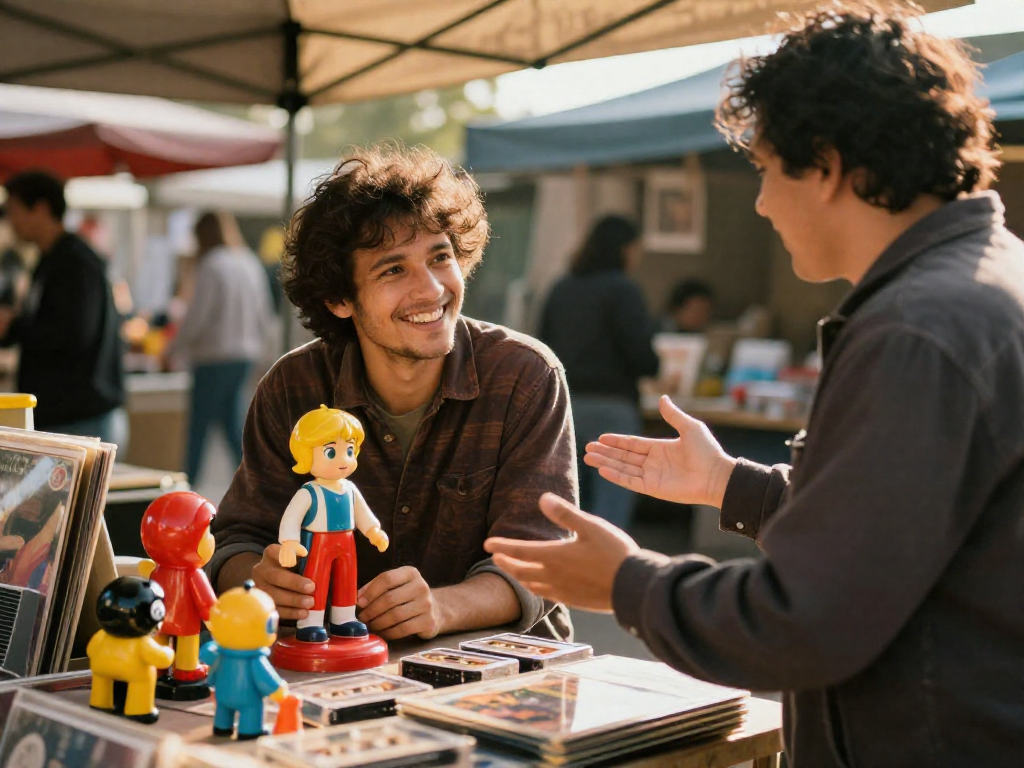
Open by naming the universal cringe of asking "what's your best price?" at a flea market or estate sale, then reassure the reader that polite haggling is expected, low-stakes, and learnable. Promise word-for-word scripts so they never have to improvise on the spot.
Why Haggling at Flea Markets and Sales Is Totally Normal
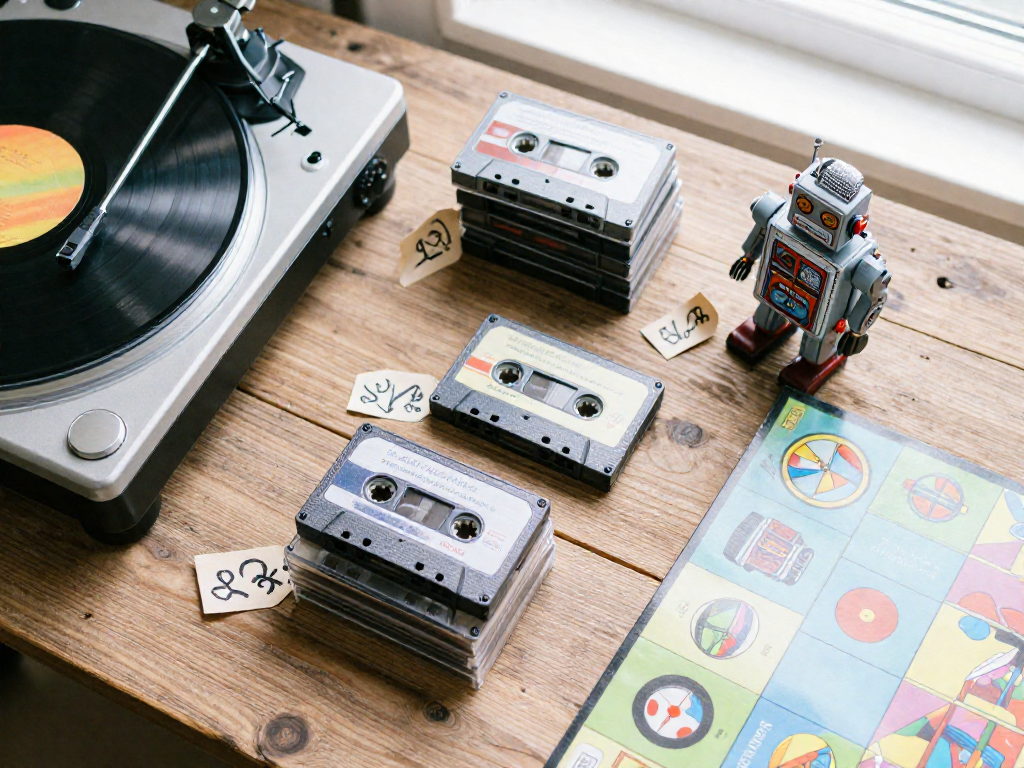
Here's a secret that takes the pressure off: most sellers expect you to ask. When a vendor tags that dusty box of cassette singles or a boxed He-Man figure, they usually build a little wiggle room into the price, fully assuming someone will offer less. You're not crashing the party—you're playing your part in it.
Think of negotiating as a friendly chat, not a showdown. A polite "Would you take $15 for this?" won't offend anyone; it's just how the dance works. Worst case, they say no and you smile and decide.
The trick is knowing where it's fair game:
- Go ahead and haggle: flea markets, garage and estate sales, swap meets, and vendor booths at record or toy shows.
- Pay the sticker: fixed-price retail stores, museum gift shops, and most online listings with a set "Buy It Now" price.
Match the setting, stay warm, and it never feels awkward.
Do Your Homework Before You Open Your Mouth
Here's the secret to haggling without the sweaty palms: confidence comes from knowing what something is actually worth. When you've got real numbers in your back pocket, an offer stops feeling like a lowball and starts feeling like a fair conversation.
Start with sold prices, not listed prices. Anybody can ask $80 for a beat-up copy of Thriller—what matters is what people actually paid. On eBay, filter your search to "Sold Items." On Discogs, check the release page's price history, which shows real transactions. Look at the last several sales to find a realistic middle, not the one wild outlier.
Next, inspect for condition flaws, because that's where your leverage lives. For vinyl, check for scratches, warping, ring wear, and seam splits. For toys and games, note missing pieces, loose joints, or faded boxes. Cassettes? Watch for cracked shells and warped labels. Each flaw is a polite, factual reason your offer sits below sticker price.
Finally, set your walk-away number before you say a word. Decide the most you'll happily pay, then relax—if the seller won't meet it, you smile and move on. No regret, no pressure. That quiet certainty is exactly what makes a negotiation feel easy instead of awkward.
Friendly Opening Lines That Break the Ice
Here's the good news: the seller at that flea market table or garage sale wants to make a deal. The trick is opening the conversation in a way that feels human, not like a courtroom cross-examination. Lead with warmth, and the price talk takes care of itself. Bookmark these copy-paste scripts and pull one out next time you spot that dusty Atari cartridge or a crate of 45s.
The soft opener. When you're not sure if there's wiggle room, keep it gentle:
"Is there any flexibility on the price?"
It's polite, it's pressure-free, and it gives the seller an easy yes. Nobody feels cornered, and you've opened the door without naming a number.
Lead with genuine interest. Connection comes before negotiation. A quick compliment or a memory does more than any hardball tactic:
"Oh man, I had this exact Fisher-Price record player as a kid—it's in great shape. Is the price firm?"
Sellers love passing their stuff to someone who actually cares about it. That goodwill often shaves a few dollars off all on its own.
The bundle script. Buying a few things? Volume is your friend:
"If I took these three, could you do a better price on the lot?"
Sellers would rather move three items than one, so bundling almost always earns a discount—and it feels generous, not stingy.
The cash script. Cash is fast, final, and frees them from card fees:
"I've got cash—would $20 work?"
Aim a bit below your real ceiling so there's room to meet in the middle.
Say any of these with a smile and a relaxed tone. The words matter less than the friendly energy behind them—you're two people who love old stuff, working out a fair deal.
How to Make a Fair Offer (Without Lowballing)
Here's the good news: making a fair offer is more about math than nerve. A simple starting point is the 10–20% rule. If a dealer has that boxed He-Man figure marked at $40, your first offer lands somewhere around $32–$36. That's polite, it signals you know the item has real value, and it leaves room to meet in the middle near $37 or $38. Everybody walks away feeling good.
The trick is to anchor without insulting. Offering $15 on a $40 piece doesn't feel like a deal to the seller — it feels like you're telling them their stuff is junk. A gentle anchor a little below your target keeps the conversation friendly and moving.
When you do want to push lower, let the condition do the talking. Instead of "this is kind of beat up," try "the spine's a little sun-faded and there's a price sticker on the back — would $30 work?" You're giving a reason, not lodging a complaint. Sellers respect that.
Most of all, remember that a fair deal beats "winning." The vendor at your local record fair or monthly flea market is someone you'll see again. Squeeze them for every last dollar once and you've burned a bridge. Treat them fairly and you become the regular who gets the first look at the good stuff before it ever hits the table.
Handling 'No' Gracefully and Walking Away
Here's the secret that takes all the pressure off: hearing "no" is not a failure. It's just information. Most sellers have a number in their head, and if your offer lands under it, a friendly decline is simply where the conversation pauses.
When that happens, keep it light: "No worries, thanks anyway!" That one phrase keeps the door open for the next time you cross paths—and at flea markets and record shows, you will cross paths again. If it's a dealer you'd love to buy from down the road, leave your number or a card and ask them to give you a shout if the price ever moves.
Then do the thing that quietly works wonders: politely walk away. A slow, genuine "thanks, take care" sometimes triggers a "hold on—how about $X?" before you've made it ten feet.
And if it's a true grail piece you've chased for years? It's perfectly okay to just pay full price and walk off grinning.
FAQ
Is it rude to haggle at an estate sale or flea market?
Not at all—at flea markets and estate sales, polite negotiating is part of the culture and sellers usually expect it. The key is to be friendly and respectful: greet the seller, show genuine interest in the item, and ask something simple like, "Is there any wiggle room on this?" Avoid insulting the merchandise to talk down the price; that's what actually comes across as rude. At estate sales, prices often drop on the final day (frequently 25–50% off), so if haggling feels uncomfortable, you can simply wait for the discount.
What percentage off should I ask for on collectibles?
A reasonable opening ask is usually 10–20% off the marked price, which leaves room to settle somewhere in the middle. On higher-priced or clearly overpriced items you can start closer to 25–30%, but going much lower than that can stall the conversation. Bundling helps too: offering to buy three records or a stack of toys together often earns a better per-item deal than negotiating each one. Always anchor your offer to what similar items actually sell for—a quick check of completed eBay listings gives you a realistic ballpark before you name a number.
Can you negotiate prices in antique stores?
Yes, more often than you'd think—many antique malls and shops build a little flexibility into their prices, and individual booth dealers frequently authorize the front desk to take 10–15% off. The most reliable approach is to ask, "Is this your best price, or is the dealer open to offers?" Items with a long sticker date, dust, or a faded tag are usually negotiable since they've been sitting a while. Cash can sweeten the deal, and being kind to the staff goes a long way, since they're often the ones relaying your offer to the booth owner.
How do I haggle online without offending the seller?
Online negotiating works best when it feels like a respectful conversation, not a lowball. On eBay, use the "Make Offer" button when it's available and keep your bid within about 10–20% of the asking price. On Facebook Marketplace or in collector groups, a quick polite message—"Love this piece! Would you consider $X?"—works far better than a blunt number. Mention condition details or comparable sold prices to justify your offer rather than just asking for less. And if they decline, thank them; sellers remember courteous buyers and sometimes circle back with a better price later.
What do I say if the seller says no?
Take it gracefully—a simple "No worries, thanks for considering it" keeps the door open. You can try one gentle follow-up, like asking whether they'd do a slightly different number or include a small extra item to sweeten the deal, but don't push past a second no. If the price still doesn't work for you, it's perfectly fine to politely walk away; with retro collectibles, another copy almost always turns up. Leaving your contact info or saying "Let me think on it" sometimes nudges a seller to reach out later when they're ready to move the piece.
See also
- Beginner's guide to collecting vinyl on a budget
- How to spot fakes and reproductions in retro toys
- Where to find the best deals at estate sales and flea markets
- How to grade the condition of cassettes and vinyl
Related articles
Why We Get So Nostalgic for the 90s, According to Memory
Why does retro stuff make us so nostalgic? The memory science behind 90s nostalgia—and why we collect the toys, tapes, and games of our childhood.
Jun 27, 2026 · 10 min read
How to Insure and Catalog a Growing Collection
Learn how to catalog your retro collection with free tools and protect it with the right insurance. Simple, beginner-friendly steps you can start today.
Jun 27, 2026 · 10 min read
A Quick Glossary of Collecting Terms Every Beginner Should Know
Confused by MIB, NM, repro, and OOP? This beginner-friendly glossary explains the retro collecting terms you'll see on eBay, in groups, and at flea markets.
Jun 27, 2026 · 5 min read