Collectible Grading Explained for People Who Hate Jargon
How does grading work for collectibles?
On this page
What "Grading" Actually Means (and Why People Bother)
Picture handing your beat-up childhood Star Wars figure to a stranger and asking, "How much is this worth?" You'll get one answer. Now imagine a neutral expert — someone with no stake in the sale — examining it and stamping it with a condition score on a fixed scale everyone agrees on. That, in plain English, is grading: a trusted third party rating an item's condition so nobody has to take your word for it.
Here's why people go to the trouble.
It builds trust between strangers. Most collectibles change hands between people who've never met, often online. "Mint condition!" means nothing when the seller is the one saying it. A grade from a recognized company turns a personal opinion into something closer to a fact, which makes buyers comfortable paying real money sight unseen.
Top condition can multiply the price. With collectibles, the gap between "pretty good" and "basically flawless" isn't a few dollars — it can be the difference between a $40 item and a $400 one. A high grade is the proof that justifies that premium. For ordinary used stuff, condition nudges the price. For collectibles, it can transform it.
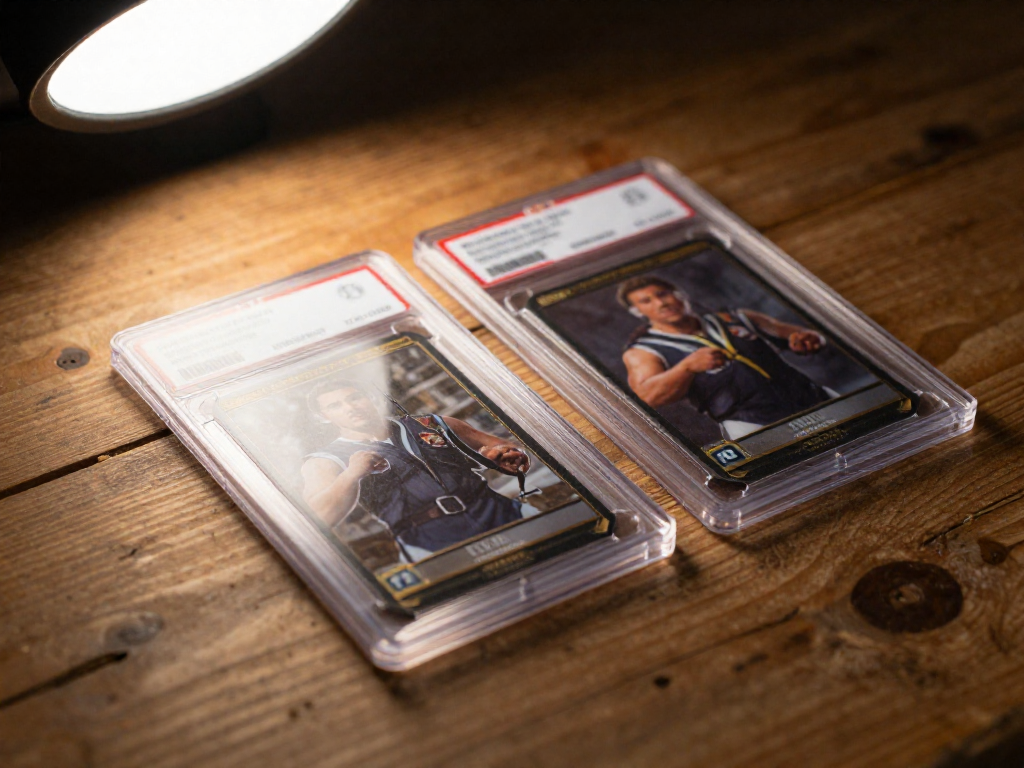
Once an item is graded, it usually gets sealed inside a clear, tamper-evident case — collectors call it a "slab" — with the grade printed right on the label. The upside: the score is locked in and the item is protected. The trade-off: you can't take it out and touch it anymore without breaking the seal (and the grade).
Why does condition matter so much here? Because you're not buying a tool, you're buying a feeling and a moment in time. A sealed 1985 toy or a near-perfect record sleeve is a tiny piece of the past that survived against the odds, and survival is rare.
One quick myth to bust before we go further: grading does not make a common item rare. A mass-produced card that millions own is still common after grading — you'll just have an officially documented common card. Grading measures condition, not scarcity. Keep that straight and you'll avoid the most expensive beginner mistake there is.
The Universal 1–10 Logic Behind Almost Every Scale
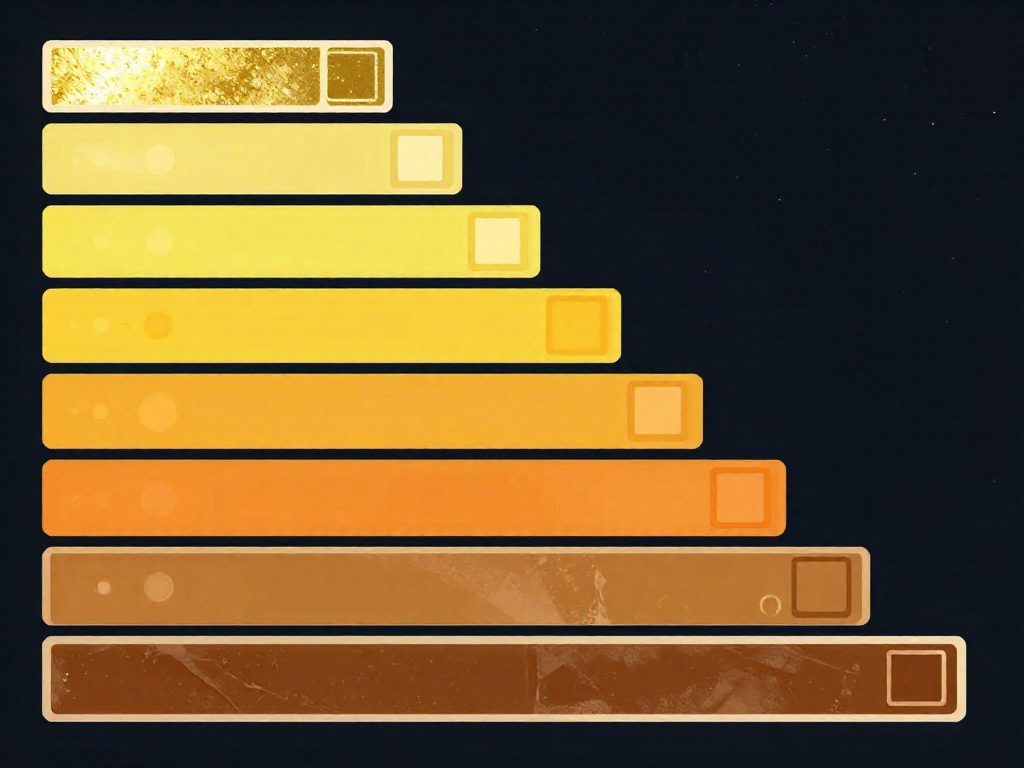
Here's the good news: once you understand one grading scale, you basically understand all of them. Whether you're staring at a graded comic, a slabbed trading card, or a vinyl record listing, almost everyone is speaking the same language. Numbers run from low (loved hard, played often, a little rough) to high (looks like it teleported straight from 1987 without a scratch). Most commonly, that's a 1-to-10 range.
Those numbers usually map to plain-English tiers, and learning them is half the battle:
- Poor / Fair (1–2): Heavy wear, maybe creases, writing, or damage.
- Good / Very Good (3–5): Clearly used but holding together nicely.
- Fine / Very Fine (6–7): Light wear, still very presentable.
- Near Mint (8–9): Almost perfect, with only tiny flaws under scrutiny.
- Mint / Gem Mint (9.5–10): As close to factory-fresh as it gets.
(Heads up: record collectors use letter codes like VG+ and NM instead of numbers, but the low-to-high idea is identical.)
What graders are actually staring at
When a professional grades something, they're checking the same handful of things you can check yourself:
- Corners — sharp and crisp, or soft and rounded?
- Edges — clean, or nicked and frayed?
- Surface — scratches, scuffs, fingerprints, or print defects?
- Centering — is the image or label printed evenly, or shifted to one side?
- Color & gloss — still vibrant and shiny, or faded and dull?
Pull an item into good light and run through that list. You're now doing 80% of what a grader does.
Why a 9 and a 10 are worlds apart
This is the part that surprises newcomers: the jump from a 9 to a 10 can multiply the price several times over, even though the two items look nearly identical to your eye. Collectors call this the "condition cliff." Because flawless examples are rare, demand for that top grade gets intense. The practical takeaway for a beginner on a budget: a sharp-looking 8 or 9 often gives you 95% of the joy for a small fraction of the cost.
Subgrades, demystified
Some grading companies also list subgrades — a separate little score for each factor (corners, edges, surface, centering). Think of it like a report card instead of a single overall GPA. A card might earn an overall 9 but show a 10 for centering and an 8 for corners. Subgrades just tell you where the points were won or lost, so you know exactly what you're paying for.
Grading Scales by Category, Translated
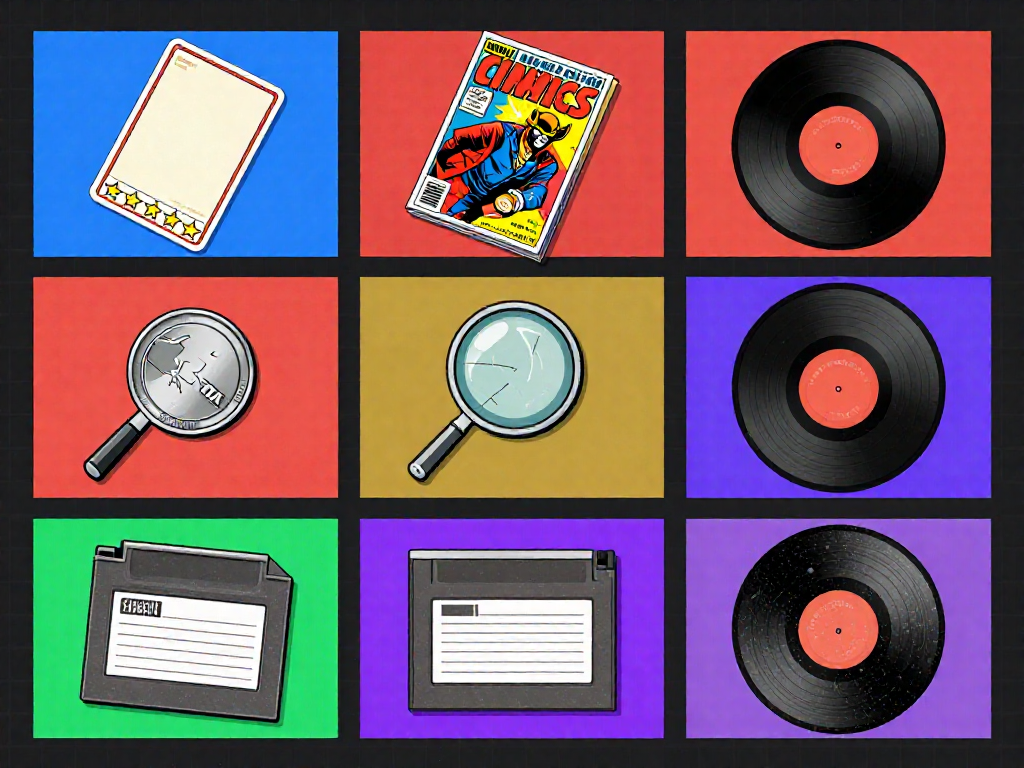
Every hobby invented its own scale, which is exactly why grading feels like alphabet soup. Here's the plain-English decoder for the five categories retro collectors actually bump into.
Trading cards (PSA, Beckett/BGS, CGC)
These run on a clean 1–10 scale. A PSA 10 ("Gem Mint") means sharp corners, perfect centering, and no print flaws under scrutiny — the card looks like it teleported out of 1991. A PSA 9 ("Mint") is gorgeous to the naked eye but has one tiny imperfection. That single point can mean a big price jump, which is why people obsess over it. Beckett's BGS adds half-grades (like 9.5) and four subgrades, so it's a bit pickier.
Comics (CGC, CBCS)
Comics use a 0.5 to 10.0 scale borrowed from old collector terminology. You'll hear endless talk about the 9.8 ("Near Mint/Mint") — it's the sweet spot because true 10s are nearly impossible, so 9.8 is the realistic ceiling most buyers chase. A 9.4 still looks fantastic and usually costs noticeably less.
Coins (the 70-point Sheldon scale)
Coins get the weird math. The Sheldon scale runs 1–70, created in 1949 when a numismatist tried to tie grades to penny values. The numbers stuck even after the pricing logic didn't. So MS-65 (Mint State 65) is a strong uncirculated coin, while AG-3 is barely readable. Just remember: higher number, better coin.
Video games & sealed toys (WATA, CGC)
Sealed games get a combo grade: a box grade (often 1–10, like 9.6) plus a separate seal rating (a letter like A++ describing the shrink-wrap). So "9.6 A+" means a near-perfect box with an excellent factory seal. WATA launched in 2018 and popularized this dual system for cartridges and sealed toys.
Vinyl records (Goldmine scale)
Records mostly skip the slab. The Goldmine scale uses letters: M (Mint), NM (Near Mint), VG+ (Very Good Plus), VG, G (Good). Most vinyl is self-graded by the seller, so it's subjective — which means you inspect it yourself before buying.
Quick comparison
| Category | Scale | "Great but affordable" target |
|---|---|---|
| Trading cards | 1–10 | PSA 8–9 |
| Comics | 0.5–10.0 | 9.4 |
| Coins | 1–70 (Sheldon) | MS-63 to MS-65 |
| Sealed games | Box 1–10 + seal letter | 8.0+ |
| Vinyl | M / NM / VG+ / VG / G | VG+ |
Beginner move: before chasing a top grade, buy one notch down. A PSA 9 card, a 9.4 comic, or a VG+ record gives you 90% of the eye appeal at a fraction of the cost — and that's a smart way to start without draining your wallet.
Should You Actually Get Something Graded? A Reality Check
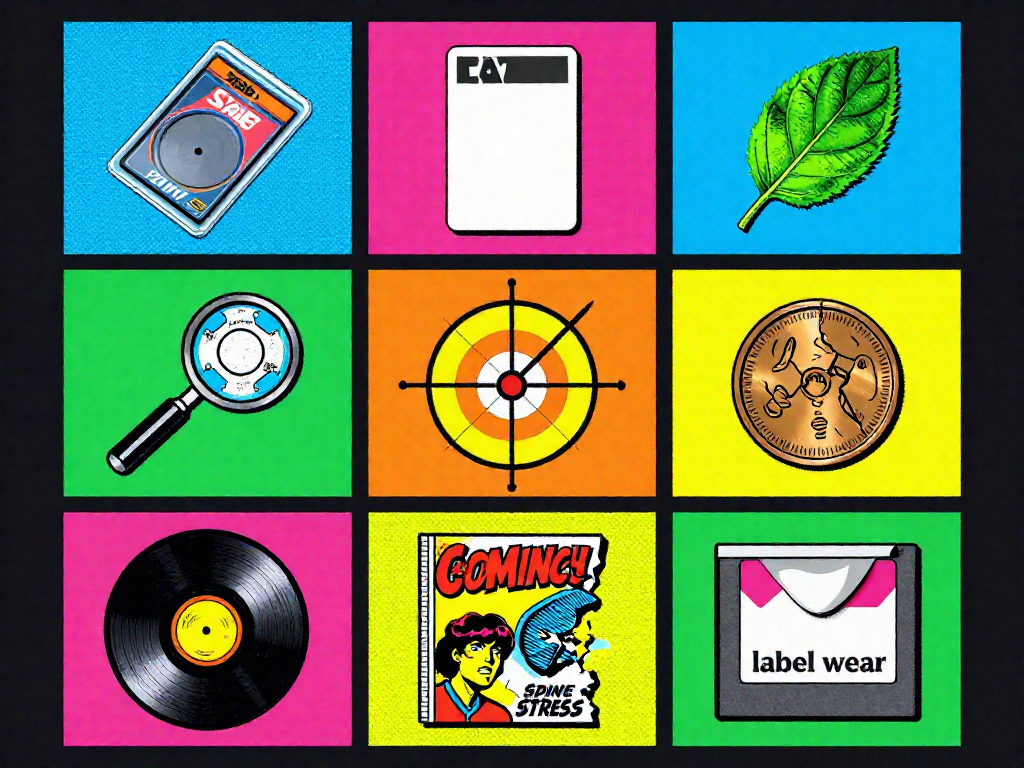
Here's the part nobody tells you when you're standing in your childhood bedroom holding a beat-up Star Wars figure: most things should not be graded. Grading is a tool, not a trophy, and using it wrong just turns your nostalgia into a shipping receipt.
Start with the math, because the math is brutal and honest. Mainstream grading runs roughly $15–$30 per card (PSA, CGC) and $20–$100+ per toy, comic, or game once you factor in tiers, shipping both ways, and insurance. So before you mail anything, ask one question: does grading add more value than it costs?
If your sealed Game Boy game is worth $40 raw, a $30 grading fee plus shipping doesn't magically make it worth $200. It makes it a $40 game that cost you $50 to put in plastic.
Worth grading:
- High-value items, where a clean grade can swing the price by hundreds (think a near-mint vintage Pokémon card or a first-print comic).
- Condition-sensitive items, where buyers pay a premium for proof — a 9.8 sells for dramatically more than a 9.6.
- Authentication cases, where the real worry is "is this fake?" Graded slabs settle that argument for good.
Skip grading:
- Common, mass-produced stuff. That cassette everyone owned in 1987 is still common in plastic.
- Low-value pieces where the fee eats the upside.
- Anything you keep for joy. A slabbed toy you can't touch is just a museum exhibit on your shelf.
That last point matters. Sentimental value is completely real — but it isn't a grade, and a grading company won't pay you for the Saturday mornings that figure reminds you of. Keep those out of the plastic and on display where you can actually enjoy them.
The 60-second gut check before you mail anything:
- Look up recent sold (not listed) prices for the raw version on eBay.
- Look up recent sold prices for the graded version at a strong grade.
- Subtract grading fees and round-trip shipping (budget ~$40 total).
If the graded price minus costs doesn't clearly beat the raw price, keep it raw. Spend that money on the next find instead.
How the Grading Process Works, Step by Step
Sending a treasured comic or boxed action figure off to strangers feels nerve-wracking the first time. Here's exactly what happens, start to finish.
1. Pick a company and service tier. Choose a grader that specializes in your item (cards, comics, coins, video games), then pick a tier. Tiers are basically a trade-off: faster turnaround costs more. Bulk or "economy" tiers often run $15–$30 per item, while express service can climb past $75–$150. For a first submission, the cheapest tier is usually plenty.
2. Package it like it's already worth a fortune. Before anything gets graded, it has to survive the mail. Sleeve and protect the item (a penny sleeve plus a rigid toploader for cards, a bag and board for comics), then pad it inside a sturdy box. Damage in transit gets graded too, so this step genuinely protects your score.
3. Inspection, grading, and encapsulation. At the lab, trained graders examine corners, edges, surface, and centering under good lighting. They assign a number, then seal the item in a tamper-evident plastic case—the "slab"—with a label showing the grade and a unique serial number.
4. Wait (and check the tracker). Turnaround depends on the tier you picked plus current backlog. Economy can take a couple of months; busy seasons stretch it longer. Most companies offer an online status tracker so you're not guessing.
5. When the slab comes back. You can display it, store it upright away from sunlight and heat, or sell it—the sealed grade is now your proof of condition. Resist the urge to crack it open; that voids the whole point.
Jargon Cheat Sheet & Red Flags
Bookmark this part. Once you can decode the lingo, the whole hobby stops feeling like a secret club.
The words everyone throws around:
- Slab — the sealed plastic case a graded item lives in. "Slabbed" just means professionally graded and encased.
- Raw — ungraded, in its natural state. Not an insult, just "not slabbed yet."
- Pop report — short for population report, the grading company's public tally of how many of an item exist at each grade. Fewer = rarer.
- Crossover — sending an already-graded item to a different company hoping for a better grade.
- Label / holder — the printed insert inside the slab listing the item, grade, and serial number.
The grade words, one line each:
- Near Mint — looks great with tiny flaws you'd need to hunt for.
- Mint — basically flawless to the naked eye.
- Gem Mint — the rare, near-perfect top tier with sharp corners and dead-center printing.
Red flags to watch for:
- Counterfeit slabs. Fake cases with real-looking labels exist. Check fonts, hologram quality, and serial numbers.
- "Pressed" or restored items sold as untouched—heat or trimming can hide damage.
- Inflated self-grades. "Mint condition!!!" from a random seller means nothing. Only a third-party grade counts.
Verify before you buy: every major company (PSA, CGC, Beckett, WATA) has a free online database. Type the slab's serial number into their cert-lookup page; the item, grade, and even a photo should match. No match? Walk away.
Beginner buying tip: start with slabbed items from sellers who show clear photos of the front and back of the slab, and stick to certs you can verify yourself. A verified $30 graded card beats a sketchy "rare" one every time.
See also
- Beginner's guide to starting a collection without overspending
- How to spot fakes and reproductions in retro collectibles
- Where to buy vintage toys and cards safely online
- How to store and protect your collection
- Vinyl record condition guide for beginners
Related articles
Why We Get So Nostalgic for the 90s, According to Memory
Why does retro stuff make us so nostalgic? The memory science behind 90s nostalgia—and why we collect the toys, tapes, and games of our childhood.
Jun 27, 2026 · 10 min read
How to Insure and Catalog a Growing Collection
Learn how to catalog your retro collection with free tools and protect it with the right insurance. Simple, beginner-friendly steps you can start today.
Jun 27, 2026 · 10 min read

How to Negotiate Prices Without Being Awkward About It
Learn how to negotiate prices on retro collectibles without the awkwardness. Friendly scripts, fair offers, and beginner tactics for vinyl, toys, and more.
Jun 27, 2026 · 7 min read