Why the Arcade Died — and Why It's Quietly Coming Back
What killed the arcade and is it returning?
On this page
The Golden Age: When the Arcade Was the Center of the Universe

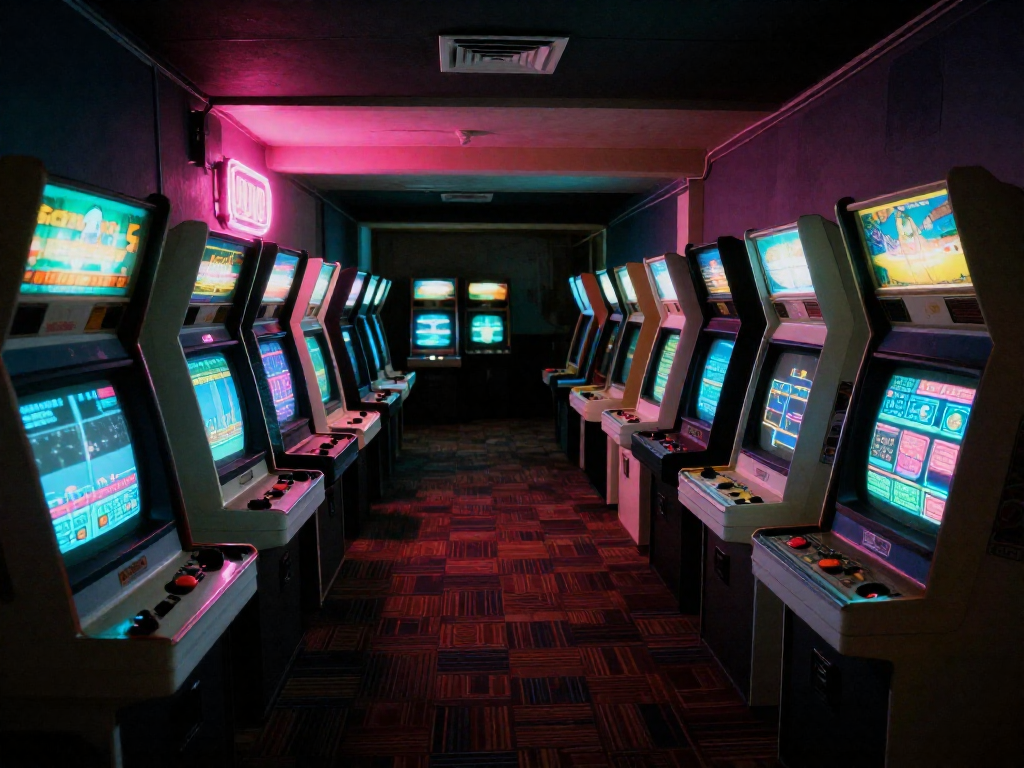
Picture it: a dim room lit by the glow of a hundred screens, the carpet a riot of neon geometry, and that unmistakable wall of sound — laser blasts, coin drops, and the cheerful death-march of a Pac-Man getting cornered. If you grew up anywhere near the late '70s and '80s, you don't just remember the arcade. You can smell it.
This was the golden age, and it arrived fast. Space Invaders landed in 1978 and was such a phenomenon in Japan that it reportedly caused a shortage of 100-yen coins. Pac-Man followed in 1980, becoming the first game to break out beyond the player base into lunchboxes, cartoons, and a top-40 song. Then came Donkey Kong in 1981, quietly introducing a mustachioed carpenter who'd go on to run a small empire. For a few short years, these machines weren't toys — they were the main event.
And the arcade was everywhere. Not just dedicated arcades, but the corner of the pizza place, the front of the convenience store, the back of the mall near the food court. A single cabinet could turn a laundromat into a hangout. For a generation of kids and teenagers, the arcade was the social network — the place you went to be seen, to defend your high score, to stand three-deep behind the best player in town and learn by watching. You didn't text your friends to meet up. You just knew they'd be there, pockets heavy with quarters.
How big did it get? Bigger than you probably think. At its 1981–1982 peak, the U.S. coin-op arcade industry was pulling in billions of dollars a year — figures that rivaled, and by some estimates exceeded, the combined take of the entire pop music industry and Hollywood box office at the time. People were feeding the machines one quarter at a time, and it added up to a cultural juggernaut.
The secret ingredient was something you simply couldn't get at home. The cabinets were experiences — dedicated hardware tuned for one game, with custom controls, vibrant dedicated artwork, and sound systems loud enough to shake your sneakers. Your Atari at home was a fun little echo; the arcade was the real thing, in glorious technicolor. That gap felt permanent. Which is exactly why what came next hit so hard.
What Actually Killed the Arcade
Here's the thing nobody wants to hear: the arcade didn't die in a single dramatic moment. There was no villain, no overnight collapse. It bled out slowly over about fifteen years, and almost every wound was self-inflicted by an industry that got a little too greedy and a little too comfortable.
It started with the 1983 video game crash. By the early '80s, everyone wanted a piece of the gold rush, and the market drowned in clones, knockoffs, and hastily made cabinets chasing the next Pac-Man. Quality cratered, distributors got burned, and consumer trust evaporated. The crash gets talked about mostly in terms of home consoles (E.T. on the Atari 2600 is the famous punchline), but the oversaturation hit arcades too. When every corner store has a worn-out cabinet running a bad game, the magic starts to fade.
Then came the part that really mattered: home consoles caught up. When the NES launched in the US in 1985, it brought arcade-quality experiences into the living room. Super Mario Bros. felt like something you'd pay quarters for — except now you didn't have to. The Sega Genesis (1989) pushed harder with faster, flashier games, and by the time the original PlayStation arrived in 1995, the quality gap between "arcade" and "home" had basically closed. The arcade's whole pitch — come here for graphics and gameplay you can't get anywhere else — stopped being true.
And once that pitch failed, the math got brutal. Think about the quarter economy. A great arcade run might cost you five, ten, fifteen dollars in an afternoon, and you walked away with nothing but a high score and sore thumbs. Meanwhile, a $50 cartridge gave you unlimited plays for years. Parents did that math instantly. Kids did too, eventually. Why feed a machine quarter by quarter when the same experience lived on the shelf at home, paid for once?
Layered on top of all this was a quieter cultural shift: the mall started to fade. Arcades thrived inside malls and family-entertainment hubs through the '80s, riding the foot traffic of a very specific era of American shopping. As malls began their long decline and family entertainment splintered — toward home video, cable, and eventually the internet — the arcade lost the physical ecosystem that fed it customers. The arcade wasn't just a business; it was a destination, and destinations need a reason for people to show up. That reason was disappearing.
So when people ask what killed the arcade, the honest answer is: nothing did, and everything did. The crash shook confidence. Home consoles erased the technical advantage. The economics stopped making sense for players. And the mall — the arcade's natural habitat — slowly emptied out. No single blow was fatal. It was a slow bleed, a death by a thousand quarters that weren't being spent.
That distinction matters, and not just for history's sake. Understanding why arcades faded — that it was about economics and ecosystems, not the games themselves — is exactly what explains their quiet comeback. The fun never stopped working. The business model just needed to change. We'll get into that next, but keep this in mind: the games were never the problem.
The Quiet Survivors: Arcades Never Fully Disappeared
Here's the thing about the "death" of the arcade: it was more of a slow fade than a funeral. Even at the genre's lowest point in the late '90s and early 2000s, the cabinets never actually went dark — they just changed addresses.
The most obvious survivor is the eat-and-play hybrid. Dave & Buster's (founded in 1982) and Chuck E. Cheese (which started life as Pizza Time Theatre back in 1977) figured out early that games alone couldn't pay the rent, but games plus food, drinks, and a wall of prize counters absolutely could. The shift toward ticket-redemption machines — skee-ball, coin pushers, claw cranes — wasn't a betrayal of arcade culture so much as a survival strategy. The quarters moved from beating the high score to stuffing a fistful of tickets toward a giant plush.
Then there's Japan, which never got the memo that arcades were supposed to die. Walk into a multi-floor game center in Tokyo or Osaka and you'll find rhythm games, crane machines, fighting cabinets, and retro corners packed on a weeknight. For decades, Japan's enduring arcade scene has been the living counterpoint to the American "arcades are extinct" narrative — proof that the format itself was never broken, just unsupported.
And don't overlook the communities that kept the hardware breathing back home. Fighting-game players gathered around Street Fighter and Tekken cabinets long after the mall arcades shuttered, treating local setups like sacred ground. Rhythm-game fans did the same for Dance Dance Revolution machines. These scenes were small, devoted, and stubborn — and they're a big reason the revival had something to revive at all. The embers, it turns out, never fully went cold.
The Barcade Revival: Why Arcades Are Coming Back
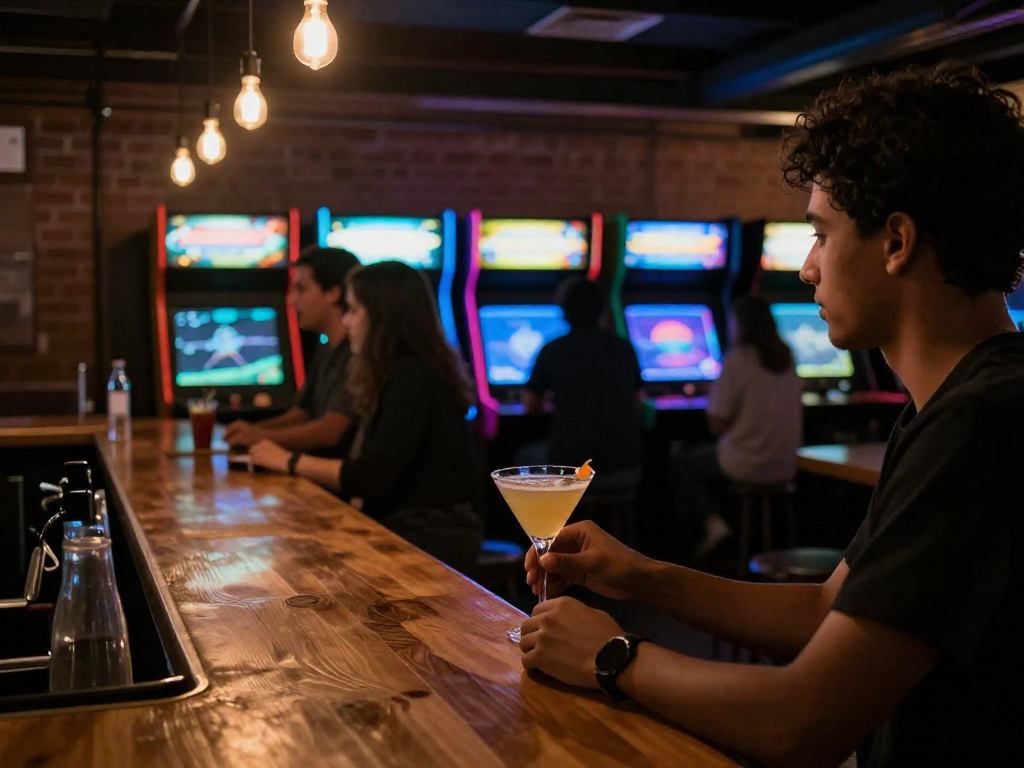
Here's the twist nobody saw coming: the arcade didn't need kids to survive. It needed those kids to grow up, get jobs, and start missing the sound of a Mortal Kombat cabinet from across a crowded room. Enter the barcade — half neighborhood bar, half time machine.
The model that finally made the math work
The original arcade lived and died on quarters dropped by teenagers with limited budgets. The barcade flipped the formula. Combine nostalgia, alcohol, and adults with actual disposable income, and suddenly a cabinet that used to earn coins a few at a time is sitting in a room where people are also buying $8 cocktails. The games become the vibe, not the only revenue source.
The pioneer here was Barcade, which opened in Brooklyn back in 2004 and built its whole identity around classic cabinets paired with craft beer. The concept spread because the economics simply work better than the quarter-slot arcades of the '80s ever could.
Why Millennials and Gen X are the perfect crowd
If you were dropping quarters into Galaga or Street Fighter II between roughly 1980 and 1995, you are exactly who these places are built for. You have the memories, you have the spending money you didn't have at twelve, and you have a powerful urge to show someone younger how it was actually done.
Barcades sell that feeling. Standing in front of the same cabinet you played as a kid — same joystick, same blocky pixels, same impossible difficulty curve — is a hit of nostalgia you can't get from an app. That emotional pull is the entire business model, and it lands squarely on people aged 30 to 50.
The quarter is dead — long live the cover charge
One of the biggest shifts is how you pay. Instead of feeding coins into a slot, most modern spots run on free-play: pay a flat cover (commonly somewhere in the $10–$15 range, though it varies by city and venue) and play everything all night. Others stay coin-op but accept reloadable cards instead of pocket change.
For a newcomer, free-play is the friendliest possible entry point. There's no pressure to be good — you're not burning a quarter every time you lose. You can fumble through twenty different cabinets without spending a cent more, which is a much gentler way to rediscover games you haven't touched in decades.
Riding the experience-economy wave
The barcade boom isn't happening in a vacuum. It's part of a broader cultural shift toward spending money on experiences rather than stuff — the same impulse driving escape rooms, axe-throwing bars, and immersive pop-up events.
That's why you're also seeing pop-up arcades at breweries and festivals, retro gaming expos where you can play rare cabinets and shop for parts, and traveling exhibits that set up for a weekend and vanish. You don't have to live near a permanent barcade to get in on it.
Want to try it yourself? Search "barcade near me" or "free-play arcade [your city]" to find a spot — most list their cover and game lineup online. Keep an eye on local brewery and convention calendars for pop-ups, and check sites like the Replay FX / retro-expo circuit for bigger gatherings. Bring a friend who remembers the originals; half the fun is the trash talk.
How to Get In: Visiting, Playing, and Collecting on a Budget
Here's the good news: you don't need a warehouse or a trust fund to scratch the arcade itch. You just need to know where to look.
Start by playing, not buying
Before you own anything, go somewhere that already has it. Search "barcade" or "retro arcade" plus your city, and check Google Maps reviews for photos of the actual lineup. Many spots are free to enter and charge per game or a flat door fee — often $10–$15 for unlimited play. It's the cheapest way to test which games you actually love before committing to a cabinet.
Affordable ways to own a piece
You've got a whole ladder of options, from pocket money to project car:
- Plug-and-play units & handhelds ($30–$120): Things like the Arcade1Up Lite, the Evercade, or mini consoles. Instant nostalgia, no maintenance.
- Bartop cabinets ($150–$500): Tabletop-sized cabinets that play dozens of games and fit on a counter. The sweet spot for most beginners.
- Candy cabs ($400–$900): Japanese "candy cabinet" arcade machines (named for their colorful, compact look) built for swappable game boards. Compact, sturdy, and beloved by fighting-game fans.
- Full uprights & restored boards ($800+): The classic standing cabinet. Original boards (PCBs) can be pricey but are the real deal.
Before you buy a full cabinet
A real arcade cabinet is roughly 5–6 feet tall and can weigh 250–300 pounds, so measure your doorways and floor first. Ask the seller three things: Does it power on and play right now? Is the monitor a CRT (heavier, authentic, harder to repair) or an LCD swap? And is it original, restored, or a reproduction? None of those are wrong — repros are a great, cheaper entry — but you want to know exactly what you're paying for.
A quick word on emulation
Software like MAME lets you run classic games on a PC, and the emulator itself is legal. The gray area is the ROMs (the game files): downloading games you don't own isn't legal. Stick to titles that have been officially re-released in collections, or play on hardware you legitimately own.
Whatever rung of the ladder you start on, you're in. That's the whole point.
See also
- The History of the Home Console Wars: NES vs. Genesis
- Beginner's Guide to Collecting Retro Video Games
- Are Old Arcade Cabinets Worth Anything? A Value Guide
- Plug-and-Play Retro Consoles: Which Ones Are Actually Worth It
Related articles
Quick Reference: Retro Console Release Years and Lifespans
When did the major retro consoles launch and end? A scannable timeline of release years, lifespans, and console eras for collectors.
Jun 27, 2026 · 5 min read
The Atari 2600 at Home: A Beginner's Restoration Primer
Found a dusty Atari 2600? Learn gentle, beginner-friendly cleaning and basic fixes to revive your first vintage console—no soldering or big budget required.
Jun 27, 2026 · 12 min read
The Quietly Brilliant Tech of the Sony Trinitron, Explained
Why do retro gamers prize CRT TVs like the Sony Trinitron? Here's the clever tech inside, why it beats flat screens for retro play, and what to look for.
Jun 27, 2026 · 10 min read