Where to Buy Collectibles: eBay, Estate Sales, or Flea Markets?
Where's the best place to buy collectibles?
On this page
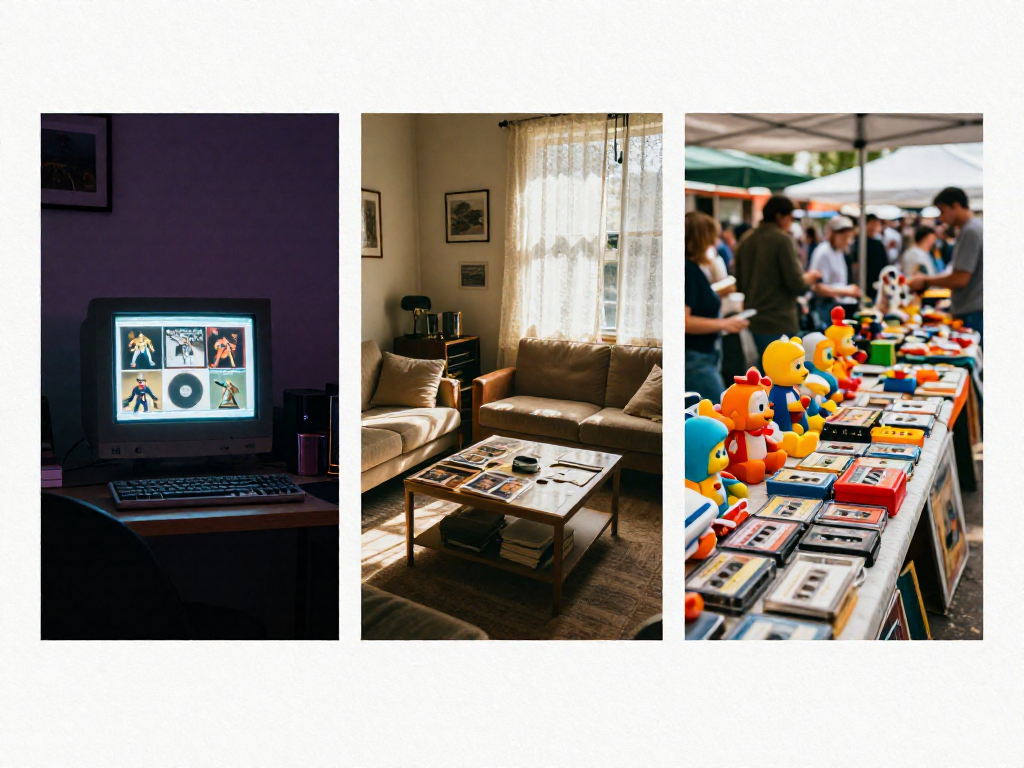
The Quick Answer: It Depends on What You're After
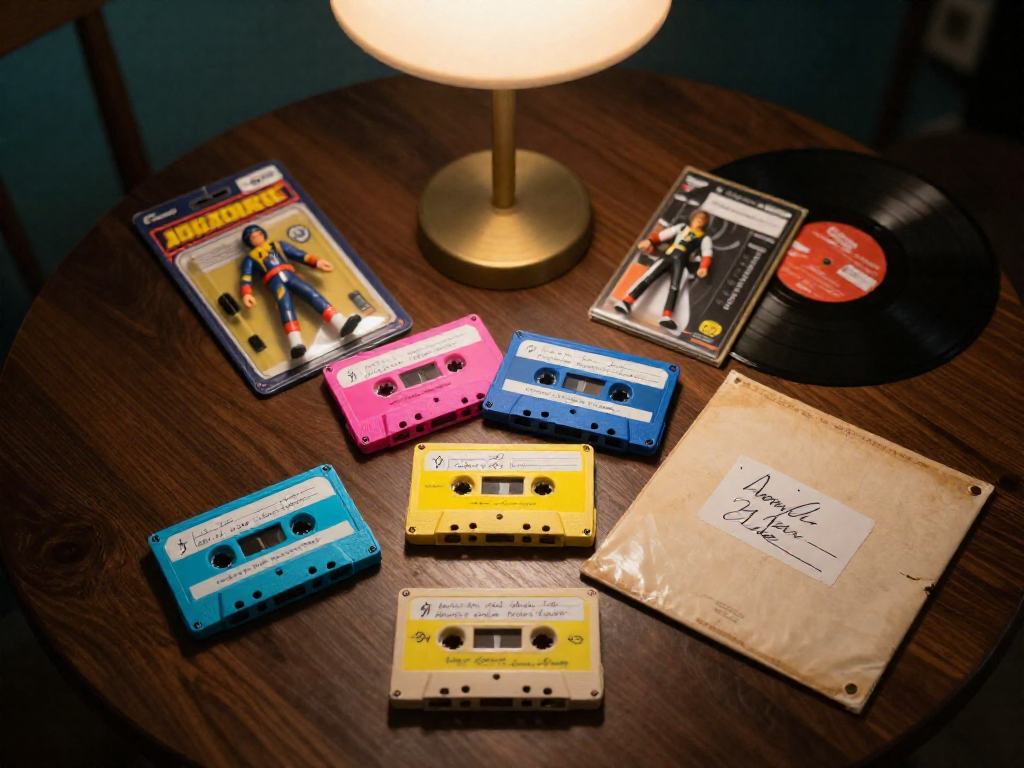
Short on time? Here's the verdict before we dig in:
- eBay — the widest selection you'll find anywhere, searchable from your couch at midnight. You'll pay the most, but if you want a specific thing (that exact 1985 Transformer, in the box), it's hard to beat.
- Estate sales — the spot for bulk steals and genuinely rare finds, since families are clearing out decades of stuff at once. The catch: you have to show up early, dig, and sometimes drive a while.
- Flea markets — the home of haggling and that instant "I'm taking this home today" thrill. Inventory is totally hit-or-miss, but the wins feel great (and cheap).
A quick rule of thumb for each kind of reader:
- "I know exactly what I want." → eBay.
- "I love the thrill of the hunt and a good bargain." → Estate sales.
- "I just want to wander and grab something fun on a Saturday." → Flea markets.
No wrong answer here — pick the vibe that matches your weekend. Now let's break down each one.
Buying Collectibles on eBay
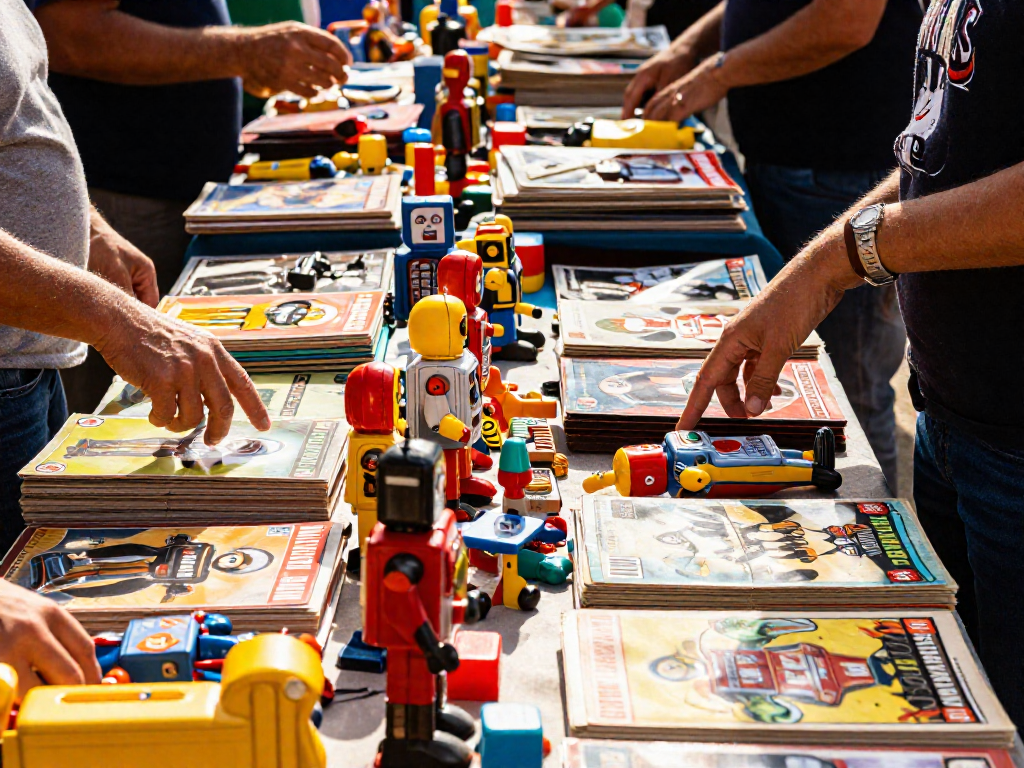
If you're just dipping a toe into collecting, eBay is the easiest place to start. Picture every garage sale, estate cleanout, and dusty attic in the country dumped into one giant searchable pile — that's roughly what you're working with. Want a sealed copy of a 1985 G.I. Joe figure or that exact translucent-purple Game Boy from your childhood? Type it in, and odds are someone, somewhere, is selling it.
The good stuff:
- Endless inventory. You're not limited to whatever your local shops happen to have.
- Smart filters. Narrow by condition, price, location, and "Buy It Now" vs. auction.
- Buyer protection. If an item never shows up or arrives wildly different from the listing, eBay's Money Back Guarantee has your back.
- Real price data (more on this below — it's the secret weapon).
The not-so-good stuff:
- Inflated asking prices. Plenty of sellers list at dream-money rates hoping someone bites.
- Shipping costs and damage. A $12 record can carry $8 shipping, and fragile items don't always survive the trip.
- Fakes and over-grading. Reproductions get passed off as originals, and "near mint" sometimes means "mint from across the room."
The one tip that pays for itself: Don't trust asking prices. Run your search, then check the box for "Sold Items" (under the filters on the left or in the "Show only" menu). This shows what people actually paid over the past few months — the real market value, not wishful thinking. If a seller wants $80 for a toy that consistently sells for $35, you'll know instantly to keep scrolling.
Best for: specific items you can't track down locally, and condition-sensitive buyers who want detailed photos and a return safety net. If you love the thrill of an in-person dig, eBay won't scratch that itch — but for targeted hunting on a budget, it's hard to beat. Start with low-stakes purchases under $25 to get a feel for sellers, shipping, and how listings translate to real-life condition.
Buying Collectibles at Estate Sales
If eBay is the comfortable couch option, estate sales are the deep end of the pool — more effort, but the rewards can be unreal. This is where someone's entire life of stuff goes up for grabs at once, which means you can stumble onto a full box of 1980s action figures, a shoebox of cassettes, or a milk crate of vinyl priced to move, not priced by a dealer who Googled every title.
Why they're worth the trouble
The big draw is underpricing. Estate sale organizers are clearing a house, not maximizing each item, so things often get tagged in bulk or by gut feel. You'll also find whole collections together — the kind of "someone actually loved this" stash you rarely see online. And if you can come back on the final day, leftover items often drop 50% or more.
The catch
There are no returns and no shipping — you show up, you carry it out. The best stuff goes fast, so early birds line up before the doors open. It's an in-person, weekend-morning commitment, which is exactly why a lot of people skip it (good news for you).
Timing it right
There's a simple trade-off:
- Go early (first hour) for the best selection.
- Go late (last day) for the markdowns, if you don't mind picking through what's left.
How to find sales near you
- EstateSales.net and EstateSale.com — searchable by ZIP code, often with photo previews so you can scout before driving over.
- Local classifieds and the weekend newspaper — still surprisingly reliable.
- Facebook groups for estate sales or yard sales in your area, where listings and tips get shared fast.
Who this is for
Estate sales reward patience and curiosity. If you genuinely enjoy the hunt and want volume — building a collection rather than chasing one specific piece — this is your channel. Bring cash, small bills, and a tote bag, and treat the early miss as part of the fun.
Buying Collectibles at Flea Markets
If eBay is the convenience store and estate sales are the deep dive, flea markets are the weekend block party of collecting. There's nothing quite like wandering rows of folding tables on a Saturday morning, coffee in hand, when a stack of dusty cassette tapes or a bin of loose action figures catches your eye. You never know what you'll find — and that surprise is half the fun.
What makes flea markets great
- You can haggle. Prices are starting points, not final offers. Cash talks, and most sellers would rather make a deal than haul inventory home.
- You inspect before you buy. Hold the record, flip the toy over, check the cassette shell for cracks. No guessing from a blurry photo.
- Surprise finds happen. That seller clearing out a basement may have no idea what they've got, which is where the deals live.
The trade-offs
Inventory is hit-or-miss. One week you'll find three vendors with vintage toys; the next, none. Truly rare pieces are less common than at estate sales, and condition varies wildly — so inspect everything yourself.
How to actually shop one (beginner steps)
- Bring small bills. Cash speeds deals and gives you leverage. A handful of $5s and $1s makes a $7 counteroffer easy.
- Walk the whole market first. Get a feel for prices before you commit. The same Star Wars figure might be $12 at one table and $5 at another.
- Never accept the first price. A friendly "Would you take $8?" is expected, not rude.
- Bundle to save. Grabbing four cassettes? Ask for a price on all of them — sellers love clearing multiples.
Realistically, expect common loose toys and tapes in the $3–15 range, with occasional standouts higher. Flea markets are best for weekend browsers who love the hunt and the conversation as much as the haul.
Side-by-Side Comparison: Price, Selection, and Risk
Still torn? Here's the whole thing at a glance — go ahead and pin it for your next treasure hunt.
| What Matters | eBay | Estate Sales | Flea Markets |
|---|---|---|---|
| Price | Market-set, easy to compare | Often lowest (sellers want it gone) | Negotiable — haggling expected |
| Selection | Huge, anything you can name | Luck of the draw, one household | Wide but hit-or-miss |
| Convenience | Shop in pajamas, 24/7 | Set dates, early-bird crowds | Weekend mornings, on your feet |
| Returns | Buyer protection on most sales | All sales final | All sales final |
| Authenticity risk | Moderate (read feedback, photos) | Low-ish, but verify yourself | Higher — bring your own know-how |
Where each clearly wins: eBay for finding that exact He-Man figure or first-press vinyl. Estate sales for rock-bottom prices on whole collections. Flea markets for the fun of the hunt and friendly haggling.
Watch the hidden costs: eBay's sticker price isn't the real price — shipping can add $8–$15 on a single record. Estate sales and flea markets cost you gas and a Saturday morning, plus that "I drove an hour for nothing" risk. Factor in your time, and the cheapest tag isn't always the cheapest deal.
How to Choose the Right Channel for You
Still torn? Ask yourself three quick questions, and the answer usually sorts itself out:
- How fast do I need it? If you want that specific 1985 Transformer in your hands by Friday, eBay wins. If the thrill of the hunt is half the fun, estate sales and flea markets reward patience.
- How rare is it? Common nostalgia pieces (cassettes, Happy Meal toys, mass-market vinyl) turn up everywhere in person and cost less. Truly scarce items are easier to find online, even if you pay a premium.
- How much do I like haggling? No interest in negotiating? Stick with eBay's fixed prices. Enjoy a friendly back-and-forth? Flea markets are your playground.
The smart move is to mix and match. Use eBay as your pricing cheat sheet—search "sold listings" to see real values—then go buy in person where deals are better and there's no shipping or buyer fees.
A no-stress starting plan: Set a $20–$40 budget, pick one item type you loved as a kid, check completed eBay prices first, then hit a local flea market or estate sale and grab one piece. That's it—you're officially collecting.
See also
- Beginner's Guide to Grading Collectible Condition
- How to Spot Fake Retro Collectibles
- Starting a Vinyl Collection on a Budget
- Top Retro Toys Worth Collecting in 2024
Related articles
Why We Get So Nostalgic for the 90s, According to Memory
Why does retro stuff make us so nostalgic? The memory science behind 90s nostalgia—and why we collect the toys, tapes, and games of our childhood.
Jun 27, 2026 · 10 min read
How to Insure and Catalog a Growing Collection
Learn how to catalog your retro collection with free tools and protect it with the right insurance. Simple, beginner-friendly steps you can start today.
Jun 27, 2026 · 10 min read
How to Negotiate Prices Without Being Awkward About It
Learn how to negotiate prices on retro collectibles without the awkwardness. Friendly scripts, fair offers, and beginner tactics for vinyl, toys, and more.
Jun 27, 2026 · 7 min read