The Safe Way to Store Any Collectible Long-Term
How do I store collectibles to preserve them?
On this page
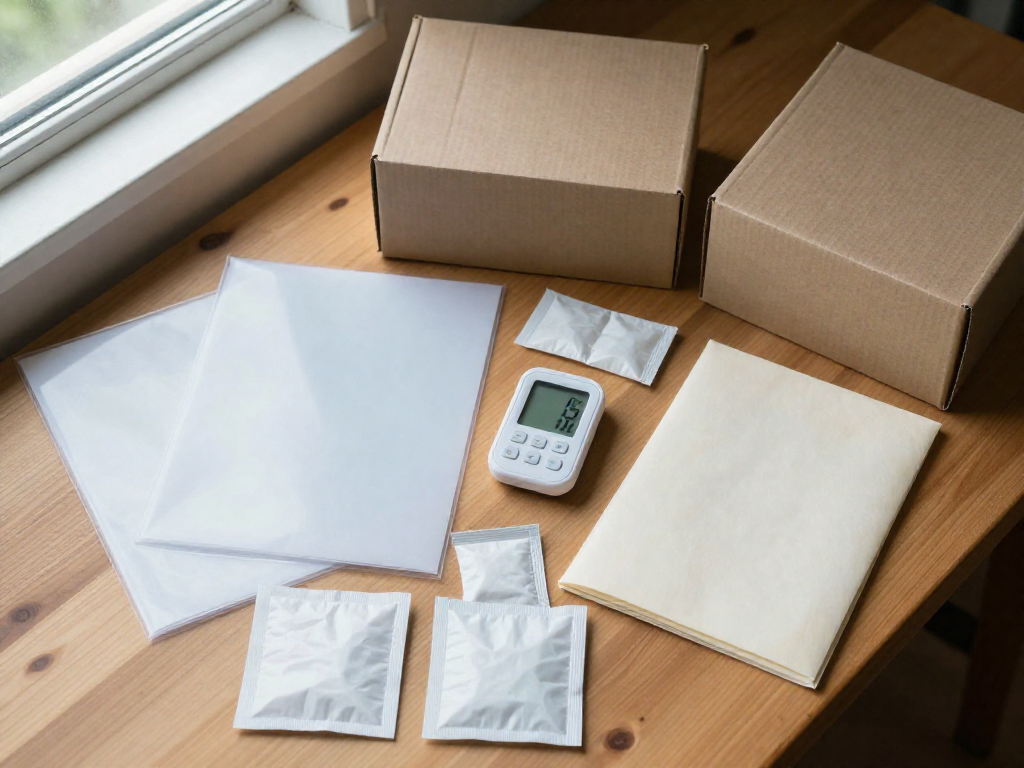
What Actually Destroys Collectibles (The 3 Enemies)
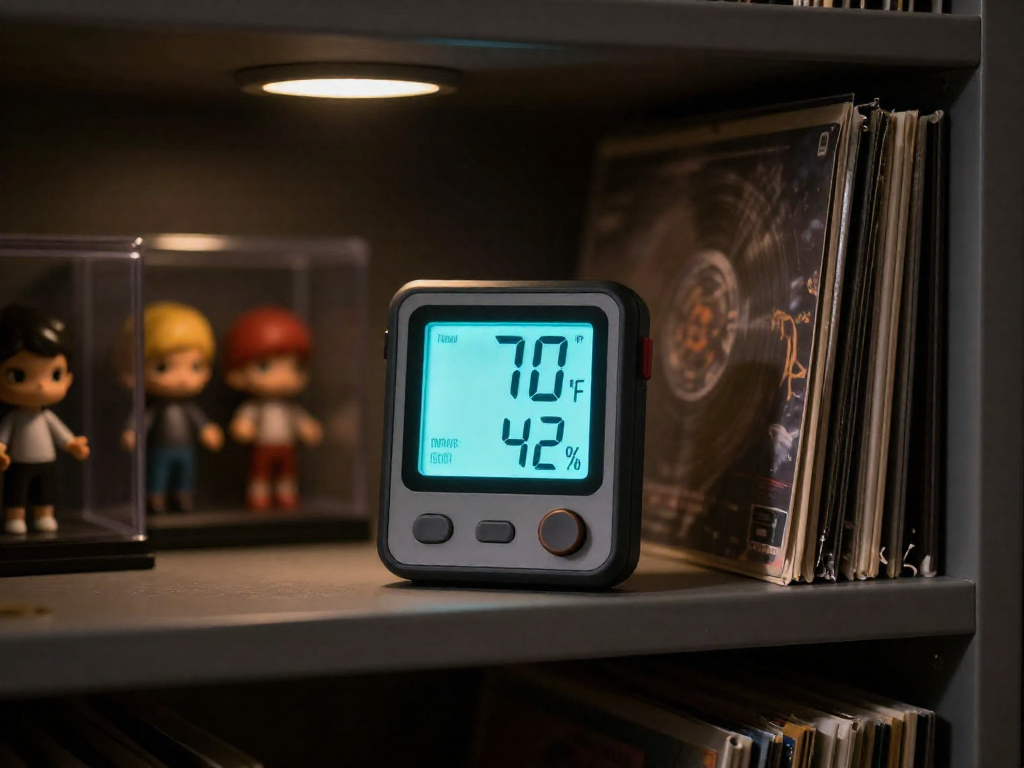
Before you bubble-wrap a single thing, it helps to know what you're actually protecting against. Almost every horror story—the warped record, the yellowed Star Wars figure, the comic with brown speckles—traces back to the same short list. Learn the "why," and storing anything becomes common sense.
Enemy #1: Heat and humidity (especially the swings). Temperature and moisture that bounce up and down do the real damage. Heat warps vinyl and softens plastic; high humidity invites mold and foxing (those rusty brown spots on old paper and comic pages). Aim for cool, stable, and dry—roughly 65–70°F and 40–50% humidity is the comfortable target most collectors shoot for.
Enemy #2: Light. UV is the obvious culprit, but even indirect daylight from a nearby window will quietly fade box art, painted figures, fabric, and printed labels over months and years. If sunlight ever touches your shelf, your colors are on a slow timer.
Enemy #3: Bad contact materials. What touches your item matters as much as the room it's in. Acidic cardboard, regular newsprint, rubber bands, and cheap PVC plastic sleeves all break down and "off-gas," leaching chemicals that yellow, stain, or fuse to whatever they're hugging. That free comic bag from the '90s may be doing harm right now.
The bonus troublemakers: pests (silverfish love paper, mice love everything), dust that grinds into surfaces, and plain old gravity from stacking things too high.
Put it together and you'll understand why the three spots people default to—the attic (bakes), the basement (floods and molds), and the garage (all of the above, plus pests)—are the three worst places in the house. Keep these enemies in mind, and the rest of this guide is just details.
Find the Right Spot: Climate Control on a Budget
Here's the good news: you don't need a fancy climate-controlled vault to keep your treasures safe. You just need to be a little picky about where in your home they live.
Aim for the sweet spot. Most collectibles—vinyl, cassettes, paper, plastic toys—are happiest at roughly 65–70°F and 40–50% relative humidity. Honestly, the exact numbers matter less than keeping things stable. Wild swings between hot and cold, damp and dry, are what warp records and curl comic covers over time.
Pick the right room. The best spots in a typical house are the boring, climate-friendly ones: interior closets, under the bed, or a spare bedroom. Skip the attic (bakes in summer), the basement (damp), and the garage (both, plus pests). Those three are where good collections go to die.
Cheap tools that punch above their weight:
- A digital hygrometer (around $10–15) so you actually know your humidity instead of guessing.
- Silica gel packs tucked into bins and boxes to soak up excess moisture—reuse the ones from shoeboxes and packaging.
- A small dehumidifier ($30–60) if a room runs muggy.
A few placement rules. Keep boxes up off the floor (a cheap wire shelf or even a couple of 2x4s works) in case of leaks. Pull storage away from exterior walls, which sweat with temperature changes, and away from HVAC vents that blast hot or cold air right onto your stuff.
Stuck with a damp basement? It happens. Run a dehumidifier, use a moisture-resistant plastic shelving unit instead of cardboard, seal items in airtight bins with silica gel, and check on them monthly. Not ideal—but workable.
Block the Light: Simple Fading Prevention
Here's the sneaky one. We all picture sunlight as the villain, but even ordinary room lighting will slowly bleach your treasures over the years. That action figure cardback that went from bright red to dusty pink? That faded Star Wars poster? Light did that — patiently, a little at a time. The good news: this is the cheapest enemy to beat.
The easy wins:
- Store, don't display, the prized stuff. Opaque archival boxes or a closed cabinet keep light off the things you care about most. Acid-free boxes run about $10–$25 and do double duty against dust.
- If you must show it off, filter the light. UV-filtering acrylic display cases, conservation-grade picture frames (look for "UV" or "conservation glass," roughly $30 and up), or even UV-blocking window film ($15–$30 a roll) cut the rays that cause fading.
- Rotate your display. Swap pieces in and out every few months so no single item takes years of constant exposure — and never park anything in a sunny window.
- Switch your bulbs. LEDs throw far less UV and heat than old halogen or fluorescent lighting, protecting both the colors and the materials.
Small changes, decades of difference.
Choose Safe Materials: Archival vs. Acidic
Here's where a lot of us mess up early on: we protect the spot but cheap out on what the item actually touches. The container matters as much as the closet.
When you're shopping, hunt for three magic words on the label: archival, acid-free, and lignin-free. Lignin is the compound in untreated wood pulp that yellows and embrittles paper over time—it's why old newspaper turns brown and crumbly. Anything labeled with all three is safe for long-term contact.
The plastic rule. Avoid PVC sleeves at all costs. You can usually spot them by the soft, sticky feel and that faint vinyl smell—and over years they "off-gas," leaving an oily residue that fuses to comics, cards, and album covers. Instead, look for these three safe plastics:
- Polypropylene – the budget-friendly workhorse for cards and comics
- Polyester (Mylar) – the gold standard, rigid and ultra-clear, for your prized pieces
- Polyethylene – soft, safe bags great for toys and odd shapes
Things to keep away from your items entirely: rubber bands (they rot and melt onto surfaces), any tape, newspaper, and plain brown cardboard. For padding, skip the bubble wrap directly on painted or printed surfaces and use acid-free tissue to stuff hollow voids (think action-figure boxes) and to separate stacked layers.
When cheap is fine vs. when to spend. For bulk commons—loose cassettes, dollar-bin comics, common cards—inexpensive polypropylene sleeves and acid-free boxes (roughly $15–25 for a sleeve-and-box starter set) are plenty. Save the pricier Mylar and acid-free backing boards for the handful of pieces you'd actually be heartbroken to lose. You don't need to armor everything; you need to match the protection to what the item means to you.
Store It Right by Format: Vinyl, Cassettes, Paper, Plastic & Toys
Every collectible has its own quirks. Here's the quick-hit cheat sheet by format so you can grab a takeaway and get to work this weekend.
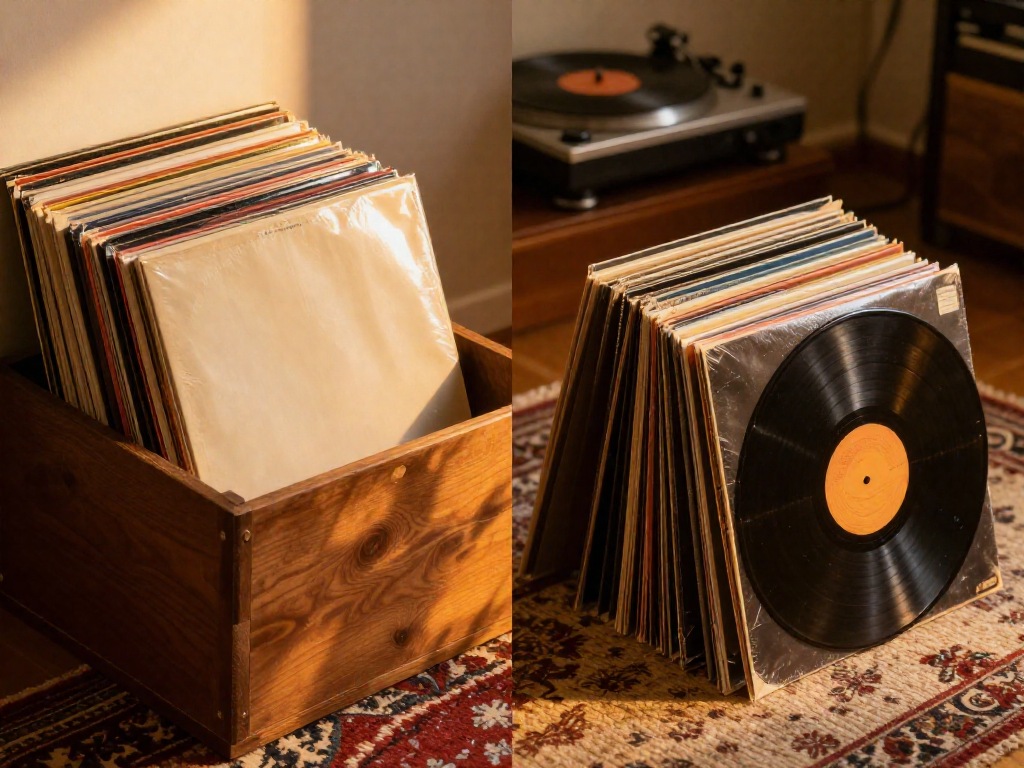
Vinyl records. Store them upright like books, never stacked flat—the weight warps everything underneath. Slide each record into a fresh anti-static inner sleeve, then add a poly outer sleeve to protect the jacket. One thing folks forget: that original shrink wrap can shrink further over time and warp the cover, so on valued pieces, loosen or remove it.
Cassettes and tapes. Stand them upright in their cases and keep them far from anything magnetic (speakers, TVs, motors) and away from heat. Before long-term storage, rewind tapes fully to one side so the exposed leader, not your music, sits at the head.
Comics and paper. Pair an acid-free backing board with a Mylar (polyester) sleeve—the board keeps things from bending, the Mylar blocks moisture. Store them upright or flat in archival short boxes, not crammed in tight.
Action figures and plastic. Keep boxed items boxed; the packaging is half the value. Support sagging blister cards from behind so they don't crease. Watch loose plastic for plasticizer bleed—that sticky, oily film—and keep pieces from touching so they don't fuse.
Metal, tin, and electronics. Toss in anti-tarnish strips for tin toys and silica gel packets to soak up humidity. Moisture is the real enemy here, so a dry, stable spot beats a damp basement every time.
Same rule across the board: dry, cool, dark, and upright.
Handling, Labeling & Long-Term Maintenance
Storing your collection well isn't a one-and-done weekend project — it's a handful of small habits that keep your treasures safe for the long haul. The good news? None of them cost much.
Start with your hands. The oils and grime on our fingers are quietly rough on vinyl, comic pages, and old action figures, so wash and fully dry your hands before handling anything delicate. For the really precious stuff, grab a pack of nitrile or thin cotton gloves (a box runs about $8–$12).
A few more easy wins:
- Label every box and snap a quick phone photo of what's inside. You'll thank yourself later when you're not digging through three bins looking for one cassette.
- Don't overpack. Crammed boxes crush corners and trap moisture — leave a little breathing room.
- Check twice a year. Pick two dates (spring and fall work great) to scan for humidity, pests, and sagging or crushed boxes.
- Keep a simple inventory list. A free spreadsheet noting items and rough values is gold for insurance and peace of mind.
Little routines, big payoff.
A Simple Starter Storage Kit (Under $50)
You don't need a climate-controlled vault to protect the stuff you love. A handful of cheap, easy-to-find supplies will cover 90% of the damage we talked about earlier. Here's a starter kit you can grab online or at most craft and hardware stores:
- Digital hygrometer (~$10) — so you actually know your humidity instead of guessing. Aim for 40–50%.
- Silica gel / desiccant packs (~$8) — toss a few in boxes and sleeves to soak up sneaky moisture.
- Acid-free boxes and tissue (~$15) — your first line of defense against yellowing and brittleness.
- Archival sleeves matched to your hobby (~$10) — outer poly sleeves for vinyl, Mylar for comics and cards.
- Optional upgrades: a small desk dehumidifier or a roll of UV-blocking window film if your space gets damp or sunny.
Start with the basics, add as you go. Your future self will thank you.
FAQ
What temperature and humidity is best for storing collectibles?
Aim for a stable, cool, and dry environment: roughly 65–70°F (18–21°C) with relative humidity around 40–50%. The exact numbers matter less than keeping them steady — wild swings between hot and cold or damp and dry are what warp records, curl photos, and crack plastic. A simple $10–15 hygrometer lets you actually see what's happening in a room, and a small dehumidifier helps if you live somewhere humid. Interior closets and climate-controlled rooms beat any space that bakes in summer or freezes in winter.
Is it bad to store collectibles in the attic, basement, or garage?
Yes, these are usually the worst spots, even though they're the most tempting because they're out of the way. Attics get brutally hot and can melt vinyl, warp action figures, and yellow paper. Basements bring damp, mold, and the occasional flood. Garages combine temperature extremes with dust, fumes, and pests. If those are your only options, get items up off the floor on shelving, seal them in sturdy lidded bins, and add silica gel packs — but an indoor closet is almost always a safer, free alternative.
What's the difference between archival and regular storage boxes?
Regular boxes are made from acidic cardboard that slowly breaks down and gives off gases that yellow paper and degrade plastics over years. Archival boxes are acid-free and lignin-free, meaning they're chemically stable and won't 'off-gas' onto your items. For everyday plastic toys, regular bins are fine. But for anything paper-based — comics, trading cards, posters, magazines, photos — archival boxes are worth the modest upgrade. Expect to pay around $15–30 for a quality archival comic or photo box, and they last for decades.
Why do my collectibles smell or feel sticky after storage?
That musty smell is almost always trapped moisture and the early stages of mildew, while stickiness usually means plastic or rubber is breaking down — a process called 'plasticizer migration' or off-gassing, common in older action figures, VHS cases, and vinyl. Both are signs of too much heat, humidity, or poor airflow. Wipe sticky surfaces gently with a slightly damp microfiber cloth (test a hidden spot first), let items air out in a dry room, and re-store them with silica gel in a cooler, more stable space to stop it from coming back.
How do I store vinyl records and cassette tapes long-term?
Store vinyl records standing straight up vertically, like books on a shelf — never stacked flat, which warps them under their own weight. Use outer plastic sleeves and acid-free inner sleeves, and keep them out of direct sunlight and away from heat. Cassettes should be stored upright in their cases too, rewound fully to one side, and kept far from magnets and speakers, which can erase the tape. For both, the cool, dry, stable conditions above are key. Quality outer sleeves run about $15–20 per 50-pack, an easy starter upgrade.
Do I really need acid-free materials, or is that just marketing?
It's real, not just a buzzword — but it matters most for specific items. Acid in standard paper and cardboard actively breaks down over time, causing the yellowing and brittleness you've seen on old newspapers. For paper-based collectibles like comics, cards, photos, and posters, acid-free sleeves and boxes genuinely protect long-term value and are inexpensive insurance. For solid plastic toys or metal items, it matters far less. You don't need to spend a fortune; just prioritize acid-free for anything made of paper and you've covered the cases where it actually counts.
See also
- Beginner's guide to starting a collection without overspending
- How to clean vinyl records safely at home
- How to spot fakes and reproductions in retro collectibles
- Best ways to display your collection without damaging it
- Where to find affordable retro collectibles (thrift, estate sales, online)
Related articles
Why We Get So Nostalgic for the 90s, According to Memory
Why does retro stuff make us so nostalgic? The memory science behind 90s nostalgia—and why we collect the toys, tapes, and games of our childhood.
Jun 27, 2026 · 10 min read
How to Insure and Catalog a Growing Collection
Learn how to catalog your retro collection with free tools and protect it with the right insurance. Simple, beginner-friendly steps you can start today.
Jun 27, 2026 · 10 min read

How to Negotiate Prices Without Being Awkward About It
Learn how to negotiate prices on retro collectibles without the awkwardness. Friendly scripts, fair offers, and beginner tactics for vinyl, toys, and more.
Jun 27, 2026 · 7 min read