How to Tell If a Record Is in Good Condition Before You Buy
How do I check a used record's condition?
On this page
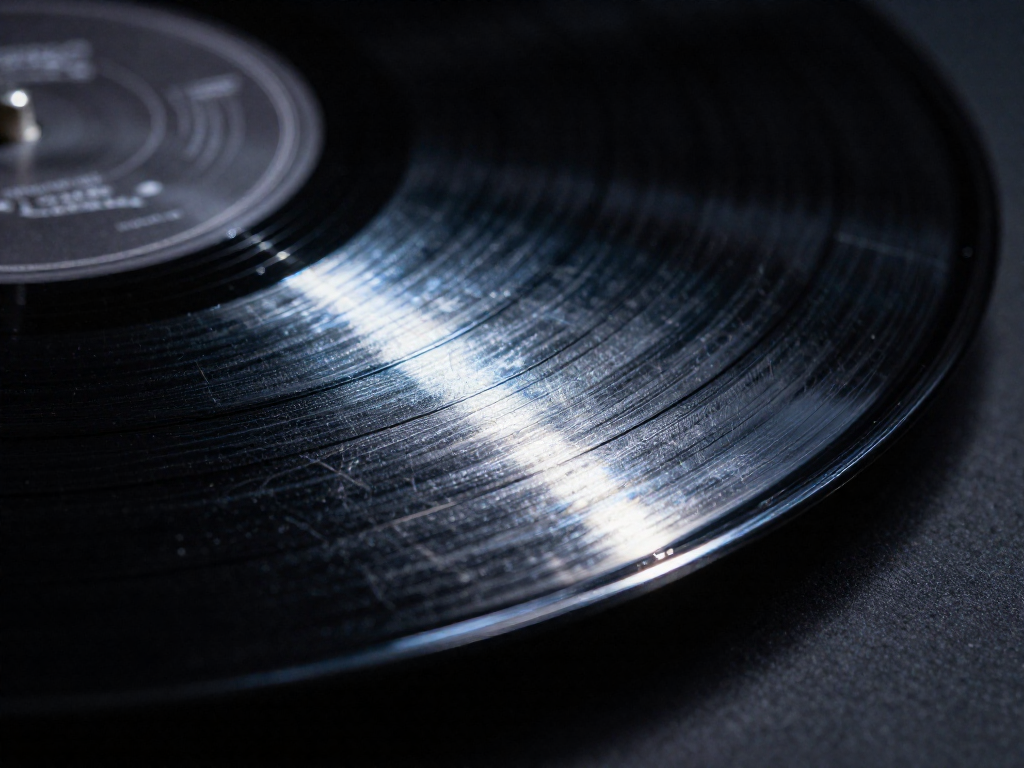
Open at the record bins with a $3 find in hand: the cover looks great, but how do you know the vinyl inside won't crackle? Promise a fast, no-equipment routine to read wear, warps, and grading codes so you buy with confidence and skip the duds.
The 30-Second Bin Check (Your Quick Routine)
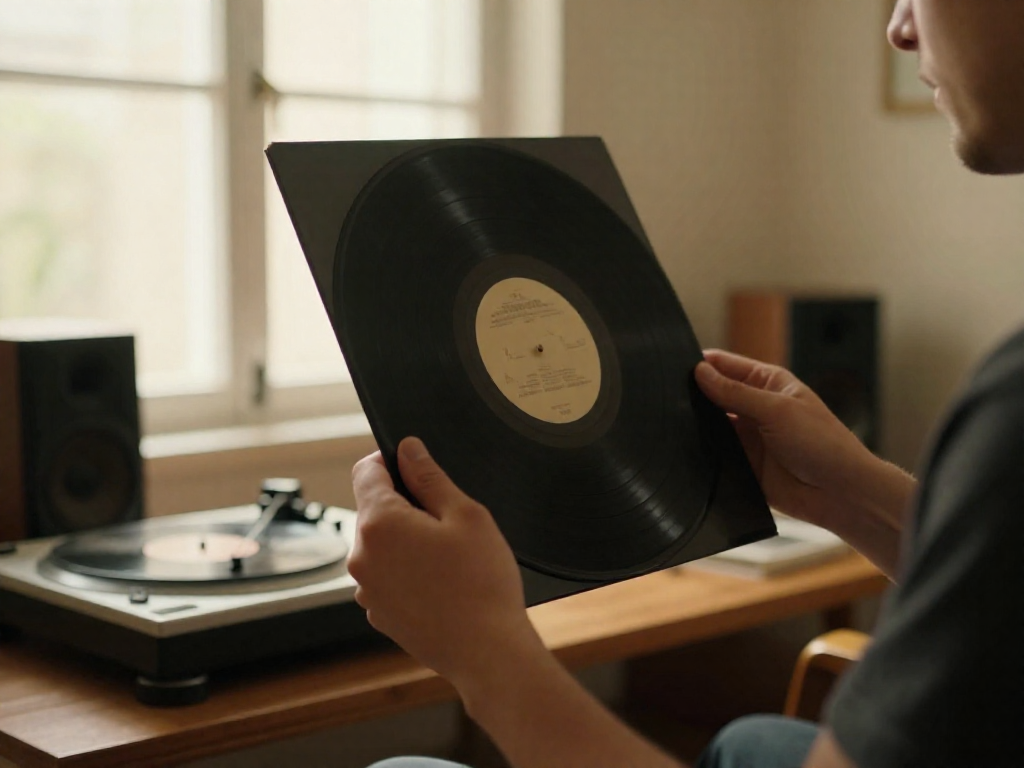
You're flipping through a crate at a flea market, the seller's watching, and you've got maybe half a minute before you either grab it or move on. Good news: you don't need a jeweler's loupe or years of experience to spot a keeper. Here's the quick routine seasoned diggers run almost without thinking.
- Tilt it under the light. Slide the record out of the sleeve and angle it toward the nearest light source. Surface scuffs, hairline scratches, and cloudy haze all jump out when the light rakes across the vinyl at an angle. A few faint marks are normal on used records; deep, catch-your-eye scratches are the ones to worry about.
- Run a clean fingertip over the grooves. Lightly, no pressing. You're feeling for deep gouges or a ridge your nail can catch. If you can feel it, you'll probably hear it.
- Sight down the edge. Hold the record flat at eye level and look across the surface like you're checking a pool table. A gentle dish is often playable; a pronounced warp or a wavy "potato chip" edge is a pass.
- Eyeball the label. Spider-web scratches around the center hole (spindle marks) hint at heavy play. A little writing won't hurt sound, but it tells you how the record was treated.
- Give it a quick sniff. Mildew and stale smoke cling to cardboard sleeves and can be tough to banish. Trust your nose.
Five checks, thirty seconds. Do these and you'll dodge most of the duds before a dollar leaves your pocket.
Reading Surface Wear: Scratches vs. Scuffs vs. Hairlines
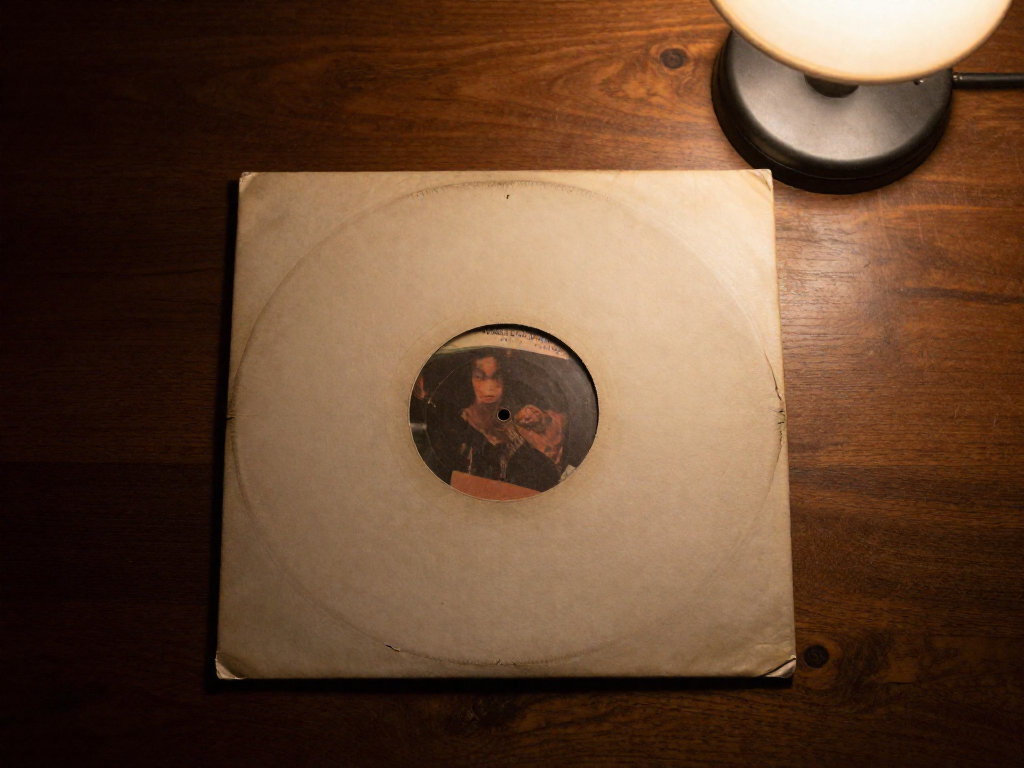
Pull the record from its sleeve and tilt it under a light. You're going to see marks—almost every used record has them—and the trick is knowing which ones matter. Here's the good news: most of what you'll spot is cosmetic.
Scuffs and hairlines are those faint, wispy scratches that catch the light but not your fingernail. They're surface-level, usually from sleeves rubbing the vinyl over the years, and they typically play through with little or no audible noise. Don't let them scare you off a $3 bin find.
Deep scratches are the real concern. The test is simple: drag a fingernail gently across the surface. If your nail catches in the groove, that's deep enough to cause a pop, tick, or skip. The direction matters too:
- A "feeler" scratch running with the grooves (in the circular direction) often plays surprisingly clean.
- A scratch running across the grooves (toward the center) is more likely to cause repeating clicks or a skip.
Next, check around the center hole. Spindle marks—those little scuffs and scrapes circling the label—tell you the record was dropped on turntables a lot. They won't affect sound, but they hint at a hard-played copy worth inspecting more closely.
One myth to drop: a glossy, shiny sheen looks nice, but it's no guarantee of clean playback. Groove integrity is what your needle reads. A slightly dull-looking record with smooth grooves will sound far better than a glossy one with deep gouges.
Spotting Warps Before They Ruin a Listen
A scratch you can hear coming, but a warp can sneak past you in a dim shop and turn a great find into a wobbly mess at home. The good news? You can catch most warps in about ten seconds, no equipment required.
Slide the record out of the sleeve, hold it flat at eye level, and slowly rotate it so the light skims across the surface like you're sighting down a pool cue. You're looking at the plane of the disc, not the grooves. A flat record reads as a clean, straight horizon. A warped one rises and dips as it turns.
Learn to tell three things apart:
- Edge warps — the outer rim curls up or down. Usually harmless if slight.
- Dish warps — the whole record bows like a shallow bowl or saucer. These are the deal-breakers; a bad dish warp makes the stylus ride a roller coaster and skip.
- Non-fill ripples — faint surface texture near the label from imperfect pressing. Cosmetic, not a warp; they play fine.
The honest rule: a slight warp that the needle still tracks through is fine, and most do. A warp dramatic enough to see the disc "flap" as it spins will likely skip or wow.
Most warping comes from heat and pressure — records left in a hot car trunk, baked in an attic, or stored flat under a stack. Keep yours upright and cool, and they'll stay flat for decades.
Cracking the Grading Codes (Goldmine Standard)
Ever stared at a price tag that just says "VG+/VG" and felt like you walked into a secret club meeting? Don't worry—most sellers use the same shorthand, called the Goldmine Standard (named for Goldmine magazine, a record-collecting institution since 1974). Once you crack the code, those cryptic scribbles become genuinely useful.
Here's the ladder, in plain English:
- M (Mint): Flawless, often still sealed. Rare and used sparingly by honest sellers.
- NM (Near Mint): Looks and plays like new, no real flaws. This is the realistic "great copy" grade.
- VG+ (Very Good Plus): Light signs of handling—faint marks, maybe a slightly worn sleeve—but plays beautifully.
- VG (Very Good): Noticeable wear and some surface noise, yet still very listenable. A sweet spot for budget collectors.
- G (Good): Plays through but with real noise and wear. Fine for a buck-bin filler of a song you love.
- P (Poor): Damaged or barely playable. Skip unless it's a wall decoration.
Read the slash. A grade like "VG+/VG" means the record is VG+ and the sleeve is VG. The first grade is almost always the vinyl, the second the cover.
What does VG actually sound like? Picture a comfy crackle behind the music—light pops, a bit of background hiss—but the song comes through clearly. For most casual listening, VG is a steal.
One honest warning: grading is part judgment, part optimism. Some sellers round up generously. So treat the listed grade as a starting point, not gospel. When you can, pull the record out and run your own quick check (see the 30-second bin check above). Trust your eyes and ears over the sticker every time.
Don't Forget the Sleeve, Label, and Inner
The record itself gets all the attention, but the packaging tells you just as much—and quietly affects what you'll pay or resell for later. Here's a quick once-over to add to your bin check.
Inspect the jacket. Run your eyes along the three open edges for seam splits (the cardboard pulling apart at the bottom is the most common). Tilt the cover toward the light to catch ring wear—that faint circular ghost where the record pressed through over decades. A water stain or warped, wavy jacket usually means it was stored badly, so check the vinyl extra carefully.
Peek inside. An original printed inner sleeve, lyric insert, or poster genuinely adds value and is easy to lose, so it's a nice bonus when it's there.
Check the label. Look for spindle marks, writing, or stickers slapped over the center. Heavy scribbling can knock a few dollars off an otherwise clean copy.
Smell test: musty, mildewy, or visibly moldy covers? Walk away. Mold spreads, and it's rarely worth saving.
Smart Buys vs. Pass: Matching Condition to Price
Here's the freeing truth: you don't need a Near Mint copy of everything. The right condition depends on how much you'll play it and what you're paying.
The $2 sweet spot. A Very Good (VG) copy of a common album — think a Fleetwood Mac Rumours pressing or any chart-topper that sold millions — is a fantastic deal in the $1–4 bin. Yes, you might hear a little surface noise, but for music you want to enjoy rather than display, that crackle is part of the charm. Spin it and smile.
When to pay up. If it's a record you'll play weekly, or a quieter genre like jazz or classical where surface noise is more distracting, it's worth stretching for VG+ or NM. Paying $15 instead of $5 for a clean copy you'll love for years is money well spent.
Rescue the dusty ones. Don't pass on a grimy record that's otherwise undamaged. A lot of "noise" is just dust and fingerprints. A few bucks of cleaning solution and a microfiber cloth — or a wash with a soft brush — can bring a $3 find back to life.
When to walk away. No price is worth a deep gouge you can feel with a fingernail, a heat warp that won't sit flat, or a cracked record. Those are skips at any cost. Put it back and keep digging — the next bin always has a surprise.
See also
- How to Clean Vinyl Records at Home Without Special Gear
- Beginner's Guide to Starting a Vinyl Collection on a Budget
- Best Places to Find Cheap Used Records
- Vinyl Record Grading Chart: A Printable Cheat Sheet
- How to Store Records So They Don't Warp
Related articles
Troubleshooting a Turntable That Skips, Hums, or Drags
Why is your turntable skipping or sounding off? Diagnose speed, tracking, and grounding problems with simple, beginner-friendly fixes—no expensive gear needed.
Jun 27, 2026 · 11 min read
How to Store Cassette Tapes So They Last Another 30 Years
Learn how to store cassette tapes long-term. Simple tips on heat, humidity, magnetism, and case care to preserve your tape collection for decades.
Jun 27, 2026 · 9 min read

The Story Behind the 45 RPM Single and the Jukebox Era
Discover where the 45 RPM single and jukebox culture came from, why the little record changed music, and beginner tips for collecting 45s on a budget.
Jun 27, 2026 · 9 min read