How to Start Collecting Retro Video Games Without Going Broke
How do I begin collecting retro games on a tight budget?
On this page
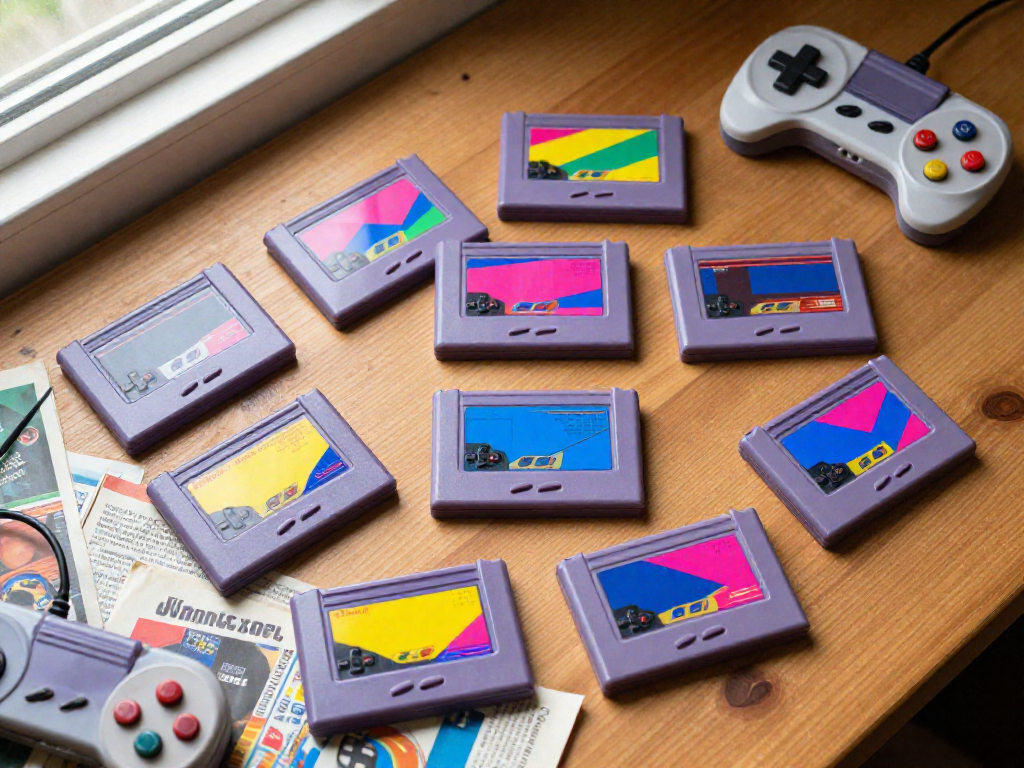
Open by naming the trap most new collectors fall into—chasing rare "grail" games and burning their budget in a week—then reframe retro collecting as a fun, slow-build hobby you can start for the price of a single new AAA game. Reassure the nostalgic 30–50 reader that the games they actually loved as kids are mostly cheap and easy to find.
Pick One Console (Not Five) to Start
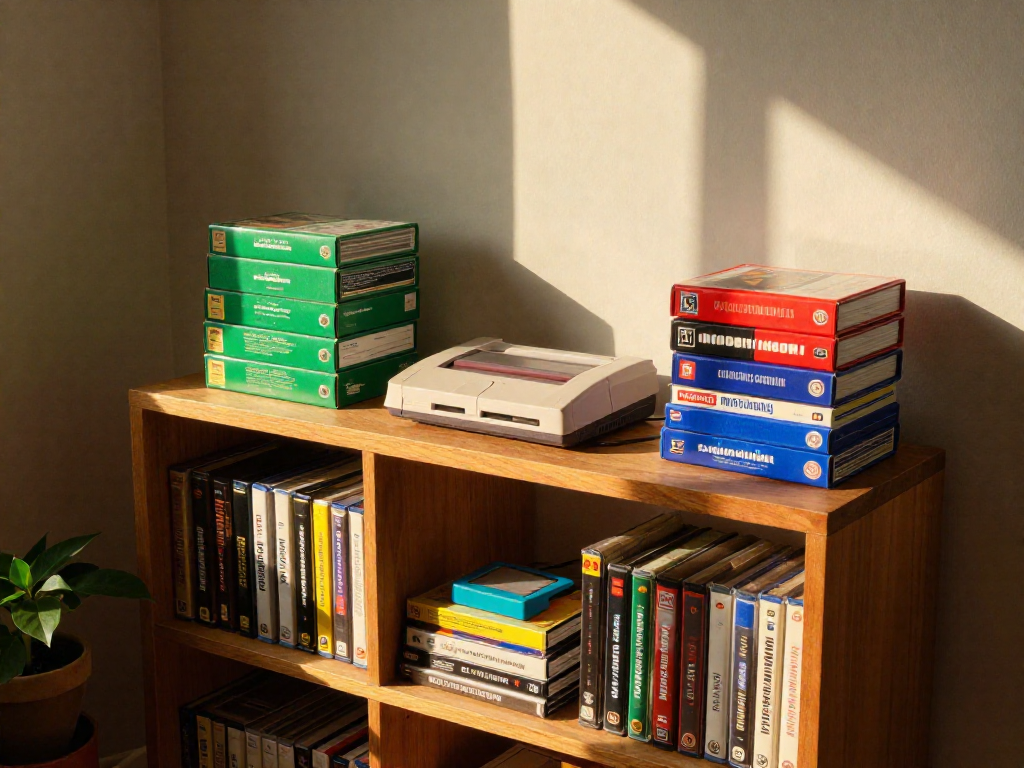
Here's the trap almost every new collector falls into: you get the itch, and suddenly you're bidding on a SNES, eyeing a Sega Saturn, and telling yourself you "need" a Neo Geo. Slow down. The fastest way to go broke—and burn out—is chasing five platforms at once. Pick one. Just one.
Choose it with your heart, not a price guide. The console you should start with is the one you actually grew up with. If Saturday mornings meant blowing into a Genesis cartridge or you logged hundreds of hours on a Game Boy under the covers, that's your answer. Collecting is way more fun when every box on the shelf gives you a little hit of nostalgia.
Lucky for your wallet, the most nostalgic systems are also the cheapest to collect. The Super Nintendo (1991 in North America), Sega Genesis (1989), original PlayStation (1995), PlayStation 2 (2000), and Game Boy (1989) all sold by the millions, which means their games are everywhere and most are affordable. You can find dozens of solid PS1 and PS2 titles loose for $5–$15, and common SNES or Genesis carts often land in the $10–$25 range.
What to skip while you're learning the ropes: pricier or fragile collector darlings like the Neo Geo AES, Sega Saturn, or anything where loose games routinely run past $50. They're great someday—just not for game one.
Quick starter move: Decide on your console today, then browse completed eBay listings and a local game shop to get a feel for real prices. Abundant, cheap libraries mean you'll fill a shelf fast without emptying your bank account.
Set a Realistic Budget and a Few Simple Rules
Here's the secret that keeps this hobby fun instead of stressful: a little structure up front. Before you chase that "holy grail" cartridge, give yourself a monthly cap and a few easy rules to live by.
Start with a number. Pick a monthly budget you won't miss — somewhere around $30–$50 is plenty when you're starting out. Treat it like a tiny allowance for your past self. When the money's spent, you're done for the month. This one habit quietly kills the impulse "add to cart" reflex that empties wallets fast.
Buy common and fun before rare and pricey. Most of the games that defined our childhoods were bestsellers, which means they're everywhere and cheap. Loose copies of beloved titles often run just a few dollars. Build a shelf of games you'll actually play first; the rare stuff can wait.
Know the three conditions and what they cost:
- Loose (cartridge or disc only) — the cheapest, and perfect if you want to play.
- Complete-in-box (CIB) — game, box, and manual together; expect to pay noticeably more for that full package.
- Sealed — factory-fresh and the priciest by a wide margin, aimed at serious display collectors.
Decide your "why" early. Are you collecting to play or to display? Players can happily grab loose carts and bargain bin finds. Display collectors lean toward CIB and sealed. Neither is better — but knowing which camp you're in tells you exactly where your budget should go.
Start With Common, Cheap, Genuinely Fun Games
Here's the secret nobody tells you when you're starting out: the most fun corner of retro collecting is also the cheapest. Walk into any game store, flea market, or thrift shop and you'll find the "bin"—that glorious unsorted stack of loose carts and discs priced around $3–$10. These "bin games" are the beating heart of a starter collection. They're plentiful, they're affordable, and a surprising number of them are absolute classics. You can walk out with five or six games for the price of one boxed "grail," and actually play them all weekend.
The trick is knowing that "common" doesn't mean "bad." Tons of genuinely great titles were printed in huge numbers, which keeps prices low to this day. A few easy starting points:
- NES (1983 US launch era onward): Super Mario Bros., Duck Hunt, and Excitebike are everywhere and usually under $10 loose.
- SNES: Super Mario World and Donkey Kong Country (1994) sold millions, so loose copies stay reasonable—often $15–$25.
- Sega Genesis: Sonic the Hedgehog (1991) is one of the most common carts ever made; expect $5–$10.
- PlayStation & PS2: Loads of disc-based gems sit in the $5–$15 range thanks to massive print runs.
Don't overlook the sports and licensed games either. Annual football, basketball, and hockey titles, plus movie and TV tie-ins, were churned out by the truckload. They're frequently the cheapest things in the bin—sometimes a dollar—and a few are legitimately fun party games.
Why start here instead of hunting that pricey sealed rarity? Because momentum matters. Building a shelf of games you love early on keeps the hobby joyful and keeps your wallet intact. You'll learn what genres and consoles you actually gravitate toward, develop an eye for condition and pricing, and have a blast doing it. Save the chase for expensive grails until later—once you've fallen in love with the games, not just the idea of owning them.
Where to Buy Without Overpaying
Half the fun of this hobby is the hunt, and the best deals rarely come from the most obvious places. Start local. Thrift stores, flea markets, and garage sales are where loose cartridges still turn up for a couple of bucks because the seller has no idea what they have. Dedicated retro game shops cost a little more, but you can hold the cartridge, test it in-store, and ask questions, which is worth a small premium when you're new.
When you go online, treat these channels as tiers:
- eBay — biggest selection, best for checking real prices.
- Facebook Marketplace — great for local pickups and lot deals, no shipping.
- Mercari — often cheaper than eBay, with more casual sellers.
The single most useful skill is reading eBay sold listings. Don't trust asking prices, anybody can list a $5 game for $80. Instead, search the title, open Filters, and check "Sold Items." That shows what people actually paid over recent weeks. Ignore the highest and lowest outliers and look at the middle of the range, that's the real value.
That habit also protects you from inflated listings. Flea-market booths near tourist areas and sellers who slap "RARE" or "HTF" on everything are banking on you not checking. A genuinely common game is common no matter what the tag says. If a price feels high, pull up sold listings on your phone right there before you buy.
Be patient. The right game at the right price comes around more often than you'd think.
Spot Fakes, Damage, and Bad Deals
Once you start hunting, you'll run into reproduction carts—modern copies of rare games sold as the real thing. They're not all scams (some sellers are honest about them), but you shouldn't pay original prices for a repro. Tells include a too-crisp label, a Phillips-head screw where Nintendo used a proprietary security bit, a glossy modern shell, or a circuit board with a tiny SD-card slot visible through the cartridge window. When in doubt, search the exact game plus "reproduction" before you buy.
Here's a quick checklist before money changes hands:
- Label: Look for natural aging, correct fonts, and a serial number. Bubbling, pixelated print, or a sticker over a sticker are warning signs.
- Shell: Genuine cartridges feel solid and color-matched. Cracks, mismatched halves, or non-standard screws suggest tampering.
- Board (if you can peek): Original chips have manufacturer stamps and date codes; a bare green board with hand-soldered parts is a repro.
- Function: Always test it. Power on, check the title screen, and—for anything with saves—make sure the battery still holds your progress.
For discs, tilt them under light to catch scratches, and confirm the manual and case art aren't laser-printed fakes.
Online, treat vague listings as red flags. Stock photos, "untested," blurry close-ups, or descriptions that dodge the label and back of the cart usually mean trouble. Ask for clear pictures of the actual item, front and back. A patient question costs nothing; a bad cart costs you twice.
Clean, Store, and Display on the Cheap
Once you've snagged a few finds, a little care keeps them playable for years—no expensive kits required.
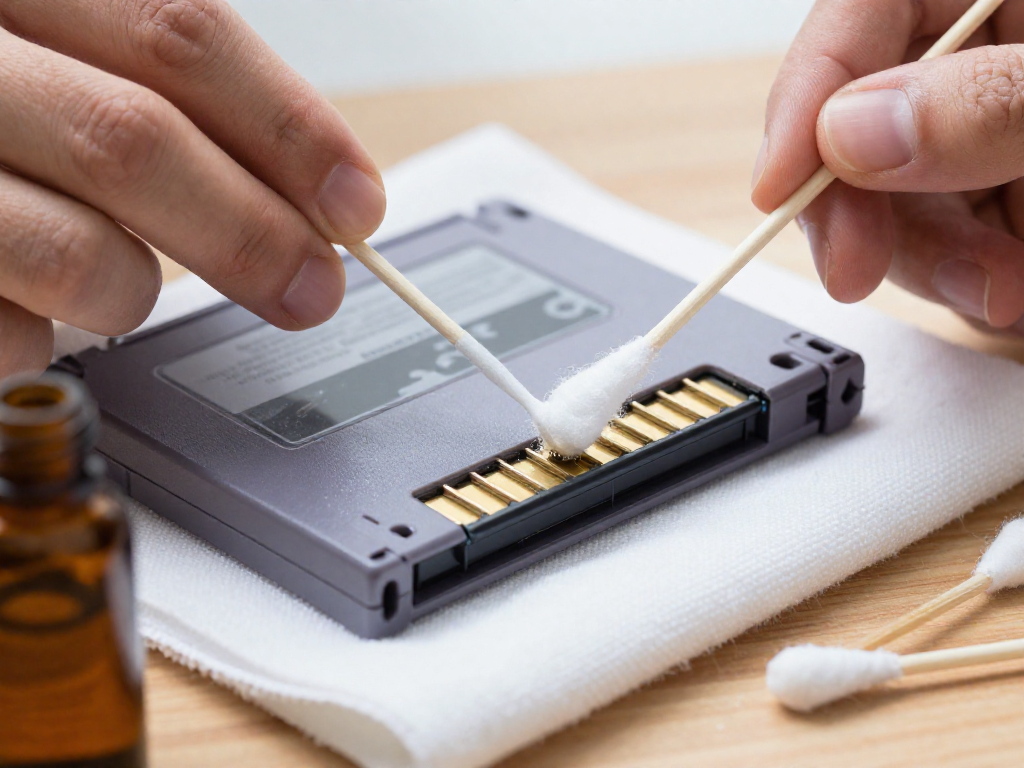
Cartridges: Dip a cotton swab in 90%+ isopropyl alcohol and gently wipe the metal contacts. Skip the old "blow on it" trick (moisture corrodes pins) and never use abrasives or erasers, which scratch the contacts. Let it dry fully before testing. A bottle costs about $4 and lasts forever.
Discs: Wipe from the center outward—not in circles—with a soft microfiber cloth and a drop of isopropyl. For light scratches, a drugstore disc resurfacer ($10–$20) often revives skipping games. Deep gouges may be beyond saving, so check playability before buying scratched discs.
Storage: Keep everything out of sunlight and away from humidity to prevent fading and mold. Plastic clamshell cases or bagged boards (a few cents each) guard against dust.
Display: You don't need glass cabinets. A cheap floating shelf, repurposed bookends, or even a clean spice rack shows off cartridges beautifully—and lets you grab one to play whenever nostalgia hits.
When (and Whether) to Chase the Grails
Eventually you'll eye a "grail" — that one pricey cartridge you've wanted since middle school, maybe Chrono Trigger (1995) or a boxed EarthBound (1995). That's fine! Just give it its own savings pot, separate from your everyday game budget. Drop $20 in whenever you can and let it grow. No grail is worth blowing the rent.
Patience is your best friend here. Retro prices swing with hype cycles, YouTube videos, and which streamer played what last week. A game that's $120 today might dip to $80 in six months when the buzz fades. Set a target price, watch eBay's "sold" listings to learn the real average, and wait for a deal to come to you.
Most importantly, chase what you love, not what someone on a podcast calls "a smart investment." You're building a collection that makes you smile, not a stock portfolio.
And know when good enough is good enough. A loose, well-worn cart that you'll actually play often beats a sealed one gathering dust in a closet.
FAQ
How much money do I need to start collecting retro games?
Honestly, less than you'd think. You can start a respectable collection with $50–$100. Common, beloved titles for systems like the NES, SNES, or Sega Genesis often run $5–$20 loose, so a single $40 trip to a flea market or secondhand store can land you a handful of games. The trick is starting with the stuff you actually loved as a kid rather than chasing rare 'grails' that sell for hundreds. Set a small monthly budget, buy what makes you smile, and let the collection grow naturally over time.
Which retro console is cheapest to collect for?
The Sega Genesis (released in North America in 1989) is widely considered the most budget-friendly entry point. Because so many cartridges were produced and sold, common sports and action titles frequently turn up for just a few dollars each. The original PlayStation (PS1, 1995 in the US) is another wallet-friendly choice, with tons of discs floating around cheaply. The NES and SNES are slightly pricier on average but still very approachable for common games. Generally, the more copies a system sold, the cheaper its everyday games are today.
Are loose cartridges worth buying or should I get complete-in-box?
For most beginners, loose cartridges are the smart play. A loose game costs a fraction of a complete-in-box (CIB) copy that includes the original box and manual, yet it plays exactly the same. Boxes and inserts are what drive prices up, since cardboard rarely survived childhood. If you're collecting to play and relive memories, go loose and save your money. If a particular title holds special meaning and you want the full package, treat the occasional CIB purchase as a splurge rather than the rule.
How do I know if a retro game is a fake or reproduction?
Reproductions have become common, so a few quick checks help. Look at the label: real labels are crisp with accurate fonts and colors, while fakes often look slightly blurry, off-color, or have glossy printer-paper sheen. Check the cartridge screws — authentic Nintendo carts use a special security (gamebit) screw, so a standard Phillips screw is a red flag. Heft matters too; many repros use lighter, mismatched shells. On the board itself (if you open it), genuine games have professionally manufactured chips, not a generic chip with a glued-on sticker. When in doubt, buy from sellers with strong reviews and clear, original photos.
Is it cheaper to buy retro games online or in person?
It depends on what you're after. In person — flea markets, garage sales, thrift stores, and estate sales — is where the real bargains hide, because sellers often don't know current values and there's no shipping cost. The downside is unpredictability; you take what you find. Online (sites like eBay) offers nearly anything you want and easy price comparison, but you'll usually pay closer to market value plus shipping. A good strategy: hunt locally for everyday titles and steals, and shop online when you're after a specific game you can't find nearby.
See also
- Best Retro Consoles to Collect for Beginners
- How to Clean and Restore Old Video Game Cartridges
- Vinyl vs. Cassettes: A Nostalgic Collector's Guide
- The Most Iconic Arcade Games of the 80s and 90s
Related articles
Quick Reference: Retro Console Release Years and Lifespans
When did the major retro consoles launch and end? A scannable timeline of release years, lifespans, and console eras for collectors.
Jun 27, 2026 · 5 min read
The Atari 2600 at Home: A Beginner's Restoration Primer
Found a dusty Atari 2600? Learn gentle, beginner-friendly cleaning and basic fixes to revive your first vintage console—no soldering or big budget required.
Jun 27, 2026 · 12 min read
The Quietly Brilliant Tech of the Sony Trinitron, Explained
Why do retro gamers prize CRT TVs like the Sony Trinitron? Here's the clever tech inside, why it beats flat screens for retro play, and what to look for.
Jun 27, 2026 · 10 min read